The Bombay High Court has set aside convictions under Section 149 IPC in a murder case, emphasizing that the prosecution must establish the existence of an unlawful assembly and a shared common object beyond reasonable doubt. The judgment underscores the critical importance of credible eyewitness testimony, proper investigation procedures, and the necessity of corroboration when relying on circumstantial evidence.
Background & Facts
The Dispute
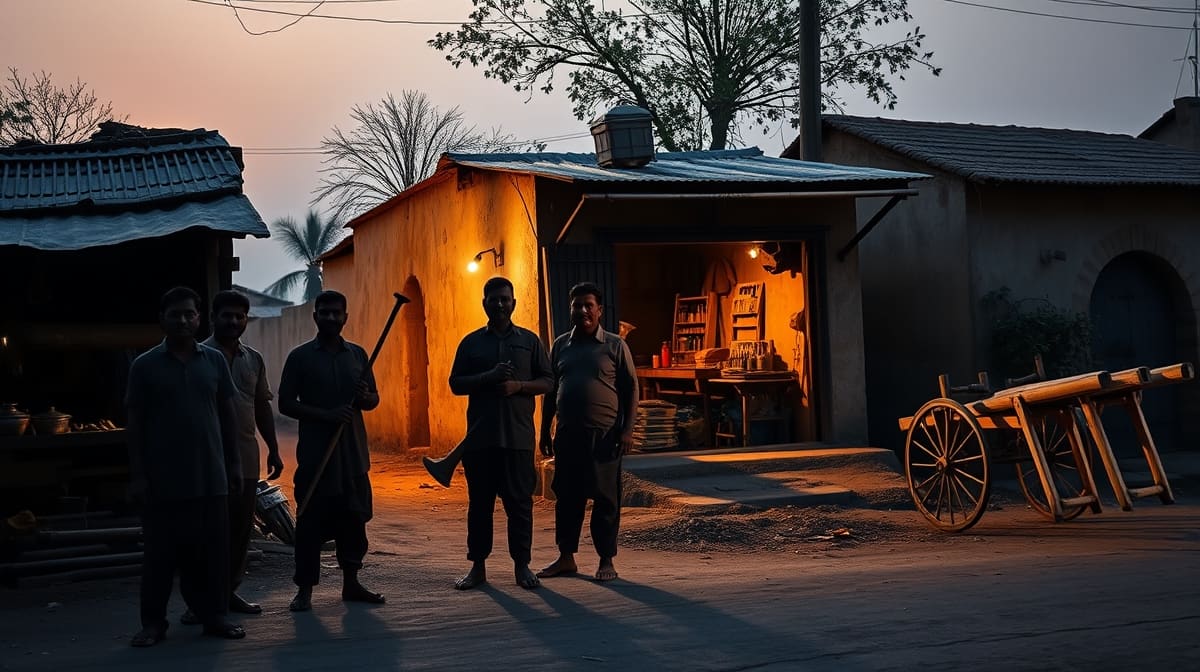
The case arose from a fatal assault on Imran @ Bablu on 18.02.2006 at Pal Chowk, Gondia, during which he sustained nineteen incised wounds leading to his death. The prosecution alleged that seven individuals, divided into two groups, participated in the attack as part of an unlawful assembly. Accused Nos. 1 to 3 were convicted of murder under Section 302 read with Section 149 IPC and arms-related offences, while Accused Nos. 4 to 7 were acquitted by the trial court.
Key Facts
- The deceased was attacked near a pan shop at approximately 1.30 p.m. on 18.02.2006.
- The prosecution claimed that Accused Nos. 1, 2, and 3 were armed with a knife, iron pipe, and gupti respectively, while the remaining four were present as part of the unlawful assembly.
- PW 2, the deceased’s elder brother, claimed he threw his bicycle at the accused to intervene, but no bicycle was seized from the scene.
- Two days prior to the incident, a quarrel occurred between the deceased and two friends, but the deceased was in jail at the time and had no direct dispute with any accused.
- Accused Nos. 1 and 2 surrendered at the police station on 19.02.2006, allegedly with the weapons, but the Assistant Sub-Inspector who recorded the surrender was not examined.
- The weapons and clothes of the accused were seized under panchnamas, but panch witnesses admitted they were merely asked to sign pre-prepared documents.
- Multiple seizure panchnamas bore identical timestamps, suggesting fabrication or batch preparation.
- The post-mortem report recorded 19 incised wounds caused by sharp-edged weapons, with no injury consistent with a blunt object like an iron rod.
Procedural History
- 18.02.2006: Incident occurred at approximately 1.30 p.m. at Pal Chowk, Gondia.
- 18.02.2006, 2.15 p.m.: FIR (Exh. 49) recorded at Gondia City Police Station.
- 18.02.2006, 2.25 p.m.: Spot panchnama (Exh. 54) commenced.
- 19.02.2006: Accused Nos. 1 and 2 surrendered at police station; weapons seized.
- 20.02.2006: Accused No. 7 arrested; blood sample and clothes seized.
- 21.02.2006: Post-mortem conducted by PW 9, Dr. Lalit Katre.
- 22.02.2006: Chemical analysis reports submitted (Exhs. 104 - 106).
- 05.03.2006: Charge-sheet filed before Judicial Magistrate First Class, Gondia.
- 10.03.2006: Case committed to Sessions Court.
- 24.10.2008: Trial Court convicted Accused Nos. 1 - 3; acquitted Accused Nos. 4 - 7.
- 2008: Criminal Appeal No. 786/2008 filed by Accused Nos. 1 - 3.
- 2009: Criminal Appeal No. 57/2009 filed by the State against acquittal of Accused Nos. 4 - 7.
- 26.02.2026: Judgment reserved.
- 18.03.2026: Judgment pronounced by Bombay High Court, Nagpur Bench.
The Parties' Positions
For Accused Nos. 1 - 3: The prosecution case was built on unreliable eyewitnesses whose conduct was unnatural, inconsistent statements, and unexplained delays in disclosure. The investigation was marred by procedural lapses: panch witnesses did not witness seizures, multiple panchnamas had identical timestamps, and the alleged surrender of weapons lacked corroboration. The medical evidence contradicted the ocular version regarding the use of an iron rod.
For the State: The trial court correctly appreciated the evidence. The eyewitnesses were natural witnesses present at the scene, and minor inconsistencies did not invalidate their testimony. The recovery of weapons and the post-mortem findings corroborated the prosecution narrative. The acquittal of Accused Nos. 4 - 7 was erroneous as they were part of the unlawful assembly.
Relief Sought
Accused Nos. 1 - 3 sought acquittal on grounds of reasonable doubt. The State sought reversal of the acquittal of Accused Nos. 4 - 7 and their conviction under Sections 147, 148, 302 read with 149 IPC and Section 4 read with 27 of the Arms Act.
The Legal Issue
The central question was whether the prosecution had proved beyond reasonable doubt that the accused formed an unlawful assembly under Section 149 of the Indian Penal Code and committed murder in prosecution of a common object, given the material inconsistencies in eyewitness testimony, defective investigation, and contradiction between ocular and medical evidence.
Arguments Presented
For the Appellant/Petitioner
The counsel for Accused Nos. 1 - 3 argued that the prosecution failed to establish the existence of an unlawful assembly. The eyewitnesses (PW 1 - 4) exhibited unnatural conduct: they did not disclose the incident to police immediately despite it occurring in a public place. Their testimonies contained material omissions and improvements. The FIR timing was implausible, with the spot panchnama commencing after the FIR was recorded. No bicycle thrown by PW 2 was recovered. The panch witnesses admitted they signed pre-prepared documents, undermining the credibility of seizure panchnamas. Multiple panchnamas bore identical timestamps, suggesting fabrication. The medical evidence showed only sharp weapon injuries, contradicting the prosecution’s claim of an iron rod being used. The alleged motive was unsubstantiated, and the surrender of weapons lacked corroboration as the officer who recorded it was not examined.
For the Respondent/State
The Additional Public Prosecutor contended that the trial court correctly evaluated the evidence. The eyewitnesses were natural witnesses whose minor inconsistencies did not render their testimony unreliable. The prosecution need not examine every bystander; quality of evidence matters more than quantity. The recovery of weapons and blood-stained clothes, along with the post-mortem report, provided sufficient corroboration. The absence of blunt force injuries did not negate the presence of an iron rod, as it may not have caused fatal injuries. The acquittal of Accused Nos. 4 - 7 was erroneous as their presence at the scene and participation in the unlawful assembly was established by the same eyewitnesses.
The Court's Analysis
The Court conducted a meticulous review of the evidence and found the prosecution’s case fundamentally flawed. The credibility of the eyewitnesses was severely undermined by their failure to disclose the incident immediately. As held in Sonia Bahera v. State of Orissa and Lahu Kamlakar Patil v. State of Maharashtra, unexplained silence by witnesses to a public assault renders their testimony doubtful. The Court observed:
"Such conduct appears wholly unnatural for persons who claim to have witnessed a serious assault in a public place. In the absence of any satisfactory explanation for this silence, the testimony of these witnesses becomes doubtful and it would not be safe to place implicit reliance upon their evidence."
The Court further noted that the sequence of events surrounding the FIR and spot panchnama was implausible. The FIR was recorded at 2.15 p.m., yet the spot panchnama commenced at 2.25 p.m., despite the police allegedly receiving a telephonic report earlier. This created a reasonable suspicion of antedating.
The investigation was riddled with procedural irregularities. Panch witnesses admitted they were not present during seizures and merely signed pre-prepared documents. The Supreme Court in Rajesh v. State of Madhya Pradesh and Pradeep Narayan Madgaonkar v. State of Maharashtra has held that such practices vitiate the evidentiary value of panchnamas. The identical timestamps on multiple seizure documents further indicated fabrication.
The medical evidence was decisive. Dr. Lalit Katre testified that all 19 wounds were incised, caused by sharp-edged weapons, and no injury was consistent with a blunt object. Yet, the prosecution claimed an iron rod was used. The Court cited Amar Singh v. State of Punjab and Lakshmi Singh v. State of Bihar, holding that when ocular testimony contradicts medical evidence without explanation, the prosecution case collapses.
The alleged surrender of weapons was uncorroborated. The officer who recorded it was not examined, and PW 10 admitted that Accused Nos. 1 and 2 had approached the police to lodge a complaint against the deceased’s brothers, suggesting possible false implication.
The Court concluded:
"The entire case of the prosecution that the accused persons had formed an unlawful assembly and committed the murder... rests primarily upon the testimony of PW-1 to PW-4. Once the presence and participation of these accused persons in the assault becomes doubtful, the very basis for invoking Section 149 of the Indian Penal Code disappears."
The acquittal of Accused Nos. 4 - 7 was upheld as the trial court’s view was plausible and not perverse.
The Verdict
The appellants, Accused Nos. 1 - 3, succeeded. The Bombay High Court set aside the conviction and sentence dated 24.10.2008, acquitted them of all charges under Sections 147, 148, and 302 read with Section 149 IPC and Section 4 read with Section 27 of the Arms Act, cancelled their bail bonds, and directed refund of any fine paid. The State’s appeal against the acquittal of Accused Nos. 4 - 7 was dismissed.
What This Means For Similar Cases
Eyewitness Conduct Must Be Scrutinized for Naturalness
- Practitioners must challenge eyewitness testimony where there is unexplained delay in disclosure, especially in public incidents.
- Courts will not accept testimony from witnesses who fail to approach police immediately unless a credible explanation is provided.
- The principle from Lahu Kamlakar Patil applies: unnatural conduct, not mere delay, renders testimony unreliable.
Investigation Lapses Can Derail Prosecution
- Panch witnesses must be shown to have independently verified seizures; signing pre-prepared documents invalidates evidence.
- Identical timestamps on multiple panchnamas will be treated as indicia of fabrication.
- Chain of custody for seized articles must be meticulously documented; failure to prove sealing and safe custody invites acquittal.
Medical Evidence Trumps Ocular Testimony When Contradictory
- When medical evidence categorically contradicts the prosecution’s version of weapon use (e.g., no blunt force injuries despite claim of iron rod), the prosecution must explain the discrepancy.
- Absent such explanation, courts will not convict based on ocular testimony alone.
- This judgment reinforces that forensic evidence is not merely corroborative - it can be decisive in undermining the prosecution narrative.
Section 149 IPC Requires Concrete Proof of Common Object
- Mere presence at the scene is insufficient to invoke Section 149.
- Prosecution must prove active participation and shared intent to commit the offence.
- Without reliable evidence of assembly and common object, convictions under Section 149 cannot stand.