
The Supreme Court’s landmark ruling in National Insurance Co. Ltd. v. Thungala Dhana Laxmi clarifies the statutory duty of vehicle owners to maintain valid third-party insurance and sets a uniform policy framework covering all occupants, with technology-driven enforcement mechanisms.
Background & Facts
The Dispute
The appellant, National Insurance Co. Ltd., challenged a High Court judgment that held it liable to pay compensation to the heirs of a deceased motorist under a comprehensive motor-vehicle policy. The respondents, Thungala Dhana Laxmi & Ors., sought enforcement of the statutory requirement of Section 146 of the Motor Vehicles Act (MVA) and a uniform policy structure covering occupants.
Key Facts
- 13.07.1996: The deceased, Mr. T. Ramu, was fatally injured in a collision while travelling in a Maruti 800 (Regn No. AP 21A 1666).
- 08.12.2009: The Motor Accident Claims Tribunal (MACT) dismissed the claim for Rs.10,00,000 compensation.
- 30.07.2024: The High Court of Telangana allowed the appeal, awarding Rs.10,00,500 compensation with 7.5% per annum interest, holding the insurer liable under a comprehensive policy.
- 18.11.2025: The Court framed two issues - non-compliance with Section 146 MVA and need for a uniform motor-vehicle policy covering all occupants.
- 24.03.2025: Notice issued in the present matter.
- 09.09.2025: Twenty-two insurance companies were impleaded as respondents.
- 13.10.2025: The Insurance Regulatory and Development Authority (IRDA) was impleaded.
- 30.10.2025: Ministry of Road Transport and Highways (MoRTH) was added as a respondent.
- 09.12.2025: Stakeholders were invited to submit suggestions and affidavits.
- 12.12.2025: IRDA consulted stakeholders and submitted recommendations.
- 28.02.2022: Central Motor Vehicles Rules were notified, effective 01.04.2022.
- 20.03.2023: Government answered Lok Sabha Unstarred Question No. 3211 on uninsured vehicles.
- 10.12.2025: Response to Rajya Sabha Unstarred Question No. 1227 on road-accident statistics.
- 14.08.2026: Deadline for stakeholders to file compliance responses.
- 18.08.2026: Deadline for filing affidavits of compliance.
Procedural History
- 13.07.1996: Accident occurred.
- 08.12.2009: MACT order dismissing compensation claim.
- 30.07.2024: High Court of Telangana allowed appeal, awarded compensation.
- 24.03.2025: Supreme Court issued notice.
- 09.09.2025: Supreme Court impleaded 22 insurance companies.
- 13.10.2025: IRDA impleaded.
- 30.10.2025: MoRTH added as respondent.
- 09.12.2025: Court heard submissions and received affidavits.
- 14.08.2026: Court directed stakeholders to file responses.
- 18.08.2026: Court set deadline for affidavits of compliance.
Parties' Positions
- Appellant (National Insurance Co. Ltd.): Argued that the High Court erred in holding it liable under a comprehensive policy and contended that a uniform occupant-cover policy was not mandated by statute.
- Respondents (Thungala Dhana Laxmi & Ors.): Asserted that Section 146 MVA requires every vehicle to have valid third-party insurance and that a uniform policy covering occupants should be legislated to protect victims.
- IRDA: Proposed a four-layer policy structure with mandatory third-party cover and optional occupant, personal accident, and own-damage covers.
- MoRTH: Supported technology-enabled enforcement, including ANPR cameras linked with the Insurance Information Bureau and VAHAN portal.
Relief Sought
- The appellant sought reversal of the High Court’s compensation award and clarification that no uniform occupant-cover policy is required.
- The respondents sought a declaration of statutory non-compliance, enforcement of Section 146, and direction for a uniform policy covering all occupants.
The Legal Issue
What is the precise legal duty imposed by Section 146 of the Motor Vehicles Act, 1988 on vehicle owners regarding third-party insurance, and should a uniform motor-vehicle policy structure covering all occupants be mandated under the Act?
Arguments Presented
For the Appellant
The appellant relied on the view that the Motor Vehicles Act does not expressly require insurance covering occupants beyond the statutory third-party liability, and that the High Court’s interpretation of the comprehensive policy was an over-reach. It cited S. Rajaseekaran v. Union of India to argue that the three-year third-party mandate should not be extended without legislative amendment.
For the Respondent
The respondents, supported by IRDA submissions, contended that the purpose of Section 146 is to ensure prompt compensation to victims and that a uniform policy covering occupants aligns with the protective intent of the Act. They referenced General Insurance Council v. State of Andhra Pradesh and Jai Prakash v. National Insurance Company to emphasize the need for strict compliance with accident-reporting provisions and timely compensation.
The Court's Analysis
The Court began by outlining the statutory framework. Section 146 of the MVA mandates that every motor vehicle must be insured for third-party risks; non-compliance leads to penalties under Section 196. The Court noted that the IRDA Act, 1999 empowers the Authority to protect policy-holder interests and to formulate regulations under Section 26.
"The ignorance of a statutory mandate results in motor accidents involving uninsured vehicles, which directly cause innocent victims to run from pillar to post for compensation."
The Court observed that despite the statutory requirement, more than half of Indian vehicles remain uninsured, citing the 2024-25 Standing Committee on Finance report (56% uninsured, i.e., 16.54 crore vehicles). It highlighted the systemic failure in enforcement and the need for technology-driven solutions such as ANPR cameras integrated with the Insurance Information Bureau and VAHAN portal.
On the policy structure, the Court accepted IRDA’s four-layer model:
- Mandatory third-party only policy (base cover).
- Optional occupant/pillion rider cover.
- Optional personal accident cover for owner, driver, and occupants.
- Optional own-damage cover. The Court emphasized that the optional layers must be offered with clear customer-option forms, enabling informed choice.
Regarding the specific compensation claim, the Court reaffirmed the principle that under a comprehensive policy, the insurer is liable for occupants, including passengers, as per the IRDA circular of 16.11.2009. It rejected the appellant’s contention that no extra premium was paid for occupant risk, stating that the policy language covered such risk.
The Court also addressed procedural lapses in MACT filings, reiterating directions from General Insurance Council v. State of Andhra Pradesh and M.R. Krishna Murthi v. New India Assurance Company Limited for prompt submission of Detailed Accident Reports (DAR) and compensation calculations within 30 days.
Finally, the Court issued extensive directions to ensure compliance, including:
- Integration of ANPR cameras with insurance databases for automatic e-challans.
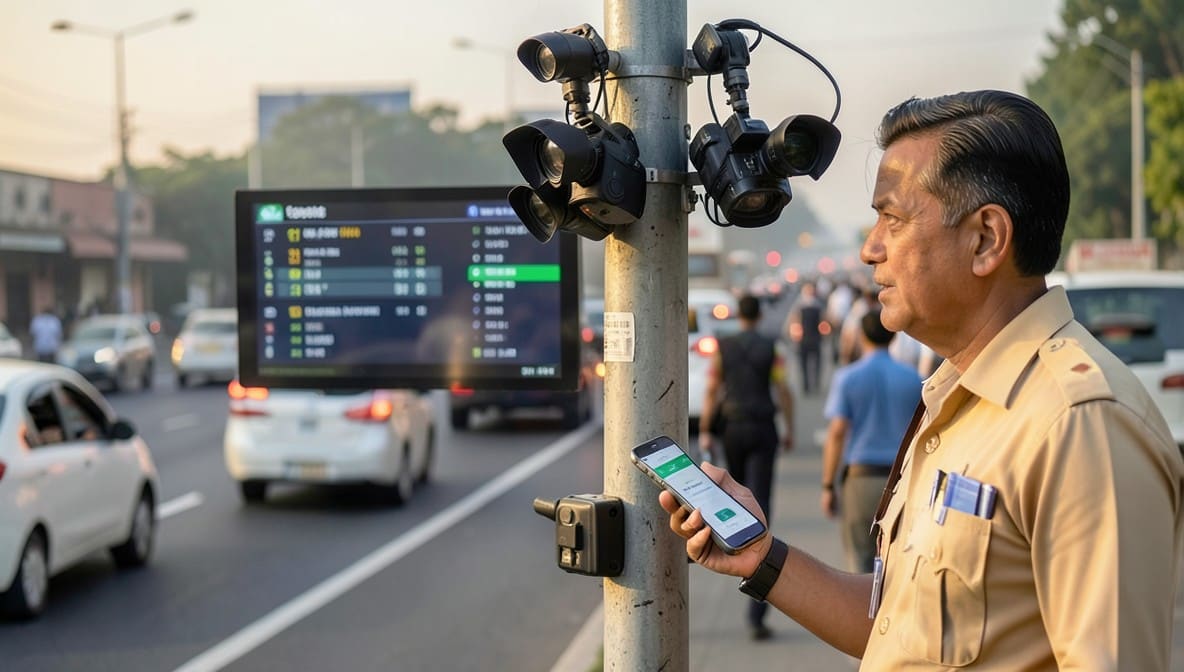
- Provision of handheld devices to State Police for real-time insurance verification.
- Amendment of Section 196 to impose progressive fines (three times basic premium or Rs 5,000 for first offence; five times basic premium or Rs 10,000 for subsequent offences).
- Extension of mandatory third-party insurance period to four years for new cars and six years for new two-wheelers.
- Deadline of 14 August 2026 for all stakeholders to file responses and 18 August 2026 for affidavits of compliance.
The Verdict
The appeal is dismissed to the extent that the insurer was held liable; the High Court’s award of Rs 10,00,500 with 7.5% per annum interest stands. The Court mandates strict compliance with Section 146 MVA, directs the implementation of a uniform four-layer motor-vehicle insurance structure, orders integration of ANPR technology with insurance databases, and sets compliance deadlines of 14 August 2026 (responses) and 18 August 2026 (affidavits). Progressive fines under the amended Section 196 are to be enforced, and the mandatory third-party insurance period is extended to four years for cars and six years for two-wheelers.
What This Means For Similar Cases
Enforcement Must Be Technology-Enabled
- Practitioners should advise clients that ANPR-based e-challan systems will be operational; non-compliance can attract enhanced fines.
- Insurance companies must ensure their policy data is promptly uploaded to the Insurance Information Bureau to avoid vehicle seizures.
Uniform Policy Structure Becomes Norm
- Drafting of motor-vehicle policies must incorporate the four-layer model; optional occupant and personal accident covers should be clearly presented in a customer-option form.
- Failure to offer these optional covers may be viewed as non-compliance with regulatory expectations.
Extended Mandatory Insurance Period
- For new vehicle registrations, advise clients that third-party insurance must now be procured for four years (cars) or six years (two-wheelers).
- Renewal reminders and compliance checks should be built into dealership and registration processes.
Procedural Rigor in Accident Claims
- Counsel must ensure that police submit DARs within 30 days and that insurers calculate compensation within 30 days of receipt.
- Non-compliance can lead to contempt proceedings and adverse cost orders.
Actionable Takeaways
- Update policy wordings to reflect the four-layer structure.
- Implement real-time insurance verification tools for fleet operators.
- Review client contracts to incorporate the extended insurance period.
- Monitor statutory deadlines (14 Aug 2026, 18 Aug 2026) for compliance filings.





