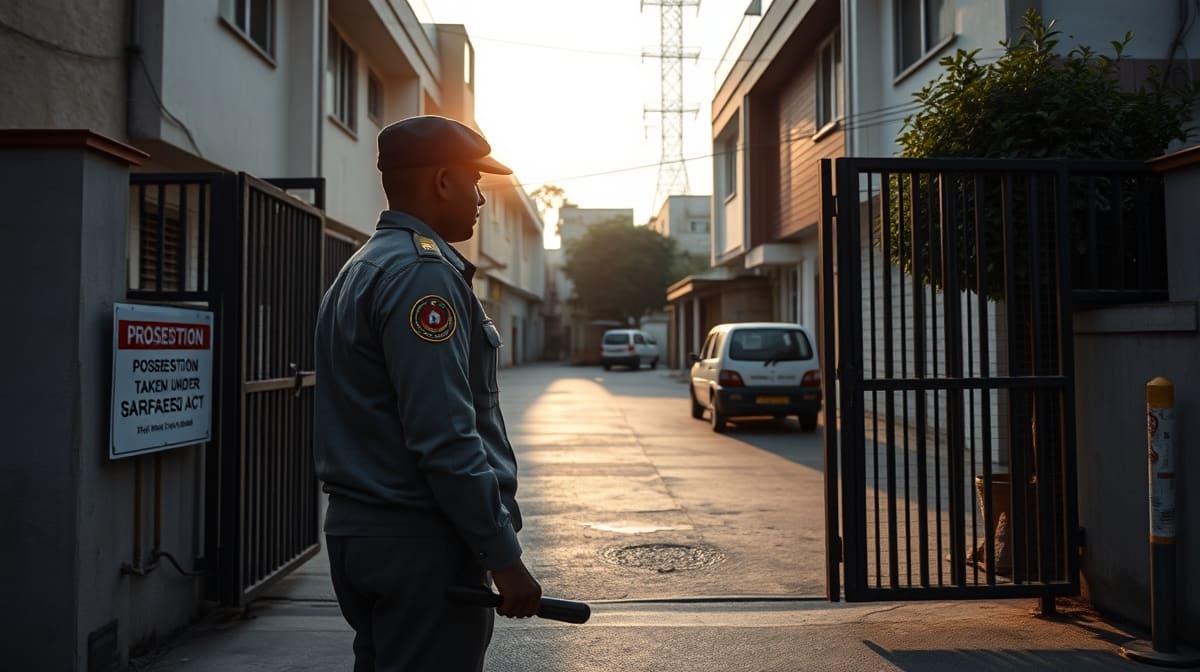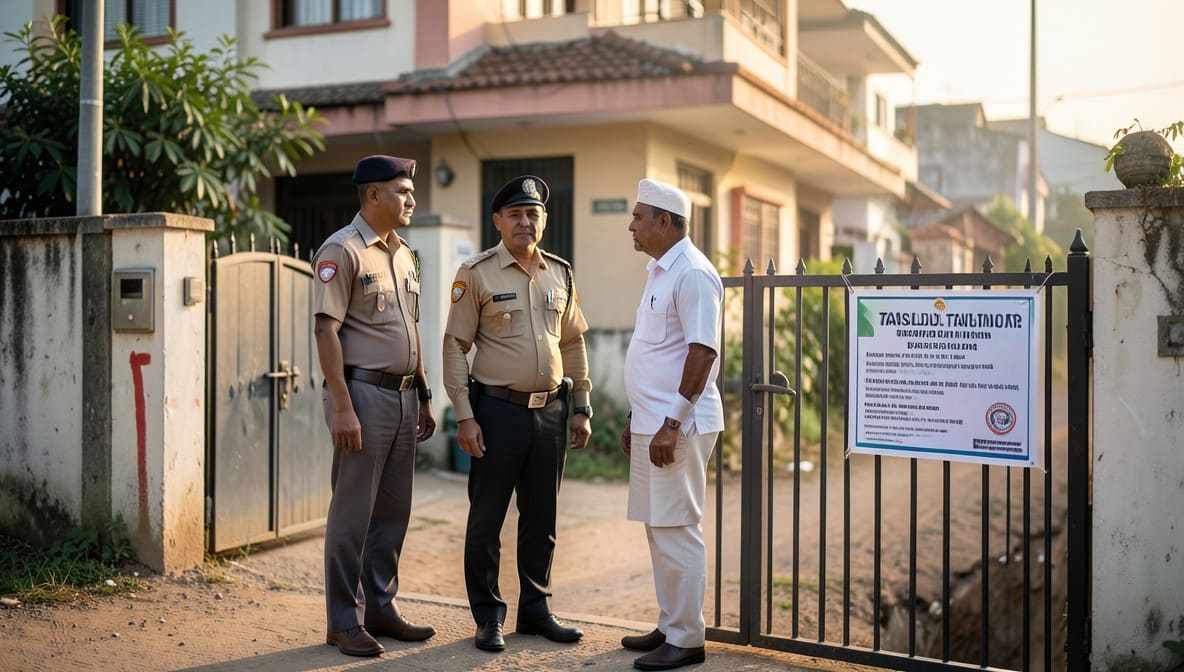
The Madras High Court has clarified that police authorities must protect possession taken under Section 14 of the SARFAESI Act, 2002 and facilitate re-possession if no contrary order exists. The judgment underscores the duty of police to act promptly in cases of trespass into properties attached under SARFAESI proceedings, ensuring compliance with judicial orders.
Background & Facts
The Dispute
The petitioner, V. Manikandan, is the Area Receivable Manager (Housing Loan Division) of Cholamandalam Investment and Finance Company Limited. The dispute arose when K. Sundararasu, a borrower who had availed a housing loan of Rs. 20,00,000, defaulted on repayment. The loan was to be repaid in 180 monthly installments, but the borrower failed to comply with the agreement and mortgage terms.
Key Facts
- The borrower, K. Sundararasu, availed a housing loan of Rs. 20,00,000 from the petitioner’s company
- The loan was secured by a mortgage on the residential property constructed by the borrower
- Due to default, SARFAESI proceedings were initiated under the Securitisation and Reconstruction of Financial Assets and Enforcement of Security Interest Act, 2002
- Physical possession of the property was taken pursuant to an order dated 15.02.2022 by the Chief Judicial Magistrate, Pudukkottai, in Crl.M.P.No.1400 of 2021 under Section 14 of the SARFAESI Act
- Despite the possession order, the borrower re-entered the property, leading to a representation by the petitioner to the police authorities
- No action was taken on the representation dated 08.12.2025, prompting the filing of the present writ petition
Procedural History
- 15.02.2022: Order passed by the Chief Judicial Magistrate, Pudukkottai, under Section 14 of the SARFAESI Act for taking possession of the property
- 2022: Criminal case (Crime No. 183 of 2022) registered by the 4th respondent police for trespass
- 08.12.2025: Representation sent by the petitioner to the respondents seeking police intervention
- 26.03.2026: Present writ petition (W.P.Crl.(MD)No.1673 of 2026) filed before the Madras High Court seeking a direction to consider the representation
Relief Sought
The petitioner sought a Writ of Mandamus directing the respondents to consider the representation dated 08.12.2025 and take necessary action to protect the possession of the property taken under Section 14 of the SARFAESI Act.
The Legal Issue
The central question was whether the police authorities are duty-bound to protect possession taken under Section 14 of the SARFAESI Act and facilitate re-possession in cases of trespass, especially when no contrary order exists in favor of the borrower.
Arguments Presented
For the Petitioner
The petitioner contended that:
- The property was lawfully taken into possession under Section 14 of the SARFAESI Act pursuant to a judicial order
- The borrower’s re-entry into the property constituted trespass, warranting police intervention
- Despite the representation dated 08.12.2025, no action was taken by the police, leading to undue delay and prejudice to the petitioner’s rights
For the Respondents
The learned Additional Public Prosecutor submitted that:
- A criminal case (Crime No. 183 of 2022) had already been registered for the trespass
- It was unclear what transpired during the interregnum period of four years, making it difficult to take a final decision
- The police required clarity on whether the borrower had obtained any order permitting re-entry into the property
The Court's Analysis
The Court observed that once possession is taken under Section 14 of the SARFAESI Act, it is the duty of the police to protect such possession and prevent trespass. The Court emphasized that the police must act firmly and in accordance with law to uphold judicial orders.
"It is the duty of the police officers to ensure that once possession is taken in execution of the order of the Chief Judicial Magistrate, Pudukkottai, under Section 14 of the SARFAESI Act, 2002, such possession is protected, and any trespass is dealt with firmly and in accordance with law."
However, the Court noted the submission of the Additional Public Prosecutor that it was unclear whether the borrower had obtained any order during the interregnum period that could justify his re-entry. To resolve this ambiguity, the Court directed the 4th respondent police to:
- Put the borrower on notice
- Conclude the enquiry within two weeks from the date of receipt of the order
- If no contrary order is found, take necessary action against the borrower and facilitate the petitioner’s re-possession of the property
The Court further directed the bank officials and police authorities to cooperate and avoid undue delay in the process. It clarified that the bank officials would bear the necessary charges for the exercise as per GO.Ms.No.139, Home (Pol-VIII) Department, dated 04.03.2019.
The Verdict
The Court disposed of the writ petition with the following directions:
- The 4th respondent police must conclude the enquiry within two weeks from the date of receipt of the order
- If no contrary order is found in favor of the borrower, the police must take necessary action to facilitate the petitioner’s re-possession of the property
- The bank officials and police authorities must cooperate to avoid undue delay
- The bank officials shall pay the necessary charges for the exercise as per GO.Ms.No.139, Home (Pol-VIII) Department, dated 04.03.2019
What This Means For Similar Cases
Police Duty to Protect Possession Under SARFAESI Act
- The judgment reaffirms that police authorities are legally bound to protect possession taken under Section 14 of the SARFAESI Act
- Practitioners can rely on this judgment to argue for police intervention in cases of trespass into properties attached under SARFAESI proceedings
- The Court’s direction to conclude enquiries within a specific timeline sets a precedent for expeditious action by police authorities
Clarity on Borrower’s Rights and Limitations
- The judgment clarifies that borrowers cannot re-enter properties taken into possession under Section 14 of the SARFAESI Act without a valid order
- If a borrower claims a contrary order, the police must verify its existence before allowing re-entry
- This provides a clear legal framework for banks and financial institutions to seek police assistance in protecting their security interests
Cooperation Between Banks and Police
- The Court emphasized the need for cooperation between bank officials and police authorities to avoid delays in re-possession
- Banks can now insist on timely police assistance, citing this judgment, to ensure compliance with judicial orders
- The judgment also clarifies the financial responsibility of banks for such exercises, as per the relevant government order