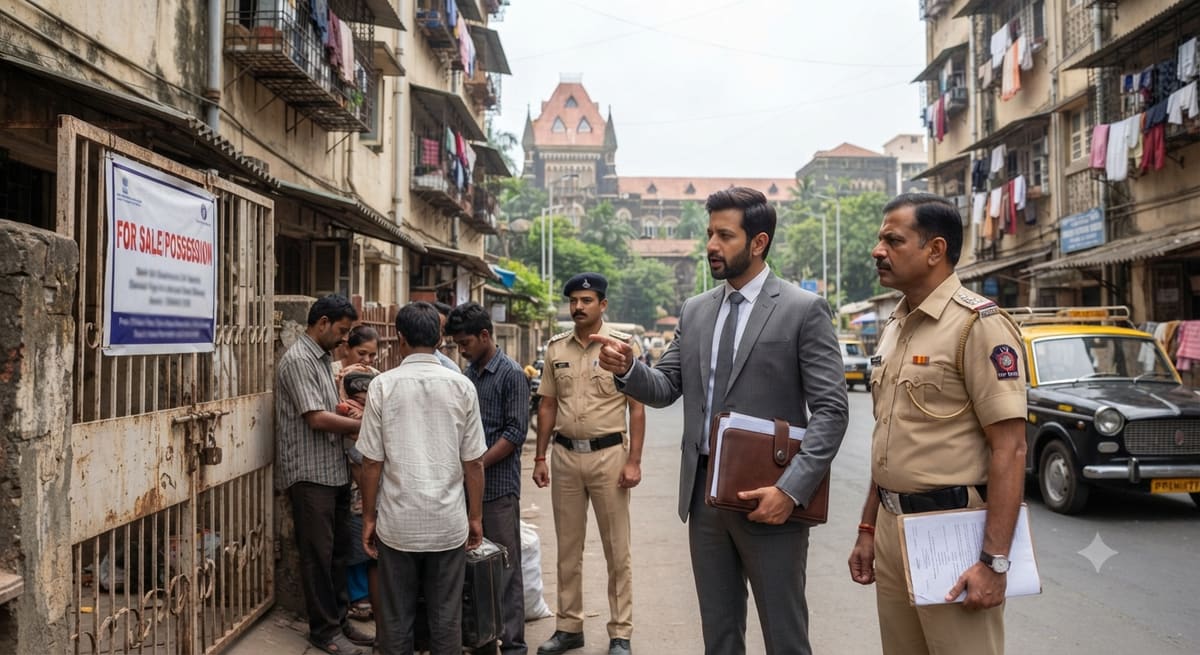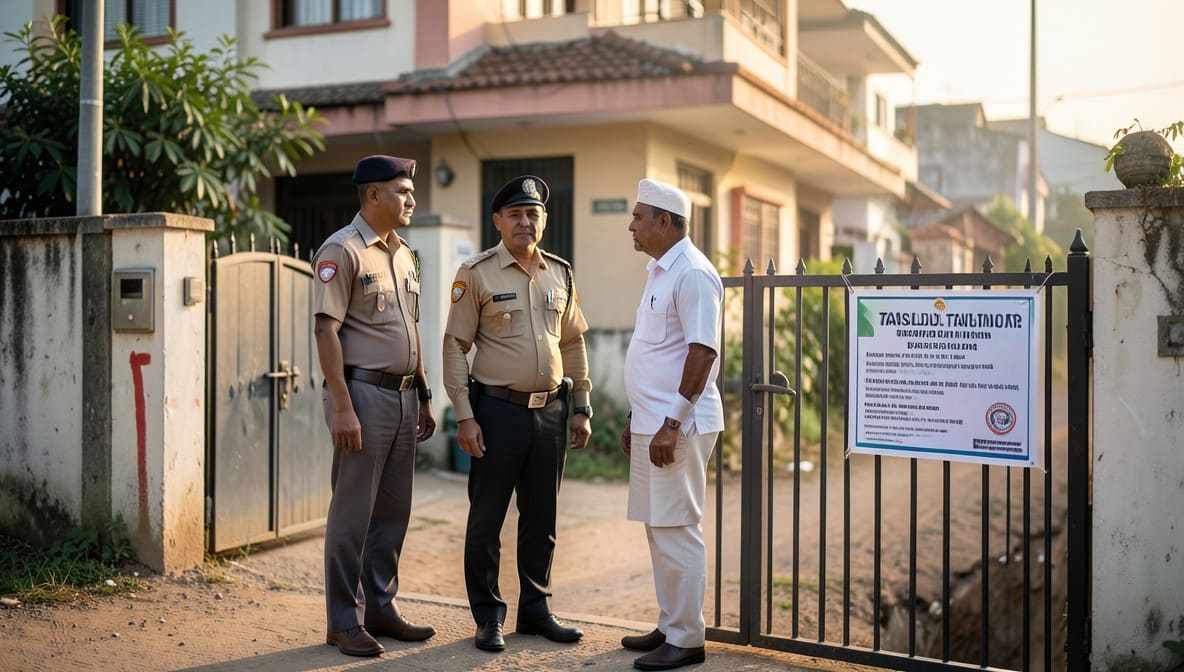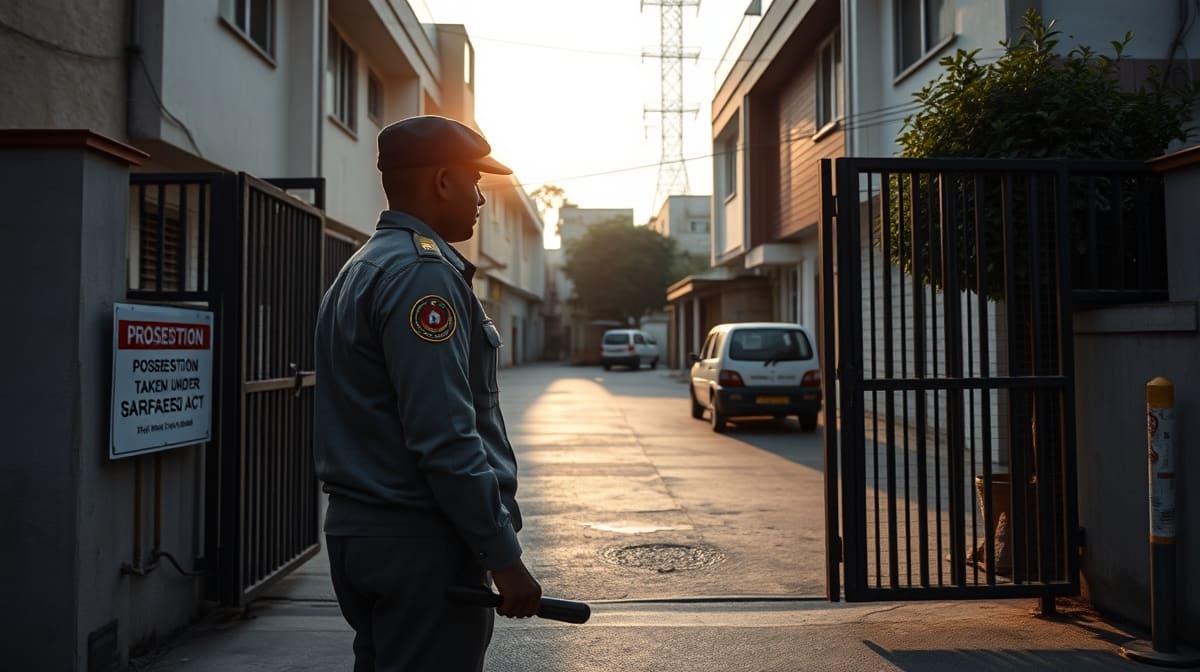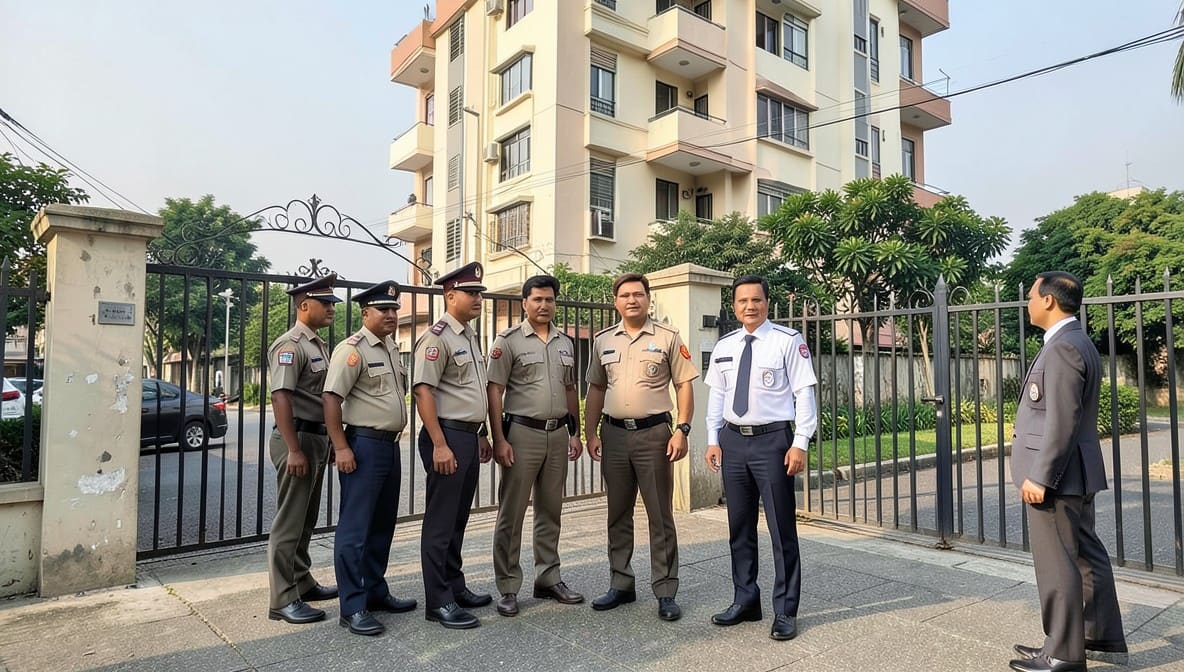
The Bombay High Court has issued a stern directive affirming that the rule of law cannot be subverted by repeated trespass on secured assets, even after judicial orders for possession have been passed. In a decisive intervention, the Court ordered police support for the physical recovery of property under the Securitisation and Reconstruction of Financial Assets and Enforcement of Security Interest Act, 2002, setting a critical precedent for enforcement mechanisms in financial recovery proceedings.
Background & Facts
The Dispute
The petitioner, Cholamandalam Investment & Finance Co. Ltd., a registered secured creditor under the Securitisation and Reconstruction of Financial Assets and Enforcement of Security Interest Act, 2002 (SARFAESI Act), obtained an order from a competent Magistrate under Section 14 to take physical possession of a residential flat in Pune, which had been pledged as security for a loan. Despite lawful execution of the order on 16.07.2025, the borrowers trespassed back into the asset just three days later, on 19.07.2025, effectively nullifying the judicial process.
Procedural History
- Prior to July 2025: Petitioner initiated proceedings under Section 13 of the SARFAESI Act, leading to issuance of a possession notice.
- June 2025: Magistrate issued order under Section 14 authorizing physical possession.
- 16.07.2025: Advocate Commissioner, appointed by the Magistrate, successfully took possession of the flat.
- 19.07.2025: Borrowers re-entered and re-trespassed into the asset.
- July - February 2026: Petitioner approached the Commissioner of Police and local authorities, but no action was taken.
- November 2025: Writ petition filed before the Bombay High Court seeking enforcement and police assistance.
Relief Sought
The petitioner sought a direction to the Advocate Commissioner to re-take possession of the asset with police support, and to hold the local police accountable for inaction. The petitioner also requested that the Court impose personal liability on the Senior Inspector of Police for non-compliance.
The Legal Issue
The central question was whether Section 14 of the SARFAESI Act empowers courts to direct police authorities to assist in the physical enforcement of possession orders, and whether persistent trespass by borrowers constitutes a failure of the rule of law warranting judicial intervention through writ jurisdiction.
Arguments Presented
For the Petitioner
The petitioner relied on M/s. K. S. Srinivasan v. Union of India and SBI v. V. Ramakrishnan to argue that Section 14 is a statutory mechanism designed to ensure swift and effective enforcement without judicial delay. It was contended that the repeated trespass amounted to a civil contempt of court order and that the police, as agents of the state, have a duty to uphold judicial mandates. The petitioner emphasized that without police backing, the SARFAESI Act becomes a paper remedy.
For the Respondent/State
The State, represented by the Additional Government Pleader, argued that police assistance is discretionary and that the SARFAESI Act does not explicitly mandate police involvement. It was submitted that the matter was pending before the local magistrate and that writ jurisdiction was premature. The State also claimed logistical constraints and lack of specific instructions as reasons for inaction.
The Court's Analysis
The Court rejected the State’s argument that police assistance is optional. It held that Section 14 is not merely procedural but substantive in its intent - to restore the secured creditor’s possession without delay or interference. The Court observed that allowing repeated trespasses to go unchallenged undermines the entire legislative framework of the SARFAESI Act.
"The rule of law cannot be a casualty of bureaucratic apathy. When a court order is flouted with impunity, the State’s duty to enforce it becomes non-negotiable."
The Court distinguished State of Maharashtra v. Rameshwar (2019), where police assistance was deemed discretionary, by noting that in this case, the trespass was not incidental but deliberate and recurrent, amounting to a pattern of defiance. The Court emphasized that Section 14 implicitly vests the executing authority with the power to seek state support, and that the High Court, under Article 226, has the inherent jurisdiction to ensure compliance with its own orders and those of subordinate courts.
The Court further held that the use of reasonable and proportionate force is permissible under the SARFAESI Act’s enforcement regime, and that the presence of lady constables was necessary to ensure dignity and compliance during execution in a residential setting.
The Verdict
The petitioner succeeded. The Court held that police authorities are legally obligated to assist in the execution of possession orders under Section 14 of the SARFAESI Act, and that failure to do so constitutes a dereliction of duty. The Court directed immediate enforcement with police support and imposed personal accountability on the Senior Inspector of Police.
What This Means For Similar Cases
Police Assistance Is Mandatory, Not Discretionary
- Practitioners must now include a formal request for police assistance in every Section 14 application.
- Failure by police to assist can be challenged via writ petition under Article 226.
- Courts may hold senior police officers in contempt for non-compliance, as demonstrated by the personal appearance order.
Enforcement Must Be Swift and Uncompromising
- Repeated trespasses after lawful possession are no longer treated as civil disputes but as systemic failures requiring judicial intervention.
- Advocate Commissioners must be empowered with police backing; their role cannot be rendered ineffective by state inaction.
- Courts will not tolerate delays or procedural evasion in SARFAESI enforcement.
Proportionate Force Is Legally Sanctioned
- Use of reasonable force during possession recovery is lawful under Section 14, provided it is necessary and minimal.
- Presence of female police personnel in residential recoveries is now a standard expectation to ensure procedural fairness and avoid allegations of harassment.