The Madhya Pradesh High Court has clarified that the enforcement mechanism under Section 14 of the SARFAESI Act is incomplete without actual physical possession of secured assets. This judgment resolves a critical ambiguity in banking recovery proceedings, affirming that judicial orders alone do not satisfy statutory obligations.
Background & Facts
The Dispute
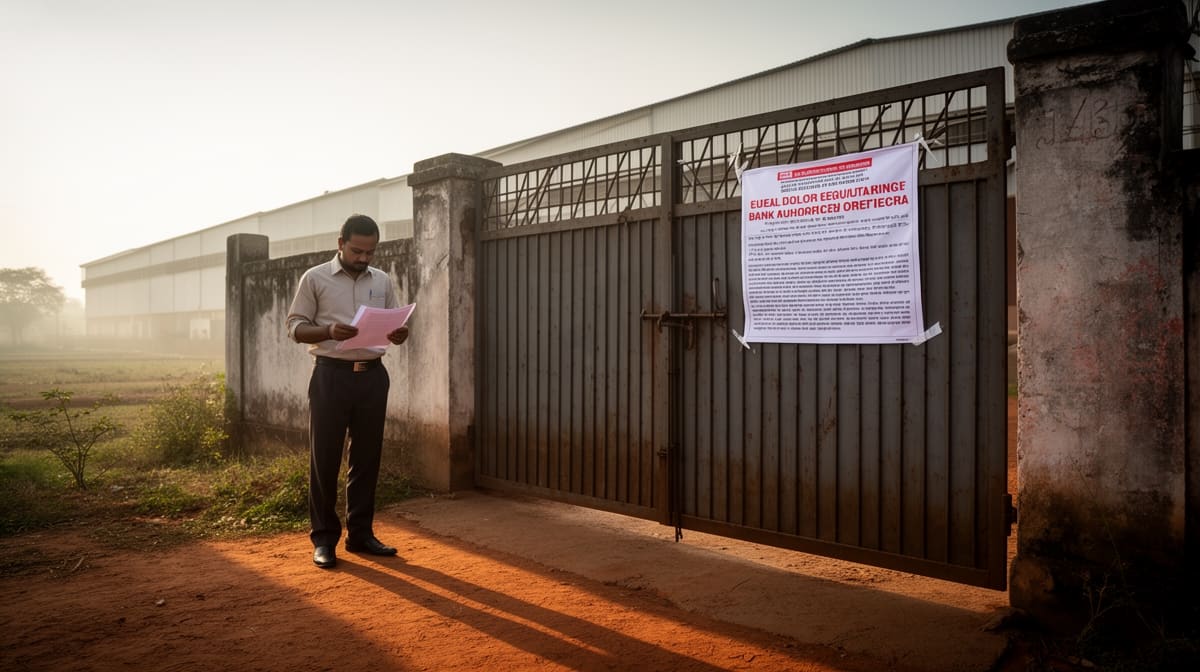
The petitioner, Capri Global Capital Ltd., a financial institution registered under the Reserve Bank of India, initiated proceedings under Section 14 of the Securitisation and Reconstruction of Financial Assets and Enforcement of Security Interest Act, 2002 (SARFAESI Act) against the respondents, Parvati Dubey and others, to enforce its security interest over immovable property located in Rajgarh, Madhya Pradesh. The secured asset was mortgaged to secure a loan facility extended to the borrowers.
Key Facts
- The loan account became a Non-Performing Asset (NPA) on 15.07.2022
- A demand notice under Section 13(2) of the SARFAESI Act was issued on 20.08.2022
- The borrowers failed to repay or raise any valid objection within the stipulated 60 days
- A possession notice under Section 13(4) was issued on 20.10.2022
- The petitioner filed an application under Section 14 of the SARFAESI Act before the Chief Judicial Magistrate, Rajgarh, on 05.11.2023
- The Chief Judicial Magistrate passed an order on 17.10.2024 directing the District Magistrate (Respondent No.2) to assist the petitioner in taking physical possession of the secured property
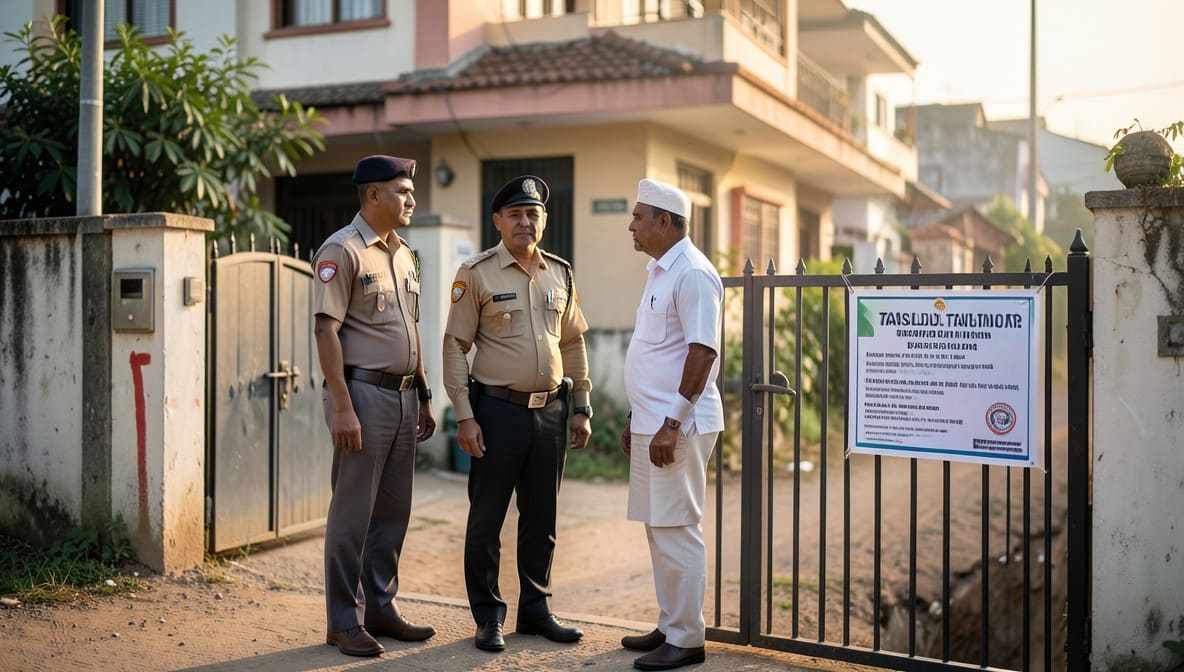
- Despite the order, no action was taken by Respondent No.2 to hand over possession
- The petitioner made repeated representations to the District Magistrate’s office on 01.12.2024, 15.02.2025, and 10.03.2025, all of which remained unaddressed
- The petitioner filed the present writ petition on 15.03.2026
Procedural History
- 15.07.2022: Loan account classified as NPA
- 20.08.2022: Section 13(2) notice issued
- 20.10.2022: Section 13(4) possession notice issued
- 05.11.2023: Section 14 application filed before CJM, Rajgarh
- 17.10.2024: CJM order passed directing District Magistrate to assist in taking possession
- 01.12.2024: First representation to District Magistrate
- 15.02.2025: Second representation
- 10.03.2025: Third representation
- 15.03.2026: Writ Petition No. 8468 of 2026 filed before Madhya Pradesh High Court
Relief Sought
The petitioner sought a writ of mandamus directing Respondent No.2 (District Magistrate, Rajgarh) to immediately take physical possession of the secured asset and hand it over to the petitioner, in compliance with the order dated 17.10.2024.
The Legal Issue
The central question was whether the fulfillment of Section 14 of the SARFAESI Act is achieved merely by the issuance of a judicial order under that provision, or whether it requires actual physical possession of the secured asset by the secured creditor.
Arguments Presented
For the Petitioner
The petitioner’s counsel argued that Section 14 is a procedural mechanism designed to enable the secured creditor to take possession with the assistance of the District Magistrate. Merely obtaining an order from the Magistrate without execution defeats the very purpose of the SARFAESI Act, which is to ensure expeditious recovery. Reliance was placed on M/s. Muthoot Finance Ltd. v. P. Sreekanth and Canara Bank v. P.N. Srinivasan, where the Supreme Court held that the object of Section 14 is to facilitate actual possession, not to create a paper trail. The delay of over five months since the order was passed was characterized as arbitrary and violative of the statutory mandate.
For the Respondent/State
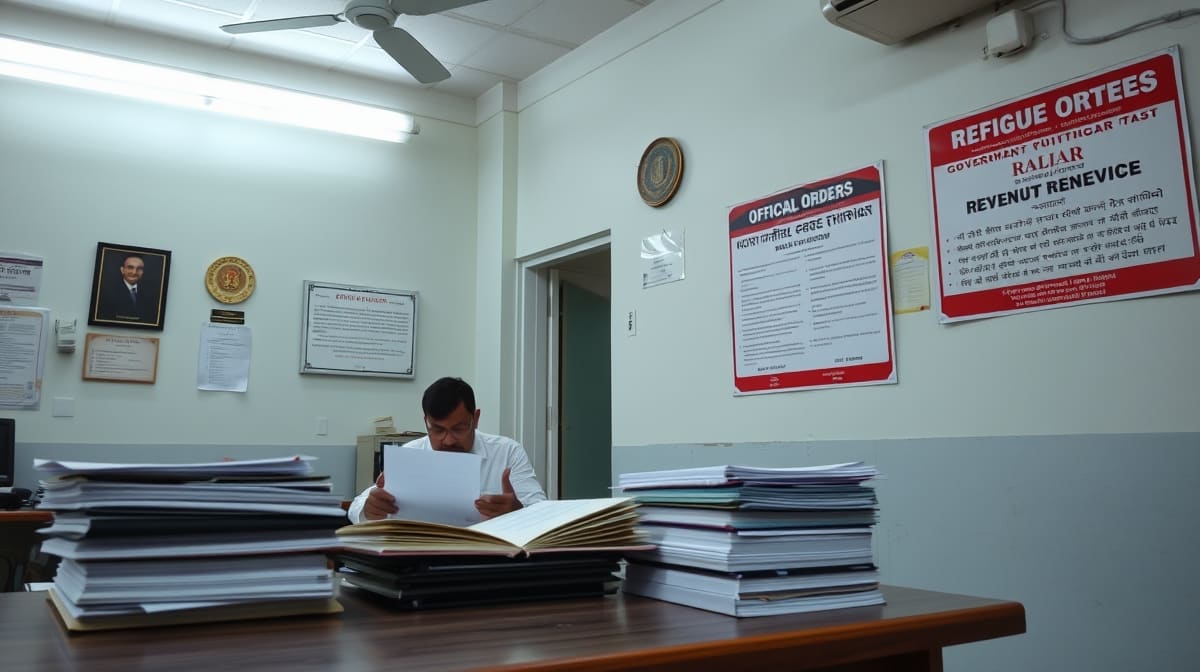
The Government Advocate contended that the District Magistrate’s office had initiated internal procedures and was awaiting clearance from higher authorities. It was submitted that administrative bottlenecks and pending verification of title documents had caused the delay. However, no documentary evidence or official record of such proceedings was produced before the Court.
The Court's Analysis
The Court examined the language and legislative intent behind Section 14 of the SARFAESI Act, which states that the District Magistrate shall take possession of the secured asset on the application of the secured creditor. The Court emphasized that the provision is not a mere formality but a substantive enforcement tool.
"The passing of an order under Section 14 is only the first step. The statute contemplates that the District Magistrate shall assist the secured creditor in taking physical possession. Without this, the order remains a dead letter."
The Court rejected the notion that administrative delay or internal processing could justify non-compliance. It noted that the SARFAESI Act was enacted to reduce the time taken in recovery proceedings, and allowing such delays undermines the legislative purpose. The Court distinguished this case from those involving genuine legal disputes over title, where the Magistrate may stay proceedings. Here, no such challenge was pending, and the order had attained finality.
The Court further observed that the District Magistrate, as a statutory officer, has a non-discretionary duty under Section 14 to execute the order. Failure to do so amounts to a dereliction of statutory duty.
The Verdict
The writ petition was allowed. The Court directed Respondent No.2, the District Magistrate, Rajgarh, to take physical possession of the secured asset and hand it over to the petitioner, Capri Global Capital Ltd., within 30 days from the date of filing of a certified copy of this order, provided there is no subsisting legal impediment. The Court emphasized that any further delay would be viewed as contempt of court.
What This Means For Similar Cases
Physical Possession Is the Final Step Under Section 14
- Practitioners must now treat the Magistrate’s order under Section 14 as only the beginning of enforcement, not its conclusion
- Banks and financial institutions should immediately file execution applications or writ petitions if possession is not taken within 15 days of the order
- Delay beyond 30 days without valid legal grounds may now attract contempt proceedings
Administrative Inaction Is Not a Valid Defense
- District Magistrates cannot cite internal delays, pending verifications, or workload as justification for non-execution
- The burden shifts to the state authority to prove a legally valid impediment (e.g., pending title suit, court stay) - mere administrative inertia is insufficient
- Petitioners can now seek contempt or immediate writ relief if possession is not granted within 30 days of the Section 14 order
Procedural Compliance Is Non-Negotiable in SARFAESI Cases
- The SARFAESI Act’s time-bound nature requires strict adherence to timelines
- Financial institutions should maintain a log of all steps taken post-Section 14 order, including dates of representations to the District Magistrate
- Legal notices should be sent within 15 days of non-compliance to preserve the right to seek judicial remedy