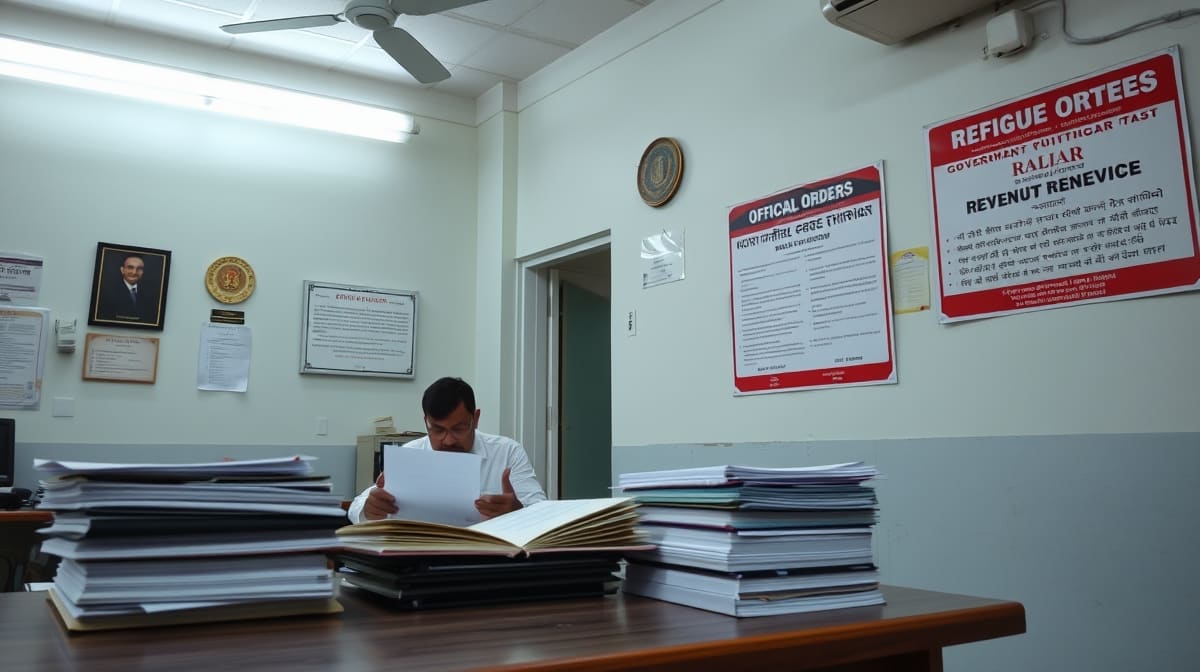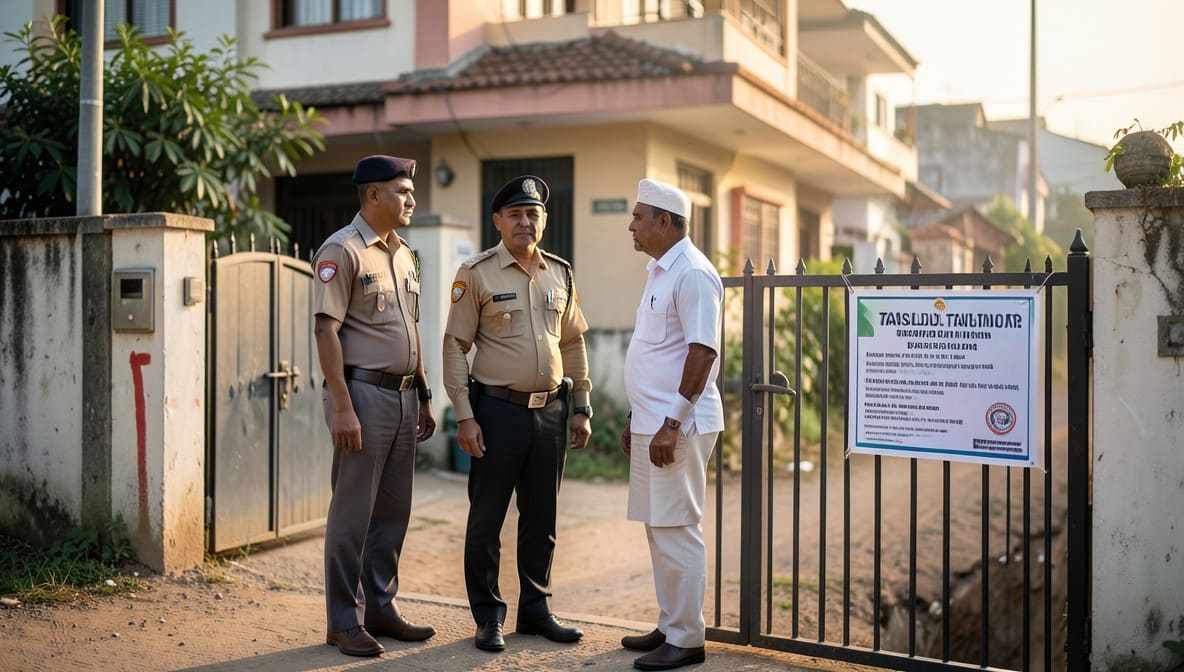
The Madhya Pradesh High Court has reinforced critical procedural timelines under the SARFAESI Act, mandating that Collectors must issue and execute orders under Section 14 within defined periods to prevent undue delay in asset recovery by Asset Reconstruction Companies. This judgment clarifies the state machinery’s obligation to facilitate enforcement without discretionary obstruction.
Background & Facts
The Dispute
Phoenix ARC Limited, an Asset Reconstruction Company registered under the Securitisation and Reconstruction of Financial Assets and Enforcement of Security Interest Act, 2002 (SARFAESI Act), acquired the secured interest in a defaulting borrower’s property through an assignment deed dated 29.12.2025 from Edelweiss Asset Reconstruction Company Ltd. The petitioner sought enforcement of its security interest under Section 14 of the SARFAESI Act, which empowers a secured creditor to seek assistance from the District Collector for taking possession of secured assets.
Key Facts
- The petitioner acquired the secured asset rights via assignment deed dated 29.12.2025.
- A prior order dated 30.05.2025 was passed by the Chief Judicial Magistrate, Guna, directing the concerned Tahsildar to assist in possession delivery.
- The Tahsildar failed to comply with the Magistrate’s order despite its urgent nature.
- The petitioner filed this writ petition under Article 226 of the Constitution seeking enforcement of its rights under Section 14 of the SARFAESI Act.
- The petitioner relied on a coordinate Bench’s earlier order dated 27.02.2024 in IIFL Home Finance Ltd. v. State of M.P. (W.P. No. 2078 of 2023), which laid down binding procedural timelines for Collectors.
Procedural History
- 29.12.2025: Assignment deed executed between Edelweiss ARC and Phoenix ARC Limited.
- 30.05.2025: Chief Judicial Magistrate, Guna, issued order directing Tahsildar to assist in possession delivery.
- Failure to comply: Tahsildar did not act on the Magistrate’s order.
- 27.02.2024: Coordinate Bench of this Court delivered directions in IIFL Home Finance Ltd. case, establishing timelines for Section 14 proceedings.
- 2026: Writ Petition No. 14768 of 2026 filed before the High Court at Gwalior.
The Parties' Positions
For the Petitioner
The petitioner sought enforcement of the SARFAESI Act’s statutory framework, requesting the Court to direct the District Collector to issue and execute the Section 14 order within a stipulated time, relying on the precedent set in IIFL Home Finance Ltd. The petitioner emphasized that delays in enforcement undermine the legislative intent of expeditious recovery under SARFAESI.
For the Respondent/State
The State did not oppose the petitioner’s request in principle but raised a procedural observation: the Municipal Corporation of Gwalior, under the Swachh Bharat Mission, had created a voluntary fund for environmental compliance. The State suggested that the petitioner may voluntarily contribute Rs. 5,000 to this fund as a gesture of corporate social responsibility.
Relief Sought
The petitioner sought:
- Direction to respondents No. 2 and 3 (District Administration and Collector) to deliver possession by acting upon the order under Section 14 of the SARFAESI Act within a stipulated time.
- Costs of the petition.
The Legal Issue
The central question was whether the District Collector is bound by the procedural timelines established in prior judgments under the SARFAESI Act, particularly the requirement to issue Section 14 orders within four weeks and execute them expeditiously, and whether non-compliance by subordinate officers like the Tahsildar warrants judicial intervention.
Arguments Presented
For the Petitioner
The petitioner relied on the binding precedent set by the coordinate Bench in IIFL Home Finance Ltd., arguing that the directions issued therein were not discretionary but mandatory under the SARFAESI Act’s statutory scheme. It contended that delays in enforcement by Collectors defeat the purpose of the Act, which is to ensure swift recovery of financial assets. The petitioner emphasized that the Tahsildar’s failure to act on the Magistrate’s order dated 30.05.2025 constituted a clear dereliction of duty.
For the Respondent/State
The State did not dispute the legal obligation under Section 14 but introduced a non-legal, voluntary contribution as a condition for goodwill. It did not contest the petitioner’s right to enforcement but sought to frame the matter as one of administrative cooperation rather than legal compulsion.
The Court's Analysis
The Court examined the legislative intent behind the SARFAESI Act, particularly Section 14, which was enacted to provide a streamlined mechanism for secured creditors to take possession of secured assets without lengthy civil litigation. The Court noted that the earlier judgment in IIFL Home Finance Ltd. had already laid down clear, time-bound obligations on Collectors to ensure compliance.
"The Collector shall pass the order under Section 14 of the SARFAESI Act as early as possible preferably within four weeks from the date of submission of certified copy of this order. Thereafter, the Collector shall ensure execution of the order in a time bound programme as directed by the Divisional Commissioner."
The Court held that these directions were not mere suggestions but mandatory procedural safeguards to prevent bureaucratic inertia. It observed that the Tahsildar’s failure to act on the Magistrate’s order dated 30.05.2025 was a clear violation of the statutory chain of enforcement under the SARFAESI Act. The Court further noted that the State’s suggestion of a voluntary contribution, while noted, could not be made a precondition for the exercise of a statutory right.
The Court reaffirmed that the SARFAESI Act operates as a self-contained code, and its provisions must be implemented without extraneous conditions. The Court emphasized that the Collector’s role is ministerial once the secured creditor has complied with the procedural requirements under Sections 13(2) and 13(4).
The Verdict
The writ petition was disposed of with directions. The District Administration and Collector are directed to issue the order under Section 14 of the SARFAESI Act within four weeks of receipt of this order and complete execution within a time-bound programme. The Tahsildar of Guna is directed to comply with the Magistrate’s order dated 30.05.2025 within one month. The petitioner is permitted to voluntarily deposit Rs. 5,000 in the Swachhata Fund of Nagar Nigam Gwalior, but such deposit shall not be a condition for enforcement. Costs of the petition are awarded to the petitioner.
What This Means For Similar Cases
Enforcement Timelines Are Mandatory, Not Discretionary
- Practitioners representing ARCs or banks may now cite this judgment to demand strict adherence to the four-week timeline for Section 14 orders.
- Any delay by the Collector beyond four weeks without valid reason can be challenged via writ petition under Article 226.
Subordinate Officers Cannot Defy Court or Magistrate Orders
- Failure by Tahsildars or other subordinate officers to execute judicial or quasi-judicial orders under SARFAESI Act attracts direct judicial censure.
- Such non-compliance can be raised in writ petitions as a ground for contempt or administrative accountability.
Voluntary Contributions Cannot Be Tied to Statutory Rights
- Authorities cannot condition the exercise of statutory rights (e.g., possession under Section 14) on voluntary donations or CSR contributions.
- Any such linkage is legally invalid and may be struck down as an abuse of power.