The Kerala High Court has clarified that the payment of a fine in lieu of confiscation under Section 130 of the CGST Act does not entitle a taxpayer to provisional release of goods pending adjudication. The judgment reinforces that statutory detention of goods in transit requires strict compliance with procedural safeguards under Section 129, and mere issuance of a show-cause notice under Section 130 cannot justify continued possession of property.
Background & Facts
The Dispute
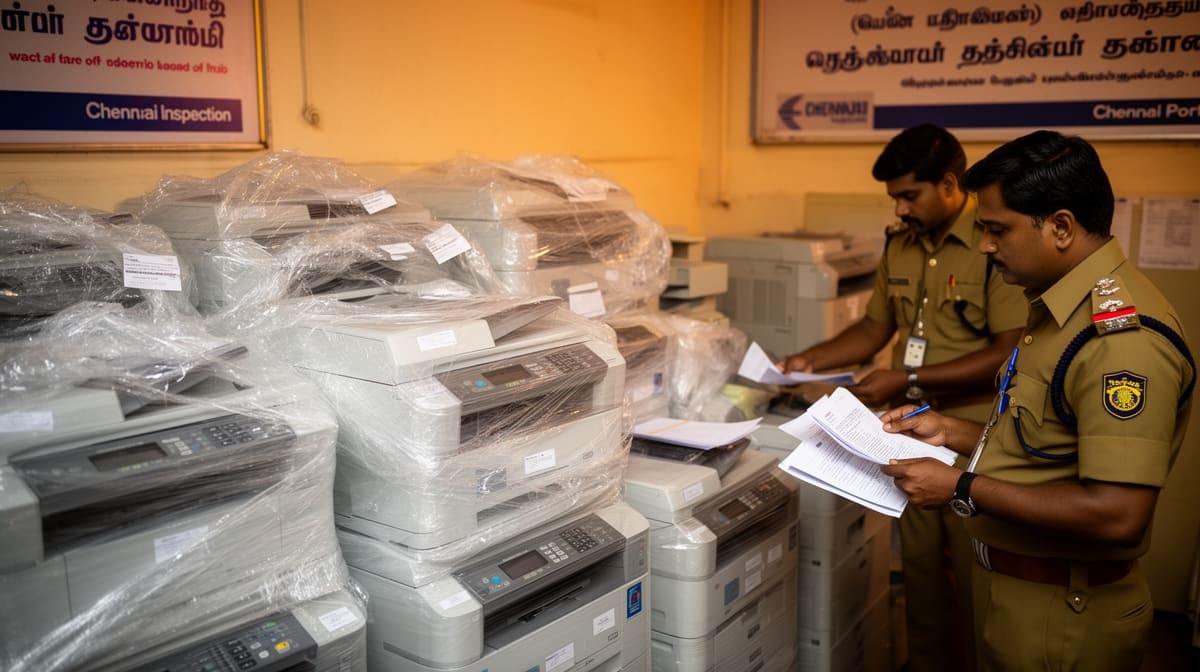
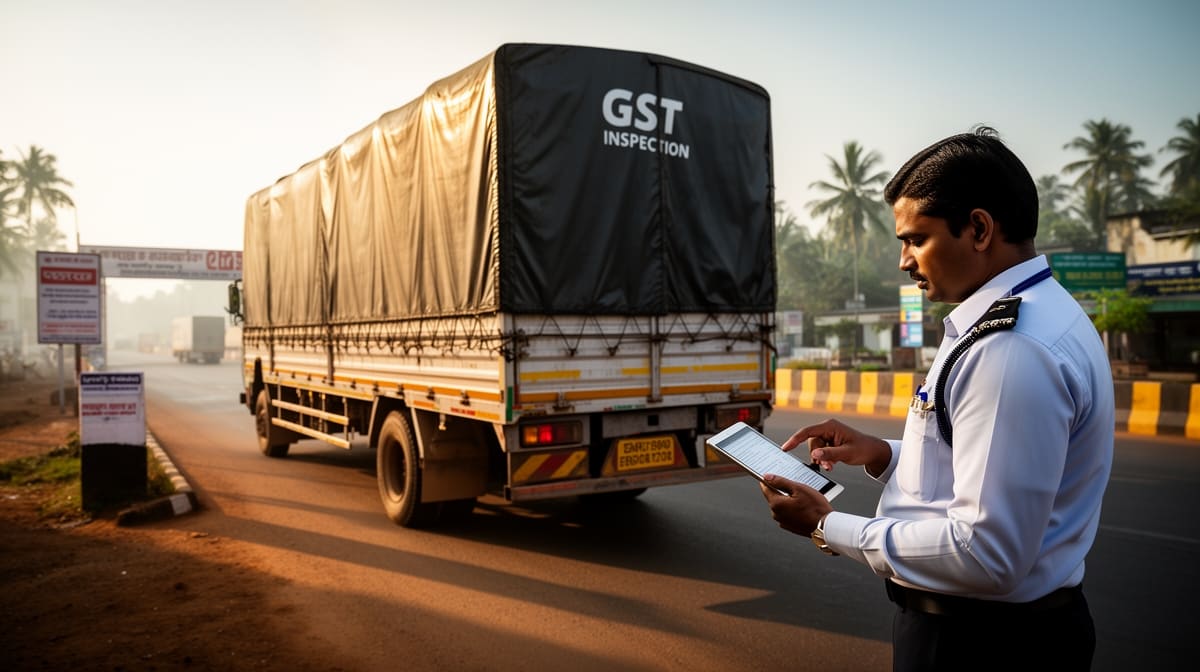
The petitioner, M/S Authentic Metals, a registered taxpayer dealing in copper scrap, transported goods from Thrissur to Metro Trading on 25 November 2025, accompanied by a valid invoice and e-way bill. During transit, the vehicle was intercepted by Enforcement Squad officers in Palakkad. The officers conducted physical verification and issued Forms MOV-1, MOV-2, and MOV-4, alleging discrepancies in documentation. No formal order of detention was issued under Section 129 of the CGST Act.
Procedural History
- 25 November 2025: Vehicle intercepted; Forms MOV-1 and MOV-2 issued for inspection.
- 3 December 2025: Show-cause notice (Form MOV-10) issued under Section 130 proposing confiscation and a fine of ₹18,92,053.
- 30 December 2025: Petitioner paid the entire proposed fine via DRC-03 challan and requested release of goods.
- January 2026: Respondents refused release, asserting continued possession under MOV-2’s prohibitory clause.
- February 2026: Writ petition filed challenging detention and seeking release.
Relief Sought
The petitioner sought quashing of the MOV-10 notice, declaration that continued detention was unconstitutional, and immediate release of goods and conveyance upon payment of fine, invoking Section 130(2) and Article 300A of the Constitution.
The Legal Issue
The central question was whether Section 130(2) of the CGST Act permits provisional release of goods pending adjudication upon payment of fine in lieu of confiscation, and whether the authorities may retain possession of goods without a formal detention order under Section 129.
Arguments Presented
For the Petitioner
The petitioner relied on Sales Tax Officer v. Y. Balakrishnan (Ext.P15), which held that Section 130(2) allows release at two stages: during adjudication and post-adjudication. It argued that payment of fine under Section 130(2) should trigger immediate release, as the statutory intent is to provide an option to avoid confiscation. The petitioner further contended that continued detention without a Section 129 order violated Article 300A, as no lawful authority existed to deprive them of property.
For the Respondent
The State contended that Section 130(2) applies only after a final order of confiscation is passed, not provisionally. It argued that the deletion of Section 130(3) and the amendment to Section 129 by the Finance Act, 2021, removed any implied power for provisional release. The State further relied on Form MOV-2’s prohibitory clause as sufficient legal basis for retention, asserting that Section 130 proceedings are independent of Section 129 and that detention is inherent in confiscation proceedings.
The Court's Analysis
The Court undertook a detailed statutory interpretation of Sections 129, 130, and 67 of the CGST Act, alongside the binding Circular No. 41/15/2018-GST. It found that the 2021 amendments fundamentally altered the scheme: Section 130(3) was deleted, and Section 129(2) - which previously linked provisional release under Section 67(6) to detention - was omitted. This removed any statutory basis for provisional release under Section 130.
"An interpretation that treats Section 130(2) as the one for provisional release would make Section 130(7) and the time limit contemplated therein meaningless."
The Court emphasized the principle of expressio unius est exclusio alterius: since provisional release is expressly provided under Section 67(6) for seized goods, but omitted in Section 130, it cannot be read into the latter. The Court distinguished Y. Balakrishnan (Ext.P15), noting it was rendered before the 2021 amendments and thus no longer binding.
Regarding detention, the Court held that Section 129(1) mandates a formal order of detention before goods may be held. Form MOV-2, while requiring the transporter to station the vehicle, is an inspection order under Section 68, not a detention order. The prohibitory clause therein cannot substitute the statutory requirement of a detention order under Section 129. The Court cited Union of India v. Rajiv Kumar and Bharat Aluminium Co. v. Kaiser Aluminium to affirm that courts cannot supply legislative omissions.
The Court further held that Article 300A protects property rights, and deprivation without statutory authority is unconstitutional. Since no detention order was issued under Section 129, and Section 130 confers no power to retain goods, the continued possession was unlawful.
The Verdict
The petitioner succeeded. The Court held that Section 130(2) does not authorize provisional release of goods pending adjudication, and Section 129 requires a formal detention order to lawfully retain goods. The respondents’ continued possession of the goods was declared illegal. The Court directed immediate release of the goods upon execution of a simple bond, while preserving the pending confiscation proceedings.
What This Means For Similar Cases
Detention Requires a Formal Order
- Practitioners must challenge any retention of goods based solely on Form MOV-2 or a show-cause notice under Section 130.
- Authorities must issue a detention order under Section 129(1) within seven days of interception; failure invalidates possession.
- Payment of fine under Section 130(2) does not entitle the taxpayer to release until after final confiscation order.
Provisional Release Is Limited to Section 67(6)
- Provisional release is only available under Section 67(6) for seized goods - requiring bond, security, or payment of tax, interest, and penalty.
- Section 130(2) is a post-adjudication option; it cannot be invoked to secure interim release.
- Taxpayers must not assume that paying a proposed fine under MOV-10 triggers release; they must seek release under Section 129(1)(c) via security.
Statutory Compliance Is Non-Negotiable
- Circulars like Ext.P6 are binding; failure to follow prescribed forms and timelines renders actions ultra vires.
- Courts will strictly construe taxing statutes against the State when fundamental rights are engaged.
- Practitioners should file writs immediately if detention exceeds seven days without a Section 129 order, as delay itself becomes grounds for release.