Topic

Urban Development Law

9 articlesLatest August 2026
Demolition for road widening without notice, hearing or compensation breaches constitutional due process | Sri Ganganagar road widening : RJ HC
Case Law Analysis
|Rajasthan High Court

Demolition for road widening without notice, hearing or compensation breaches constitutional due process | Sri Ganganagar road widening : RJ HC

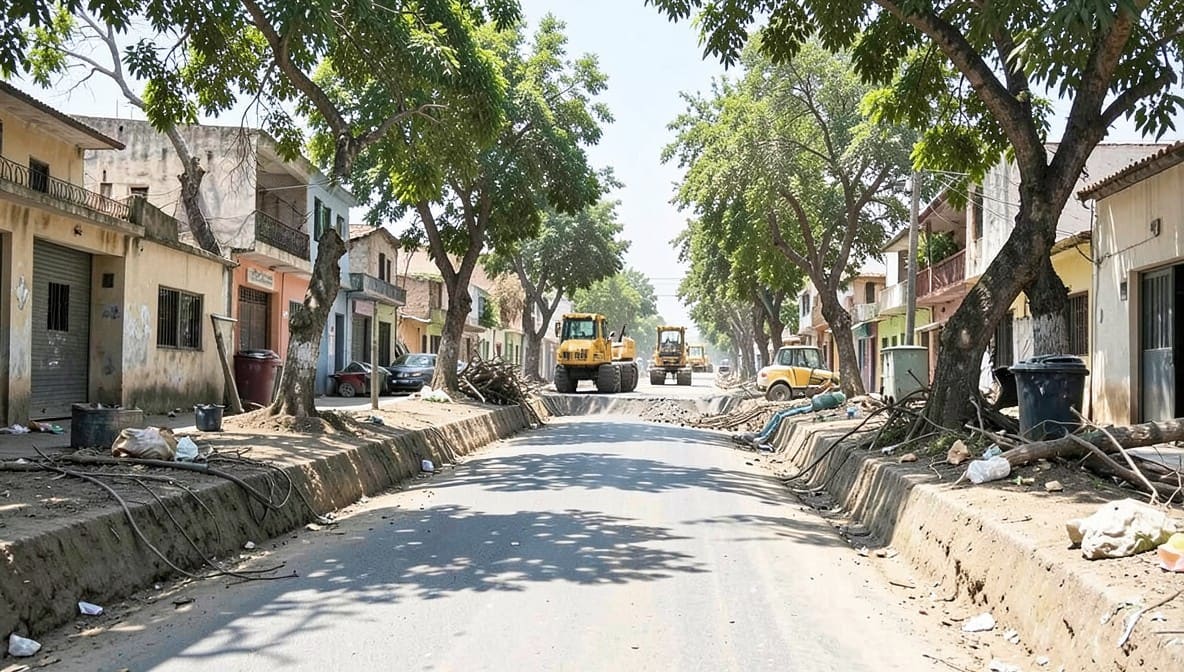
The Rajasthan High Court ruled that demolishing residential premises for road widening without prior notice, a hearing, or compensation violates constitutional due process, and ordered a committee to ensure procedural compliance and award appropriate compensation to affected owners. This decision reinforces procedural safeguards for property owners under the Rajasthan Urban Improvement framework.

Section 127 MRTP Act | Land Reservation Automatically Lapses If No Acquisition Steps Taken Within 24 Months: Bombay HC
Case Law Analysis
|Bombay High Court

Section 127 MRTP Act | Land Reservation Automatically Lapses If No Acquisition Steps Taken Within 24 Months: Bombay HC

Bombay High Court clarifies that land reservations under Section 127 of the MRTP Act automatically lapse if authorities fail to initiate acquisition proceedings within 24 months of the purchase notice. This ruling reinforces landowners' rights and imposes strict timelines on urban development authorities, preventing indefinite land lock-ins.

Article 226 | Writ Petition for Unauthorised Construction Dismissed Without Exhausting GMDA Act Appeal Remedy : Gauhati HC
Case Law Analysis
|Gauhati High Court

Article 226 | Writ Petition for Unauthorised Construction Dismissed Without Exhausting GMDA Act Appeal Remedy : Gauhati HC

Gauhati High Court reinforces the exhaustion doctrine by dismissing a writ petition challenging a demolition order for unauthorised construction, directing petitioners to first pursue the statutory appeal under the GMDA Act. The ruling underscores that Article 226 cannot be invoked bypassing available statutory remedies, impacting property owners and developers in urban development disputes.

Natural Justice in Urban Development | Third-Party Objections Mandatory Before Final Layout Permission Under AP Metropolitan Act : AP HC
Case Law Analysis
|Andhra Pradesh High Court

Natural Justice in Urban Development | Third-Party Objections Mandatory Before Final Layout Permission Under AP Metropolitan Act : AP HC

Andhra Pradesh High Court rules that the Visakhapatnam Metropolitan Region Development Authority (VMRDA) must consider third-party objections before granting final layout permission, reinforcing compliance with natural justice and statutory provisions under the Andhra Pradesh Metropolitan Region and Urban Development Authorities Act, 2016. The ruling sets a precedent for due process in urban development approvals, impacting developers, local authorities, and affected stakeholders.

Section 295(3) Municipal Corporation Act | Silence Beyond 30 Days Constitutes Deemed Sanction for Construction : MP HC
Case Law Analysis
|Madhya Pradesh High Court

Section 295(3) Municipal Corporation Act | Silence Beyond 30 Days Constitutes Deemed Sanction for Construction : MP HC

The Madhya Pradesh High Court has ruled that if a municipal corporation fails to reject a building plan application within 30 days, the approval is deemed granted under Section 295(3). This protects property owners from arbitrary demolition orders and imposes a clear duty on civic bodies to act promptly, reinforcing administrative accountability in urban development.

DCR 33(5) | MCGM’s 100% Premium Levy for Staircase Relaxation Illegal; Refund Mandated with 6% Interest : Bombay HC
Case Law Analysis
|Bombay High Court

DCR 33(5) | MCGM’s 100% Premium Levy for Staircase Relaxation Illegal; Refund Mandated with 6% Interest : Bombay HC

Bombay High Court rules that the Municipal Corporation of Greater Mumbai (MCGM) lacks authority to impose a 100% premium for staircase relaxation under DCR 33(5), citing binding Supreme Court precedent. The Court directed a refund of Rs. 3.48 crore with 6% interest within 10 weeks, reinforcing limits on municipal discretion in development charges.

Section 3C(1) Slum Act, 1971 | Preferential Right of Landowner Triggered Only After Formal Declaration : Bombay HC
Case Law Analysis
|Bombay High Court

Section 3C(1) Slum Act, 1971 | Preferential Right of Landowner Triggered Only After Formal Declaration : Bombay HC

The Bombay High Court holds that a landowner’s preferential right under the Slum Rehabilitation Scheme cannot be invoked unless a Section 3C(1) declaration is first issued by the competent authority. This ruling binds all SRA applicants and ensures procedural integrity in slum redevelopment, preventing premature claims that bypass statutory prerequisites.

Fraudulent Building Permissions Void Ab Initio | Bombay HC Rejects Regularisation of Unauthorised Construction Under Urban Development Law
Case Law Analysis
|Bombay High Court

Fraudulent Building Permissions Void Ab Initio | Bombay HC Rejects Regularisation of Unauthorised Construction Under Urban Development Law

Bombay High Court rules that fraudulently obtained building permissions are null and void, barring regularisation even for high-value projects. The judgment reinforces that unauthorised constructions-regardless of investment or completion-must be demolished to prevent environmental and urban planning violations, aligning with Supreme Court precedent on zero tolerance for illegal developments.