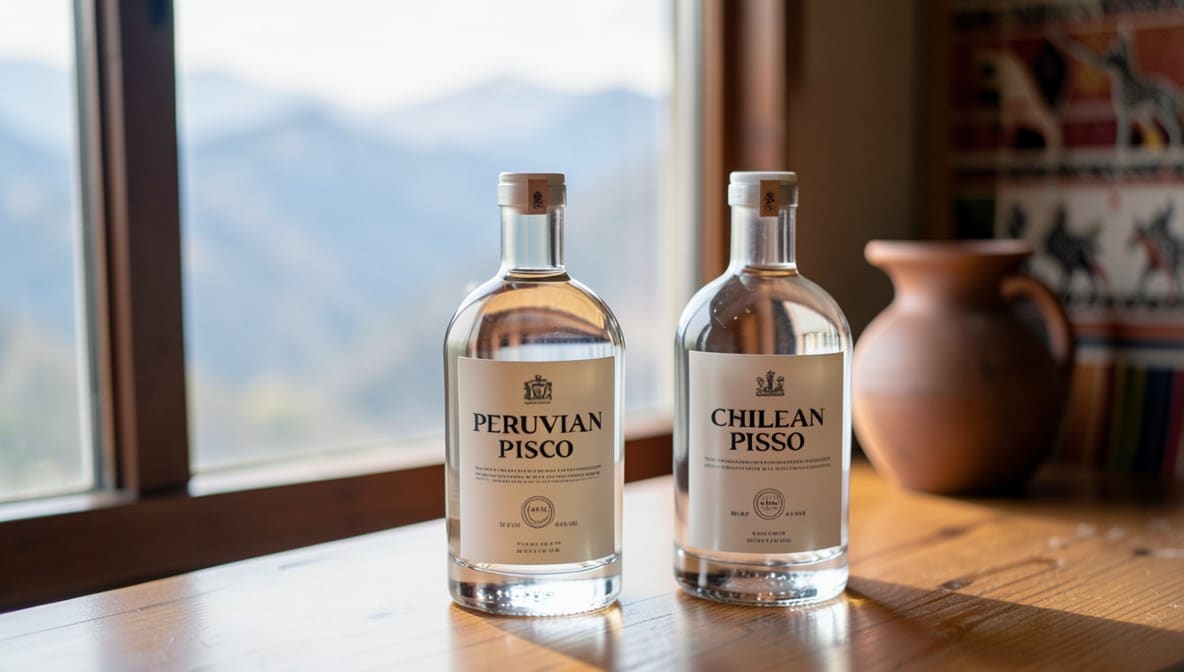
The Delhi High Court has clarified that a geographical indication cannot be registered if its exclusive use by one country would mislead consumers due to pre-existing use by another, even when both have legitimate historical ties to the name. In a landmark ruling on the dispute between Peru and Chile over the GI 'PISCO', the Court upheld the use of a geographical prefix to prevent confusion, while rejecting the notion that homonymous GIs can be granted without a formal application.
Background & Facts
The Dispute
The Embassy of Peru applied for registration of the Geographical Indication (GI) 'PISCO' under the Geographical Indications of Goods (Registration and Protection) Act, 1999, for an alcoholic beverage distilled in the departments of Lima, Ica, Arequipa, Moquegua, and parts of Tacna. The Asociacion De Productores De Pisco A.G. (ADP), representing Chilean producers, opposed the application, asserting that 'Pisco' had been used for centuries in Chile to denote a distinct but similarly named spirit produced in the Atacama Region and Coquimbo.
Key Facts
- The term 'Pisco' refers to an alcoholic beverage distilled from fermented grapes, produced in both Peru and Chile using different methods and grape varieties.
- Peru claims 'Pisco' originated from the Quechua word 'Pisku' meaning 'bird', and that the town of Pisco in Ica, Peru, has been associated with the spirit since the 15th century.
- Chile asserts that 'Pisco' derives from the Quechua word for clay pitchers ('Piscos') used to store the spirit, and that production in the Coquimbo region dates back to at least 1873.
- Chile enacted its first Pisco-specific legislation in 1931 and renamed the town 'La Unión' to 'Pisco Elqui' in 1936 to strengthen its geographical association.
- Chile has entered into Free Trade Agreements (FTAs) with over 15 countries, including the EU, USA, Canada, China, and South Korea, recognizing 'Chilean Pisco' as a protected appellation of origin.
- Peru's application for GI registration was initially rejected by the Assistant Registrar in 2009, who granted 'PERUVIAN PISCO' instead.
- The Intellectual Property Appellate Board (IPAB) overturned this in 2018, granting Peru the standalone GI 'PISCO', and dismissed ADP’s opposition.
- ADP filed a writ petition (WP(C) 3549/2020, later renumbered WP(C)-IPD 17/2021) challenging the IPAB order.
- On 7 July 2025, a Single Judge of the Delhi High Court set aside the IPAB order, restored the Assistant Registrar’s decision, and directed registration of 'PERUVIAN PISCO'.
- The Court also vacated a 2020 stay on ADP’s separate GI application for 'CHILEAN PISCO' and directed its processing.
- Peru filed the present Letters Patent Appeal (LPA 577/2025) against the Single Judge’s judgment.
Procedural History
- 1990: Peru’s Department of Industrial Property (ITINTEC) issues Directorial Resolution No. 072087-DIPI declaring PISCO an appellation of Peruvian origin.
- 19 May 2005: Peru registers 'PISCO' in WIPO’s International Registry for Appellations of Origin.
- 3 July 2009: Assistant Registrar of Trade Marks grants GI 'PERUVIAN PISCO' to Peru, rejecting standalone 'PISCO'.
- 29 November 2018: IPAB allows Peru’s appeal, sets aside Assistant Registrar’s order, and grants GI 'PISCO' to Peru.
- 3 June 2020: ADP files GI Application No. 689 for 'CHILEAN PISCO'.
- 16 June 2020: Delhi High Court stays further proceedings on ADP’s 'CHILEAN PISCO' application.
- 7 July 2025: Single Judge allows ADP’s writ petition, sets aside IPAB order, restores 'PERUVIAN PISCO' registration, and lifts stay on 'CHILEAN PISCO' application.
- 18 March 2026: Delhi High Court (Division Bench) delivers judgment on LPA 577/2025.
The Parties' Positions
Peru: Argued that 'PISCO' is exclusively Peruvian in origin, with historical, linguistic, and geographical links dating to the 15th century. Contended that Chile’s use was dishonest, achieved by renaming 'La Unión' to 'Pisco Elqui' in 1936 to appropriate goodwill. Asserted that Section 10 (homonymous GI) is inapplicable as no prior GI existed. Claimed that Section 11(6) does not empower modification of the GI name.
ADP: Argued that 'Pisco' has been used continuously in Chile since 1873, with legislative recognition, international FTAs, and global market presence. Contended that granting Peru exclusive rights to 'PISCO' would violate Section 9(a) of the GI Act by causing consumer confusion. Asserted that Section 11(6) permits the Registrar to impose conditions, including geographical prefixes, to avoid deception.
Relief Sought
Peru sought: (1) Setting aside of the Single Judge’s order dated 7 July 2025; (2) Restoration of the IPAB’s order granting GI 'PISCO' without prefix; (3) Dismissal of ADP’s 'CHILEAN PISCO' application.
ADP sought: (1) Upholding of the Single Judge’s order; (2) Recognition of 'CHILEAN PISCO' as a homonymous GI; (3) Rejection of Peru’s standalone 'PISCO' application.
The Legal Issue
Can a geographical indication be registered as a standalone mark when the same name is used by another country for a similar product, and can the Registrar, under Section 11(6) of the GI Act, impose a geographical prefix to avoid consumer confusion?
Arguments Presented
For the Appellant (Peru)
Peru contended that 'PISCO' is inherently Peruvian, with historical, linguistic, and geographical roots dating to pre-colonial times. It argued that Chile’s use of the term was a recent, dishonest appropriation, achieved by renaming 'La Unión' to 'Pisco Elqui' in 1936. Peru asserted that Section 10 of the GI Act, which governs homonymous GIs, is inapplicable because no prior GI for 'PISCO' existed when Peru filed its application. It further argued that Section 11(6) does not empower the Registrar to alter the GI name itself, only to impose procedural or administrative conditions. Peru relied on Section 2(1)(e) and Section 16(1), claiming that once the criteria for a GI are satisfied, the Registrar must register the exact mark applied for.
For the Respondent (ADP)
ADP argued that 'Pisco' is a shared designation with deep historical roots in both Peru and Chile, supported by over a century of continuous use, legislative recognition in Chile, and international FTAs that explicitly recognize 'Chilean Pisco'. It contended that granting Peru exclusive rights to 'PISCO' would violate Section 9(a) of the GI Act, which prohibits registration likely to deceive or cause confusion. ADP emphasized that Section 11(6) grants the Registrar broad discretion to accept applications subject to modifications, including geographical prefixes, to prevent consumer deception. It cited WIPO guidelines supporting the use of qualifiers to differentiate homonymous GIs.
The Court's Analysis
The Court began by affirming that satisfaction of Section 2(1)(e) - defining a GI as an indication linking goods to a geographical origin with qualities attributable to that origin - does not guarantee registration. Section 9 of the GI Act imposes absolute prohibitions, and its language - particularly the use of the word 'shall' - leaves no room for discretion.
"Registration of GIs, 'the use of which would be likely to deceive or cause confusion', and 'which falsely represent to the persons that the goods originate in another territory, region or locality' is absolutely proscribed under clauses (a) and (g) of Section 9."
The Court found that both Peru and Chile had established long-standing, legitimate use of the term 'Pisco' for their respective spirits. While Peru claimed historical primacy, the Court held that allegations of dishonest adoption - such as Chile’s 1936 renaming of 'La Unión' - were unsupported by credible evidence and legally irrelevant under Section 9(a). The Court emphasized that Section 9(a) is agnostic to prior use, goodwill, or intent; it focuses solely on likelihood of consumer confusion.
The Court further held that Free Trade Agreements (FTAs) between Chile and over 15 nations, which explicitly recognize 'Chilean Pisco', constitute credible evidence of international recognition and consumer identification. These agreements were not mere commercial compromises but indicators of the term’s established use as a geographical indicator.
"The relevance of the FTAs is not for the purpose of establishing goodwill or reputation of the GI in India, but to establish that the GI is an indicator of origin of the indication identifying the goods concerned in the country, region or territory for which registration of the GI is sought."
The Court concluded that granting Peru the standalone GI 'PISCO' would mislead consumers into believing that all 'Pisco' originates from Peru, when in fact a distinct product from Chile also bears the same name. This would violate Section 9(a).
The Court then addressed whether the Single Judge was justified in granting 'PERUVIAN PISCO'. It rejected the premise that this was a homonymous GI under Section 10, noting that Section 10 requires an existing registered GI to which a new homonymous one is being added - a condition not met here. However, the Court held that Section 11(6) empowers the Registrar to accept an application subject to modifications, conditions, or limitations - a power broad enough to include adding a geographical prefix.
"The words 'amendments, modification, conditions or limitations', as employed in Section 11(6), are as wide as all outdoors. They are unfettered by any caveats contained in the statute or outside it."
The Court held that the addition of 'PERUVIAN' as a prefix to 'PISCO' was a permissible condition under Section 11(6) to avoid confusion, and that the Single Judge was correct in upholding the Assistant Registrar’s decision.
The Verdict
The appeal was dismissed. The Delhi High Court upheld the registration of the GI as 'PERUVIAN PISCO' for Peru, rejecting the standalone 'PISCO'. The Court directed that the Registrar shall register the GI with the prefix 'PERUVIAN' to prevent consumer confusion. The stay on ADP’s application for 'CHILEAN PISCO' remains lifted, and the Registrar is directed to process it in accordance with law. No costs were awarded.
What This Means For Similar Cases
Geographic Prefixes Are a Valid Tool to Prevent Confusion
- Practitioners may now rely on Section 11(6) to argue for the addition of geographic qualifiers (e.g., 'French Champagne', 'Indian Darjeeling') to GI applications where shared usage exists.
- The Registrar has broad discretion to impose such conditions even if the applicant objects, provided the modification prevents consumer deception.
- This approach aligns with international practices under WIPO guidelines and avoids the need for formal homonymous GI applications under Section 10.
Section 9(a) Overrides Historical Claims and Prior Use
- Even if an applicant has the oldest documented use of a term, registration may be denied if another jurisdiction has established, legitimate, and continuous use of the same term for a similar product.
- Evidence of international recognition - such as FTAs, foreign registrations, and trade records - is admissible and often decisive in proving likelihood of confusion.
- Allegations of 'dishonest adoption' or 'misappropriation' are legally irrelevant under Section 9(a); the focus is solely on consumer perception.
Homonymous GI Applications Must Be Explicitly Filed
- Section 10 cannot be invoked retroactively to justify modifications to an existing application.
- To register a homonymous GI, a separate application must be filed, disclosing the existence of the prior GI and measures to differentiate the two.
- This prevents parties from circumventing procedural requirements by seeking modifications under Section 11(6) when Section 10 is the proper route.