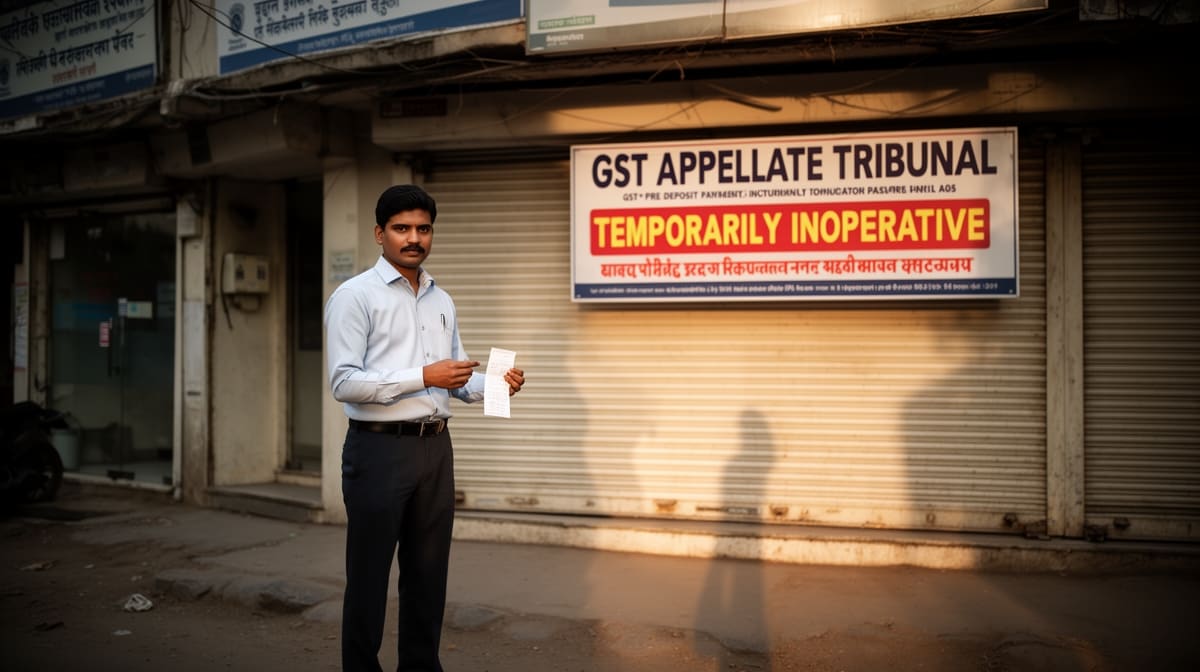
The Allahabad High Court has disposed of a writ petition by extending the appeal period for GST matters to June 30, 2026, due to the delayed constitution of the GST Appellate Tribunal. The Court directed that appeals filed within this period shall be entertained without limitation objections, and prior deposits made under interim orders shall be treated as compliance with Section 112(8) of the CGST Act. This judgment provides clarity on procedural compliance for taxpayers affected by the delayed operationalization of the GST Tribunal.
Background & Facts
The Dispute
The petitioner, M/S L.D. Goyal Steels Pvt. Ltd., filed a writ petition before the Allahabad High Court challenging an order passed under Sections 107 or 108 of the Central Goods and Services Tax Act, 2017 (CGST Act). The petitioner sought relief due to the non-constitution of the GST Appellate Tribunal, which prevented the filing of an appeal under Section 112 of the CGST Act.
Key Facts
- The petitioner was aggrieved by an order passed under the CGST Act, necessitating an appeal before the GST Appellate Tribunal
- The GST Appellate Tribunal was not constituted at the time of filing the writ petition, creating a procedural vacuum
- The Central Government constituted the GST Tribunals vide order dated 24.09.2025, with Members appointed vide Office Order No. 03/2025 dated 26.12.2025
- Members were requested to join their respective Benches by 21.01.2026
- The Central Government notified the procedure for the GST Appellate Tribunal under Notification No. CG-DL-E-17092025-266217 dated 17.09.2025
Procedural History
- Date of Impugned Order: Not specified in the judgment, but presumably passed under Sections 107 or 108 of the CGST Act
- Date of Writ Petition: WRIT TAX No. 472 of 2023 filed before the Allahabad High Court
- Interim Order: The Court directed the petitioner to deposit a certain amount, in addition to the amount paid under Section 107(6) of the CGST Act
- Constitution of GST Tribunal: 24.09.2025 (order), 26.12.2025 (appointment of Members), 21.01.2026 (request to join Benches)
- Notification of Procedure: 17.09.2025 (Notification No. CG-DL-E-17092025-266217)
- Date of Judgment: 07.05.2026
Relief Sought
The petitioner sought permission to file an appeal before the GST Appellate Tribunal without facing objections on the grounds of limitation, given the delayed constitution of the Tribunal. Additionally, the petitioner sought recognition of the deposit made under the interim order as compliance with Section 112(8) of the CGST Act.
The Legal Issue
The central question before the Court was whether taxpayers could be permitted to file appeals before the GST Appellate Tribunal beyond the prescribed limitation period, given the delayed constitution and operationalization of the Tribunal. Further, the Court had to determine whether deposits made under interim orders could be treated as compliance with Section 112(8) of the CGST Act.
Arguments Presented
For the Petitioner
The petitioner contended that the non-constitution of the GST Appellate Tribunal had deprived them of their statutory right to appeal under Section 112 of the CGST Act. They argued that the delay in constituting the Tribunal should not prejudice their right to seek redressal, and thus, the appeal period should be extended. Additionally, the petitioner sought recognition of the deposit made under the interim order as sufficient compliance with Section 112(8).
For the Respondent
The learned Additional Chief Standing Counsel (ACSC) for the State-respondents did not present substantive arguments against the petitioner’s contentions. The focus of the judgment remained on the procedural relief to be granted in light of the delayed constitution of the Tribunal.
The Court's Analysis
The Court observed that the GST Appellate Tribunal had been constituted and its Members appointed, indicating that the Tribunal was now functional. The Court noted that Notification No. CG-DL-E-17092025-266217 dated 17.09.2025 had been issued to regulate the procedure and functioning of the Tribunal. Given these developments, the Court held that no useful purpose would be served by keeping the matter pending before it.
The Court further analyzed Section 112(8) of the CGST Act, which mandates the deposit of a certain amount as a precondition for entertaining an appeal. The Court directed that the deposit made by the petitioner under the interim order be treated as compliance with this provision. This approach ensured that the petitioner would not be prejudiced by the delayed constitution of the Tribunal.
"Once the procedure has been notified and appointments of the Presidents and the Members have been made to the respective Benches of the GST Appellate Tribunal, which itself indicates the functioning of GST Appellate Tribunal are put to motion, no useful purpose will be served in keeping the matter pending before this Court."
The Court also provided detailed directions for the filing and processing of the appeal, including timelines for curing defects and the requirement to furnish proof of deposit.
The Verdict
The Allahabad High Court disposed of the writ petition with the following directions:
- The petitioner is permitted to prefer an appeal before the GST Appellate Tribunal up to June 30, 2026
- Appeals filed within this period shall be entertained without raising any objection regarding limitation
- The deposit made by the petitioner under the interim order shall be treated as compliance with Section 112(8) of the CGST Act
- The petitioner must furnish a certified copy of the interim order along with proof of deposit
- The Registrar of the GST Appellate Tribunal or the designated officer shall intimate the petitioner of any defects within three weeks of filing the appeal
- The petitioner shall cure any defects within 30 days of such intimation
- The appeal shall be decided on its own merits in accordance with the law
What This Means For Similar Cases
Extension of Limitation Period Due to Procedural Delays
- Taxpayers who were unable to file appeals due to the delayed constitution of the GST Appellate Tribunal can now file appeals up to June 30, 2026 without facing limitation objections
- This judgment sets a precedent for extending limitation periods in cases where statutory tribunals are not constituted in a timely manner
Compliance with Pre-Deposit Requirements
- Deposits made under interim orders of High Courts can be treated as compliance with Section 112(8) of the CGST Act, provided proof of deposit is furnished
- Practitioners should ensure that certified copies of interim orders and proof of deposit are submitted along with the appeal to avoid procedural hurdles
Defect Rectification Timeline
- The GST Appellate Tribunal or its designated officer must intimate defects within three weeks of filing the appeal
- Appellants must cure defects within 30 days of intimation, failing which the appeal may be rejected
- This timeline emphasizes the importance of procedural diligence and timely compliance with defect rectification requirements