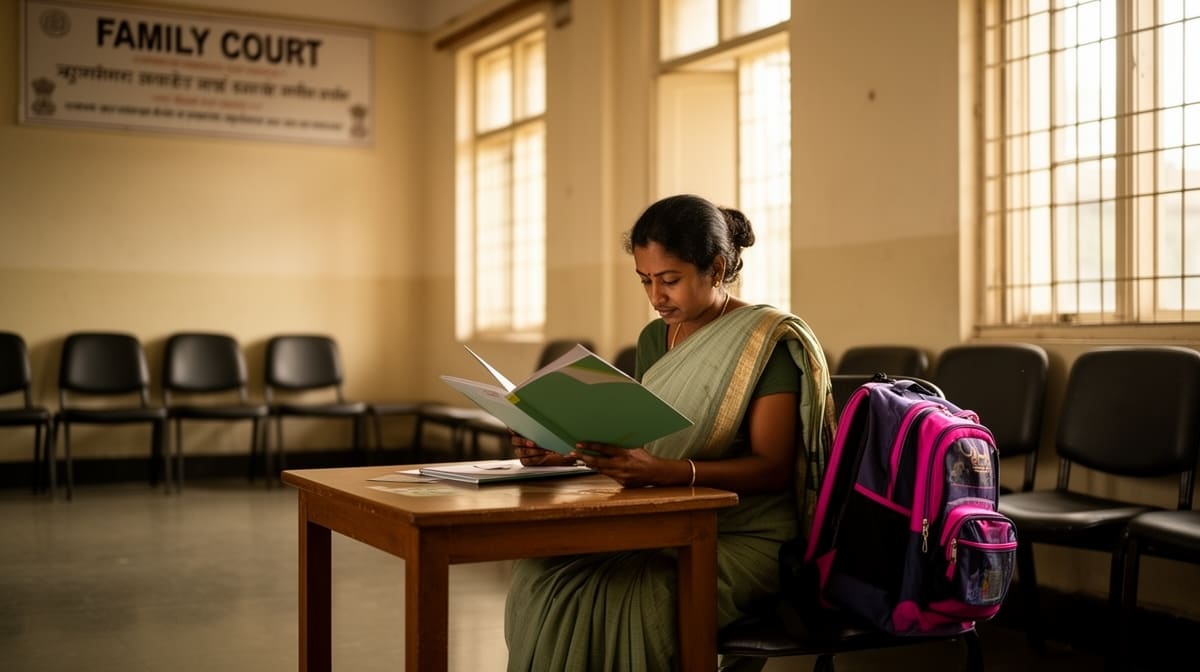
The Punjab and Haryana High Court has clarified that transfer of matrimonial proceedings under Section 11/12 of the Hindu Marriage Act must prioritise the convenience of the wife, particularly when she lacks independent income and related litigation is already pending in her preferred jurisdiction. The judgment underscores that mere allegations of misconduct cannot defeat a transfer application when practical considerations favour the wife's access to justice.
Background & Facts
The Dispute
The applicant, Momal Preet Kaur, sought transfer of a petition filed by her husband, Jarmanjit Singh, under Section 11/12 of the Hindu Marriage Act from the Family Court, Amritsar, to Ludhiana. The marriage, solemnised on 30 April 2024, had no children, and the parties were living separately due to matrimonial disputes.
Procedural History
The key litigations between the parties included:
- HMA/2359/2024: Petition under Section 11/12 HMA filed by the husband in Amritsar, sought to be transferred.
- MNT-125/8353/2025: Maintenance petition filed by the wife in Ludhiana, at the appearance stage.
- COMA/23611/2025: Petition under the Protection of Women from Domestic Violence Act, pending in Ludhiana, with the husband already appearing.
The wife, lacking independent income, relied on her parental family for support. The distance between Amritsar and Ludhiana was approximately 300 km.
Positions Before the Court
- Applicant-Wife: Argued that her financial dependence, pending litigation in Ludhiana, and the logistical burden of travelling 300 km justified the transfer.
- Respondent-Husband: Opposed the transfer, alleging the wife had remarried during the subsistence of their marriage, rendering her disentitled to relief. However, he failed to file a reply despite opportunities.
The Legal Issue
The central question was whether Section 21A of the Hindu Marriage Act, read with Section 24 of the Code of Civil Procedure, permits transfer of matrimonial proceedings to the wife’s preferred jurisdiction when:
- She lacks independent income,
- Related litigation is already pending there, and
- The husband’s opposition lacks substantive grounds.
Arguments Presented
For the Applicant-Wife
- Financial Dependence: The wife had no source of income and relied on her parental family.
- Pending Litigation: Two related cases (maintenance and domestic violence) were already pending in Ludhiana, with the husband appearing in one.
- Logistical Burden: The distance of 300 km made travel impractical for her.
- Procedural Lapse: The husband failed to file a reply, weakening his opposition.
For the Respondent-Husband
- Alleged Misconduct: Contended the wife had remarried during their marriage, rendering her disentitled to relief.
- No Substantive Reply: Despite opportunities, no formal reply was filed to support his objections.
The Court's Analysis
The Court emphasised that transfer applications under Section 21A HMA must balance the convenience of both parties, but practical considerations often favour the wife, particularly when she is financially dependent. Key observations included:
"Even though, counsel for the respondent has submitted about the conduct of the applicant... but however, the same need not be appraised, while dealing with the transfer application. The same will be taken care of by the Court, where the petition under Section 11/12 of the Hindu Marriage Act, is already pending."
The Court held that allegations of misconduct cannot override practical impediments to justice, such as:
- The wife’s lack of independent income,
- The pendency of related litigation in Ludhiana, and
- The husband’s failure to substantiate his opposition with a reply.
The judgment distinguished between adjudicating the merits of the matrimonial dispute and ensuring access to justice. The former would be addressed by the trial court, while the latter required prioritising the wife’s convenience.
The Verdict
The transfer application was allowed. The petition under Section 11/12 HMA, titled Jarmanjit Singh v. Momal Preet Kaur, was transferred from the Family Court, Amritsar, to the Family Court, Ludhiana. The parties were directed to appear before the Ludhiana court within one month.
What This Means For Similar Cases
Convenience of the Wife Prevails Over Procedural Objections
- Financial Dependence: Courts may favour transfer when the wife lacks independent income, particularly if she relies on parental support.
- Pending Litigation: If related cases (maintenance, domestic violence) are already pending in the wife’s preferred jurisdiction, transfer is likely to be granted.
- Husband’s Lapse: Failure to file a reply or substantiate objections weakens the husband’s opposition to transfer.
Allegations of Misconduct Are Not Determinative
- Merits vs. Access: Courts will not adjudicate allegations of misconduct (e.g., remarriage) in transfer applications. Such issues are left to the trial court.
- Focus on Practicality: The burden of travel, financial constraints, and pendency of related cases are decisive factors.
Strategic Considerations for Practitioners
- For Wives Seeking Transfer:
- Highlight financial dependence and logistical challenges (e.g., distance, pending litigation).
- Emphasise the husband’s failure to oppose substantively (e.g., no reply filed).
- For Husbands Opposing Transfer:
- File a detailed reply addressing the wife’s claims.
- Avoid relying solely on allegations of misconduct, as these are not determinative in transfer applications.
- Argue alternative arrangements (e.g., video conferencing, reimbursement of travel costs) to mitigate inconvenience.