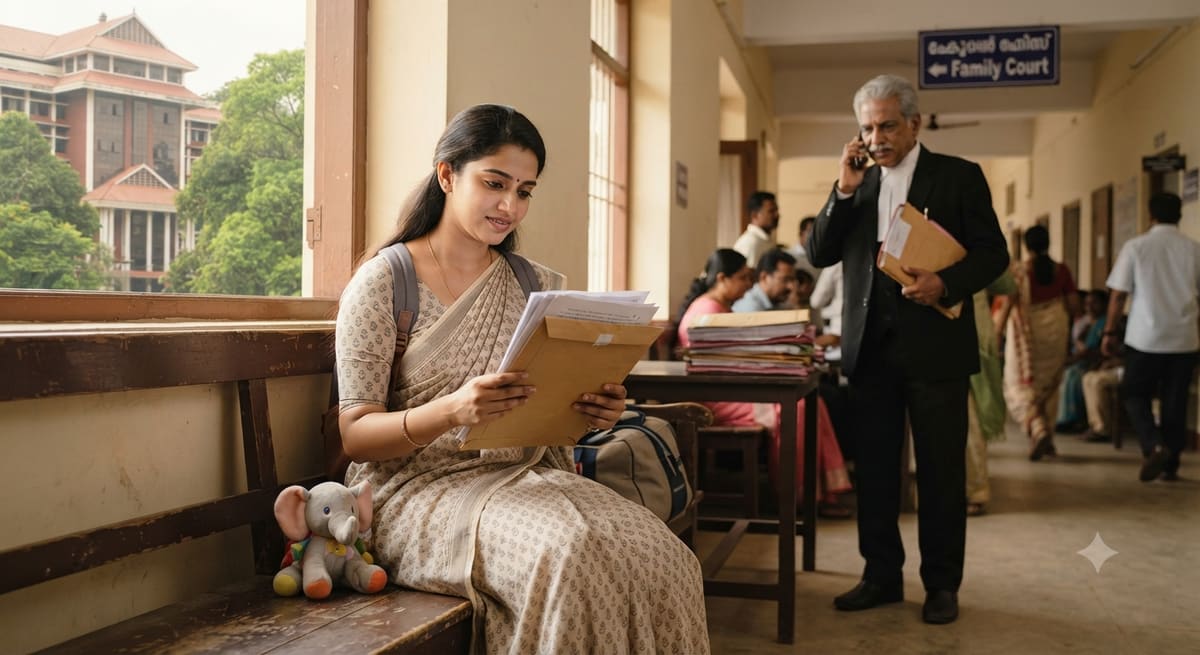
In a significant ruling on transfer petitions under Section 24 of the Civil Procedure Code, the Karnataka High Court has clarified that the convenience of a financially dependent wife residing with her parents must be prioritized over the travel inconvenience of the husband. The judgment underscores the court's discretion in balancing the hardships of both parties while ensuring the transferee court's competence to adjudicate the matter.
Background & Facts
The Dispute
The petitioner, Smt. Monika, wife of the respondent Sri. Abhilash J., filed a transfer petition under Section 24 of the Civil Procedure Code (CPC) seeking to transfer M.C. No. 14/2026 pending before the Principal Judge, Family Court, Chikkamagaluru, to the Principal Judge, Family Court, Bellary. The petitioner, a homemaker with no independent income, resides with her parents in Bellary, approximately 283 kilometers from Chikkamagaluru. She contended that traveling such a distance for every hearing would cause her significant hardship.
Key Facts
- The petitioner and respondent met and married while the respondent was working in Bellary
- The petitioner is financially dependent on her parents and has no independent income
- The distance between Bellary and Chikkamagaluru is approximately 283 kilometers
- The respondent is employed and has an independent income
- The respondent did not dispute the petitioner's financial dependence or her residence in Bellary
- The respondent did not claim to be paying any maintenance or litigation expenses to the petitioner
Procedural History
- Date of Marriage: Not specified, but the couple met while the respondent was working in Bellary
- Date of Filing M.C. No. 14/2026: Not explicitly mentioned, but the transfer petition (CP No. 100088 of 2026) was filed in 2026
- 03.07.2026: The Karnataka High Court, Dharwad Bench, pronounced the order allowing the transfer petition
The Parties' Positions
Petitioner's Contentions
- The petitioner is a homemaker with no independent income
- She resides with her parents in Bellary, 283 kilometers from Chikkamagaluru
- Traveling to Chikkamagaluru for hearings would cause her significant hardship
- The respondent is employed and has an independent income
- The respondent has not provided any financial support for her maintenance or litigation expenses
Respondent's Contentions
- Transferring the case to Bellary would cause him significant inconvenience as he would have to travel 280 kilometers
- He prayed for the case to be transferred to a court equidistant from both parties
- Cited the decision in Smt. Meenakshamma and others v. Smt. Laxmi and others (NC:2026:KHC-D:6149), where the court transferred a case to a location convenient for both parties
Relief Sought
The petitioner sought the transfer of M.C. No. 14/2026 from the Principal Judge, Family Court, Chikkamagaluru, to the Principal Judge, Family Court, Bellary, to mitigate her hardship in attending hearings.
The Legal Issue
The central question before the court was whether the hardship faced by the petitioner, a financially dependent wife residing with her parents, outweighed the inconvenience caused to the respondent by transferring the case to the Family Court at Bellary, and whether the court could exercise its discretion under Section 24 CPC to transfer the case to a location other than the one prayed for by the petitioner.
Arguments Presented
For the Petitioner
The petitioner's counsel argued that:
- The petitioner is financially dependent and resides with her parents in Bellary
- Traveling to Chikkamagaluru would cause her significant hardship
- The respondent is employed and has an independent income, making his travel inconvenience less severe
- The respondent has not provided any financial support for her maintenance or litigation expenses
- The transferee court (Family Court, Bellary) is competent to try the matter
For the Respondent
The respondent's counsel contended that:
- Transferring the case to Bellary would cause him significant inconvenience as he would have to travel 280 kilometers
- The court should consider transferring the case to a location equidistant from both parties, as done in Smt. Meenakshamma and others v. Smt. Laxmi and others
- The respondent's inconvenience should be given equal weight in the court's discretion
The Court's Analysis
The court examined Section 24 CPC, which empowers the High Court or District Court to transfer any suit, appeal, or proceeding to any court subordinate to it that is competent to try or dispose of the matter. The court emphasized that while exercising this power, it must ensure that the transferee court is competent to adjudicate the matter.
The court observed that the respondent did not dispute the petitioner's financial dependence or her residence in Bellary. It noted that the respondent is employed and has an independent income, whereas the petitioner has no source of income and relies on her parents. The court also considered that the respondent had not provided any financial support to the petitioner for her maintenance or litigation expenses.
Addressing the respondent's reliance on Smt. Meenakshamma and others v. Smt. Laxmi and others, the court distinguished the present case. It held that transferring the case to a third location would likely cause inconvenience to both parties rather than resolving it. The court concluded that the petitioner's hardship outweighed the respondent's inconvenience, particularly given the respondent's financial independence and the lack of support provided to the petitioner.
"Section 24 of CPC stipulates the general power of the High Court or the District Court of withdrawal and transfer of any suit, appeal or other proceedings pending before it or any court subordinate to it, for its trial or disposal. The said provision empowers transfer of any suit, appeal or other proceedings to any court subordinate to it, and which is competent to try or dispose of the same. Thus, it becomes clear that while exercising the power of transfer under Section 24 of CPC, the High Court or the District Court is required to see whether the transferee court is a court subordinate to it and whether it is competent to try or dispose of the suit, appeal or other proceedings under transfer."
The Verdict
The court allowed the transfer petition and passed the following orders:
- The civil petition (CP No. 100088 of 2026) was allowed
- M.C. No. 14/2026 pending before the Principal Judge, Family Court, Chikkamagaluru, was withdrawn and transferred to the Principal Judge, Family Court, Bellary, for disposal in accordance with the law
- The parties were directed to appear before the Principal Judge, Family Court, Bellary, on 31.07.2026 at 11:00 a.m. to take notice of further proceedings
- The office was directed to communicate the order to the concerned courts forthwith
What This Means For Similar Cases
Financial Dependence and Residence Are Key Factors in Transfer Petitions
- Courts are likely to prioritize the convenience of financially dependent parties, particularly in matrimonial disputes
- The residence of the petitioner, especially if they are dependent on family support, will be a significant factor in determining the outcome of transfer petitions
- Parties opposing transfer petitions must demonstrate not only their own inconvenience but also their willingness to mitigate the other party's hardship (e.g., by offering financial support)
Courts Will Not Automatically Transfer Cases to Equidistant Locations
- While the respondent cited a precedent where the court transferred a case to an equidistant location, the court in this case refused to do so
- The court emphasized that transferring the case to a third location may cause inconvenience to both parties rather than resolving it
- Practitioners should argue the specific hardships of their clients rather than relying on general principles of equidistance
Competence of the Transferee Court Is Non-Negotiable
- Section 24 CPC requires that the transferee court be competent to try the matter
- Parties must ensure that the court to which they seek transfer has the requisite jurisdiction and competence
- Mere convenience without competence will not suffice to grant a transfer petition