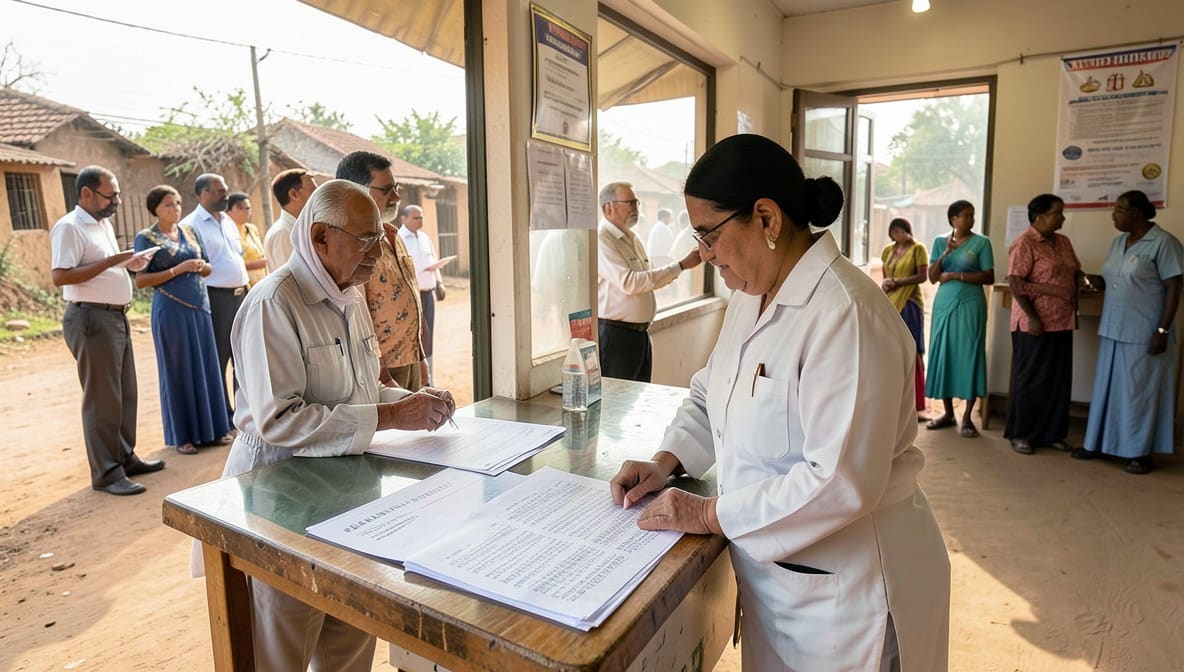
The Rajasthan High Court has reinforced the Election Commission of India's guidelines governing the appointment of Booth Level Officers (BLOs), holding that priority must be given to employees who are registered electors in the concerned polling station. The judgment underscores the mandatory compliance with procedural safeguards in electoral administration, setting aside orders that failed to adhere to these norms and directing reconsideration of appointments within strict timelines.
Background & Facts
The Dispute
The petitioners - Narsi Kumar Balai, Meewa Ram, and Bharat Singh Dhobi - are Teacher Grade III Level 2 employees in Rajasthan's education department. They were appointed as Booth Level Officers (BLOs) in polling stations where they were not registered as electors, contrary to the Election Commission of India's guidelines issued on 09.06.2025. The impugned orders dated 20.03.2025 and 22.07.2025 directed their posting as BLOs, prompting the present writ petition.
Key Facts
- The Election Commission of India's guidelines mandate that a BLO must be a registered elector in the polling station where they are appointed.
- Clause 1.1 of the guidelines requires appointment of Group C or above regular employees enrolled as electors in the concerned polling station.
- Clause 1.2 permits appointment of Anganwadi workers, contract teachers, or central government employees only if they are registered electors in the polling station.
- Clause 1.3 allows appointment of employees from outside the polling station only if no eligible candidates under Clauses 1.1 or 1.2 are available, subject to prior approval of the Chief Electoral Officer (CEO).
- The petitioners were appointed as BLOs without verifying the availability of eligible local electors, and the impugned orders did not record non-availability of such candidates.
Procedural History
- 20.03.2025: First impugned order appointing petitioners as BLOs in polling stations where they were not registered electors.
- 22.07.2025: Second impugned order reaffirming the appointment.
- 07.07.2026: Present writ petition (SBCWP No. 5696/2026) filed before the Rajasthan High Court, challenging the impugned orders.
- The petitioners relied on a coordinate bench judgment in Rajesh Kumar Meena v. State of Rajasthan & Anr (SBCWP No. 352/2026), decided on 15.01.2026, which held that BLO appointments must comply with the Election Commission's guidelines.
Relief Sought
The petitioners sought the following reliefs:
- Quashing of the impugned orders dated 20.03.2025 and 22.07.2025 as illegal.
- Continuation of the petitioners as Teacher Grade III Level 2 in their respective schools.
- Declaration that the respondents' action of posting the petitioners as BLOs was illegal.
- Any other relief deemed just and proper by the court.
The Legal Issue
The central question was whether the appointment of Booth Level Officers (BLOs) in polling stations where they are not registered electors violates the Election Commission of India's guidelines, and if so, whether such appointments can be set aside without recording non-availability of eligible local electors.
Arguments Presented
For the Petitioners
- The petitioners' counsel argued that the impugned orders violated the Election Commission's guidelines, which prioritize appointment of local electors as BLOs.
- The appointment orders did not record non-availability of eligible candidates under Clauses 1.1 and 1.2 of the guidelines, rendering the appointments illegal.
- Reliance was placed on the judgment in Rajesh Kumar Meena v. State of Rajasthan & Anr, which held that compliance with the guidelines is mandatory.
For the Respondents
- The respondents did not file a detailed counter-affidavit or contest the petitioners' contentions.
- The judgment does not record any arguments advanced by the respondents.
The Court's Analysis
The court relied on the coordinate bench judgment in Rajesh Kumar Meena v. State of Rajasthan & Anr, which interpreted the Election Commission's guidelines as follows:
"A reading of the above clause makes out that the employees who are falling under Group-C category are required to be appointed as Booth Level Officer in the booth in which such employee is registered as an elector. If the officers of Group - C are not available in the booth then they have to resort to any other Anganwadi workers, contract teachers or Central Government employees who are registered as voters in that particular booth. If the above two category employees are not found registered as elector in the booth, then any other person from any other areas can be appointed in that booth, even though they are not registered as voters in that booth."
The court observed that the impugned orders did not indicate that the appointment of the petitioners as BLOs was necessitated by the non-availability of eligible local electors. The failure to record such non-availability rendered the appointments procedurally flawed.
The court emphasized that the guidelines are binding and that deviation from them requires proper justification. Since the respondents failed to demonstrate compliance with the guidelines, the court held that the petitioners were entitled to relief.
The Verdict
The writ petition was disposed of in terms of the judgment in Rajesh Kumar Meena v. State of Rajasthan & Anr. The court directed the following:
- The petitioners are at liberty to make a representation within one week of the judgment, indicating the names of eligible employees available in the concerned polling stations.
- The respondent authorities shall reconsider the appointment of the petitioners as BLOs and pass appropriate orders within 15 days of receiving the representation.
- No coercive steps shall be taken against the petitioners for not joining as BLOs until the representation is disposed of.
- If the authorities find that no eligible candidates under Clauses 1.1 or 1.2 are available, they may resort to Clause 1.3 of the guidelines.
What This Means For Similar Cases
Mandatory Compliance with Election Commission Guidelines
- Public authorities must strictly adhere to the Election Commission's guidelines when appointing BLOs.
- Appointments made without verifying the availability of eligible local electors are vulnerable to challenge and may be set aside by courts.
Procedural Safeguards Are Non-Negotiable
- The judgment reinforces that procedural compliance is not a mere formality but a legal requirement.
- Appointment orders must explicitly record non-availability of eligible candidates under Clauses 1.1 and 1.2 before resorting to Clause 1.3.
- Failure to do so may result in judicial intervention and quashing of orders.
Practical Takeaways for Practitioners
- Challenge illegal appointments: Practitioners can challenge BLO appointments where the appointee is not a registered elector in the concerned polling station, and the order does not record non-availability of eligible candidates.
- Seek timely relief: Petitioners can seek interim protection against coercive actions pending reconsideration of their appointments.
- Ensure representation: Affected employees should file representations within the stipulated timeline (one week) to trigger the reconsideration process.