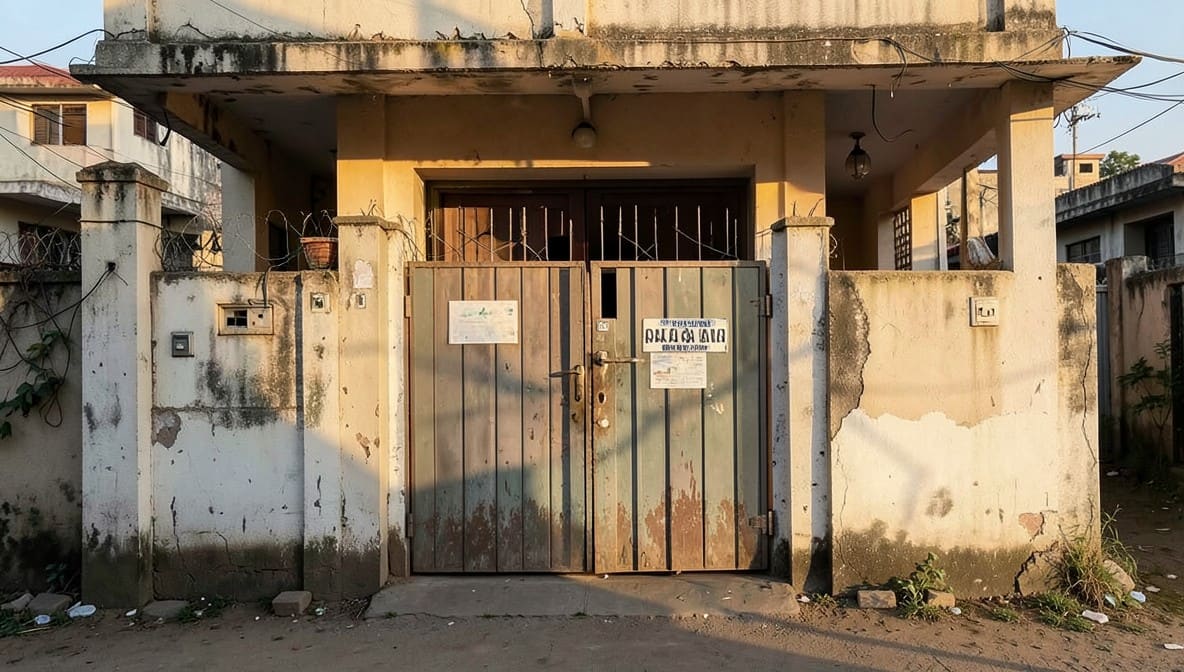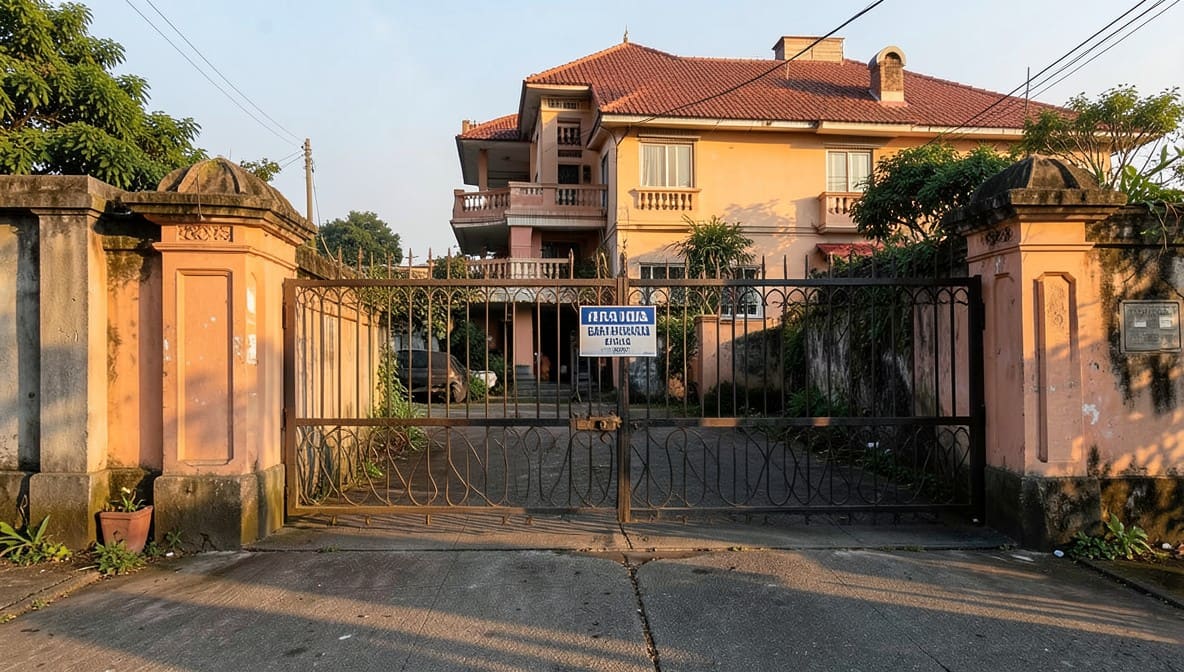
The Kerala High Court has clarified that a person who is neither a borrower nor a guarantor may still invoke Section 17 of the SARFAESI Act to challenge asset recovery measures affecting their property. In a significant procedural ruling, the Court stayed the proposed sale of property pending issuance of a certified copy of the Debt Recovery Tribunal’s order, ensuring statutory remedies remain accessible.
Background & Facts
The Dispute
The appellant, Vincy Viswanathan, is a third party whose property was attached by The Indian Bank under the Securitisation and Reconstruction of Financial Assets and Enforcement of Security Interest Act, 2002 (SARFAESI Act). The appellant is not a borrower or guarantor under the loan agreement. She filed an application under Section 17 of the SARFAESI Act before the Debt Recovery Tribunal (DRT) seeking relief from the attachment and proposed sale of her property. The DRT allegedly rejected the application without assigning a case number, reportedly on the ground that only borrowers or guarantors are entitled to file such applications.
Key Facts
- The appellant is the owner of a property located at Kottapparambil House, Varappuzha, Ernakulam District
- The property was attached by The Indian Bank’s Asset Recovery Management Branch under SARFAESI Act proceedings
- The appellant is in actual possession of the property and has not been dispossessed
- No copy of the DRT’s order rejecting her Section 17 application has been provided to her
- The appellant filed a writ petition (WP(C) No. 19345 of 2026) before the Kerala High Court on the grounds of denial of statutory remedy
- The High Court’s single judge dismissed the writ petition on 08.06.2026
- The appellant filed this writ appeal on 15.06.2026
- On 10.06.2026, the appellant applied for a certified copy of the DRT’s order
- The DRT’s order has not been uploaded to any official server
Procedural History
- Date of attachment: Not specified in judgment, but occurred prior to Section 17 application
- Date of Section 17 application: Not specified, but filed before DRT prior to 08.06.2026
- Date of DRT order: Not specified, but rejected without assigning case number
- 08.06.2026: Single Judge of Kerala High Court dismissed WP(C) No. 19345 of 2026
- 10.06.2026: Appellant applied for certified copy of DRT order
- 15.06.2026: Writ Appeal No. 1200 of 2026 heard and decided by Division Bench
The Parties' Positions
Appellant’s Position: The appellant is not a borrower or guarantor but is a third-party owner whose property has been wrongfully attached. She has a statutory right under Section 17 to challenge the bank’s action. The DRT’s refusal to entertain her application without a reasoned order or case number violates her right to appeal under Section 18.
Respondent Bank’s Position: The bank contended that Section 17 is only available to borrowers or guarantors, and since the appellant is neither, her application is not maintainable. The bank did not dispute that no copy of the DRT order was provided.
Relief Sought
The appellant sought quashing of the DRT’s order, setting aside the attachment, and directions to the bank to cease all coercive action against the property. She also sought a direction for issuance of the certified copy of the DRT order.
The Legal Issue
Can a person who is neither a borrower nor a guarantor invoke Section 17 of the SARFAESI Act to challenge the enforcement of security interest affecting their property, and can the Debt Recovery Tribunal reject such an application without providing a reasoned order or case number?
Arguments Presented
For the Appellant
Learned counsel for the appellant relied on the statutory language of Section 17 of the SARFAESI Act, which permits any person - whether borrower, guarantor, or third party - to file an application if their interest in the secured asset is affected by the bank’s action. He argued that the DRT’s refusal to entertain the application on the ground of maintainability, without issuing a reasoned order or case number, effectively nullifies the statutory right of appeal under Section 18. He further submitted that the failure to provide a certified copy of the order renders the appellate remedy illusory.
For the Respondent
The Standing Counsel for the Bank conceded that no copy of the DRT’s order had been provided to the appellant and acknowledged that the order was not uploaded to the official server. The Bank did not dispute the appellant’s possession of the property or the absence of a reasoned order. However, it maintained that Section 17 is limited to borrowers and guarantors, and therefore the appellant lacks locus standi.
The Court's Analysis
The Division Bench of the Kerala High Court examined the language of Section 17 of the SARFAESI Act, which states: "Any person, including the borrower or the guarantor, whose interest in the secured asset is affected by any measure taken under Section 13... may make an application..." The Court emphasized that the phrase "any person" is broad and inclusive, and does not restrict the remedy to borrowers or guarantors alone. The Court noted that third parties with a legal interest in the secured asset - such as owners, lessees, or mortgagees - may be adversely affected by enforcement actions and are thus entitled to seek redress.
"The failure of the Debt Recovery Tribunal to furnish a copy of its order cannot be permitted to render the statutory remedy of appeal redundant."
The Court observed that the DRT’s conduct - rejecting the application without assigning a case number, without recording reasons, and without providing a copy - amounts to a denial of natural justice. The Court further held that the bank’s proposed sale of the property while the appellant remains without access to the order would defeat the purpose of Section 18, which guarantees a 30-day window to appeal. The Court stressed that procedural compliance is not optional; it is foundational to the statutory scheme.
The Court also noted that the appellant is in actual possession of the property and no coercive dispossession has occurred. Therefore, the balance of convenience favors preserving the status quo until the certified copy is obtained.
The Verdict
The writ appeal was allowed. The Court directed that until the appellant receives a certified copy of the DRT’s order, no sale of the subject property shall be conducted. The Bank shall retain only symbolic possession. The appellant is granted 30 days from the date of receipt of the certified copy to file an appeal under Section 18 of the SARFAESI Act. The DRT is directed to issue the certified copy within seven days upon receipt of this judgment. No coercive steps shall be taken to dispossess the appellant. Costs are left to the parties.
What This Means For Similar Cases
Third Parties Have Standing Under Section 17
- Practitioners must now argue that any person with a legal interest in the secured asset - whether owner, tenant, or mortgagee - may file a Section 17 application
- Banks cannot reject applications solely on the ground that the applicant is not a borrower or guarantor
- The term "any person" in Section 17 is expansive and must be interpreted purposively
Procedural Compliance Is Non-Negotiable
- Debt Recovery Tribunals must assign case numbers and record reasoned orders for all Section 17 applications
- Failure to issue a certified copy upon request renders the appellate remedy ineffective
- Courts will intervene to prevent procedural lapses from nullifying statutory rights
Sale of Property Must Be Stayed Until Order Is Received
- Banks must not proceed with auction or sale while a Section 17 applicant is seeking a certified copy
- Symbolic possession is permissible; actual dispossession is not
- Courts will impose injunctions to preserve the status quo pending appellate review