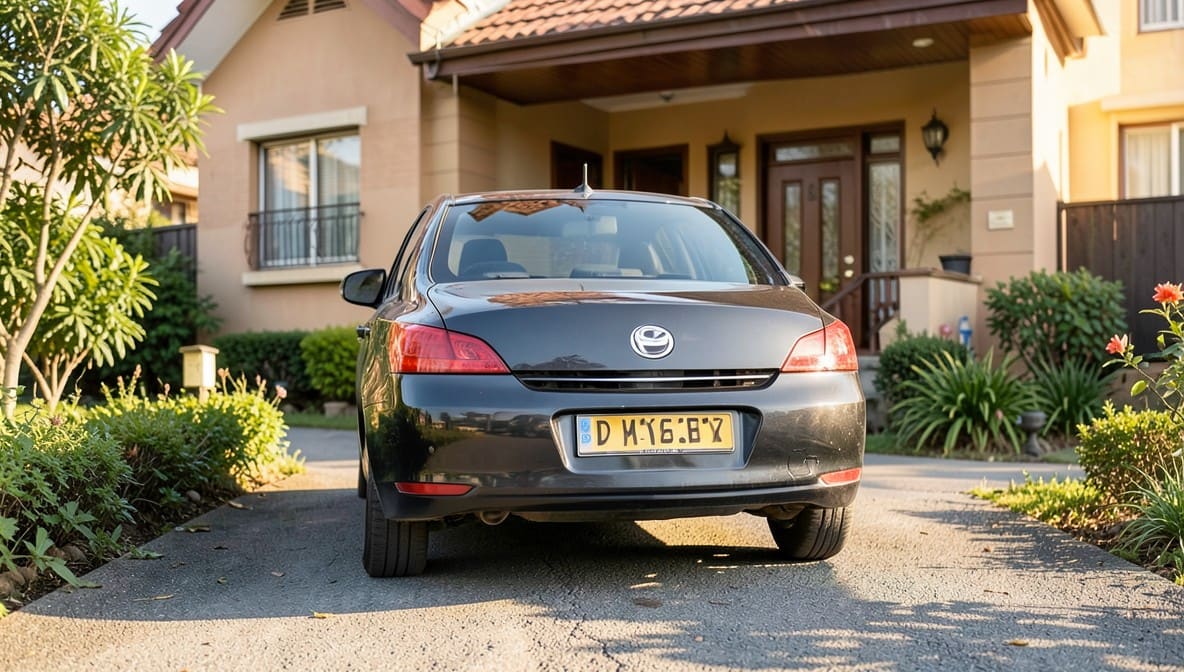
The Punjab & Haryana High Court has clarified that conditions imposed for the release of a vehicle on sapurdari must be reasonable and proportionate to its actual value, lest the relief become illusory. In a significant ruling, the Court struck down excessive security demands that bore no rational connection to the asset in question, reinforcing the principle that procedural safeguards must not eclipse substantive rights.
Background & Facts
The Dispute
The petitioner, Gurvinder Kaur, sought the release of her bus, bearing registration No. PB-13-T/9145, which was seized following an accident involving third-party casualties. The vehicle was impounded by authorities pending investigation and potential civil claims for compensation. The petitioner applied for its release on sapurdari, a procedural mechanism under the Bharatiya Nagarik Suraksha Sanhita, 2023, allowing conditional release of seized property during pendency of proceedings.
Key Facts
- The bus was involved in an accident on an unspecified date prior to 19.04.2025
- The insurance company assessed the market value of the bus at approximately ₹2,00,000/-
- The petitioner relies on the bus for her livelihood as a transport operator
- The vehicle has been stored in open premises since seizure, leading to progressive deterioration
- The petitioner has no other means of income and cannot afford high-value financial securities
Procedural History
-
19.04.2025: Judicial Magistrate Ist Class, Sangrur, ordered release of the bus on sapurdari subject to:
- Furnishing sapurdari bonds of ₹4,00,000/- with one surety in the same amount
- Deposit of ₹4,00,000/- in the form of Fixed Deposit Receipt (FDR)
- Production of the vehicle at every hearing
- Prohibition on sale, alienation, modification of make, parts, or colour
-
04.06.2025: Additional Sessions Judge, Sangrur, modified the order by:
- Removing the FDR requirement
- Replacing it with property bonds of ₹4,00,000/- backed by immovable property owned by the petitioner
- Directing that a charge be registered against the property in revenue records
-
29.04.2026: Petition heard by Division Bench of Punjab & Haryana High Court
-
04.05.2026: Judgment pronounced
Relief Sought
The petitioner sought:
- Quashing or relaxation of the security conditions imposed
- Release of the bus on personal bond or reasonable terms
- Removal of the requirement to furnish property bonds, given lack of ownership of immovable property
- Prevention of further depreciation of the vehicle
The Legal Issue
The central question was whether the conditions imposed for release of a vehicle on sapurdari under Section 528 of the Bharatiya Nagarik Suraksha Sanhita, 2023 can be so onerous as to render the relief illusory, particularly when the security demanded exceeds the market value of the vehicle and is unsupported by evidence of ownership of collateral property.
Arguments Presented
For the Petitioner
Counsel argued that the security demanded - ₹4,00,000/- - was double the insurance valuation of the bus (₹2,00,000/-), making it manifestly disproportionate. The requirement of property bonds was impracticable, as no evidence existed that the petitioner owned any immovable property. The petitioner’s livelihood depended on the bus, and its prolonged detention caused irreparable financial loss. The conditions, as imposed, effectively denied the statutory right to sapurdari release.
For the Respondent
The State contended that the conditions were necessary to safeguard prospective claims of accident victims, citing settled principles that courts may impose security to ensure future compensation. It relied on the State Government’s notification permitting such conditions and argued that the modified order (property bonds) was a reasonable compromise.
The Court's Analysis
The Court acknowledged that imposition of security to protect the interests of potential claimants is legally justified. However, it emphasized that such conditions must be reasonable, proportionate, and practically enforceable.
"Such condition must be reasonable and not so onerous as to defeat the very purpose of release of the vehicle on sapurdari."
The Court found the initial order of ₹4,00,000/- FDR deposit to be excessive, particularly given the vehicle’s assessed value. The modification by the Sessions Judge - replacing FDR with property bonds - was equally flawed. There was no evidence on record that the petitioner owned any immovable property. The Court observed:
"The condition imposed is thus based on a hypothetical premise and is impracticable in its application."
The Court rejected the notion that security must always match the maximum possible claim. Instead, it held that the quantum of security must reflect the value of the seized property and the petitioner’s capacity to comply. The imposition of a bond twice the asset’s value, without any nexus to the likely compensation, violated the doctrine of proportionality.
The Verdict
The petition was partly allowed. The Court set aside the order dated 04.06.2025 of the Additional Sessions Judge. The condition of security was reduced from ₹4,00,000/- to ₹2,00,000/-. The petitioner shall furnish sapurdari bonds and one surety in the amount of ₹2,00,000/-, and deposit ₹2,00,000/- either in cash or as a Fixed Deposit, to the satisfaction of the Trial Court. All other conditions - production at hearings, prohibition on sale or modification - remain unchanged. The vehicle shall be released forthwith upon compliance.
What This Means For Similar Cases
Security Must Reflect Asset Value, Not Maximum Claim
- Practitioners must now argue that security demands under Section 528 BNSS must be calibrated to the market value of the seized property, not speculative compensation amounts
- Courts cannot impose security exceeding the asset’s valuation without concrete evidence of likely liability
- Insurance assessments or independent valuations should be treated as prima facie evidence of value
Property Bonds Require Proven Ownership
- Courts cannot impose property bonds unless the accused establishes ownership of the property offered
- Revenue records or title documents must be produced and verified before such conditions are imposed
- Hypothetical or unverified claims of property ownership render conditions void for vagueness and impracticability
Sapurdari Is Not Illusory
- The right to sapurdari release is a statutory safeguard, not a discretionary privilege
- Conditions that effectively deny release - through excessive financial burdens or impossible collateral - violate the spirit of the provision
- Courts must balance victim protection with the accused’s right to livelihood and due process