The Andhra Pradesh High Court has clarified that seized vehicles involved in criminal cases may be released to owners on interim custody, provided evidentiary integrity is preserved and damage is prevented. This ruling reinforces the balance between investigative needs and property rights under the Bharatiya Nagarik Suraksha Sanhita, 2023.
Background & Facts
The Dispute
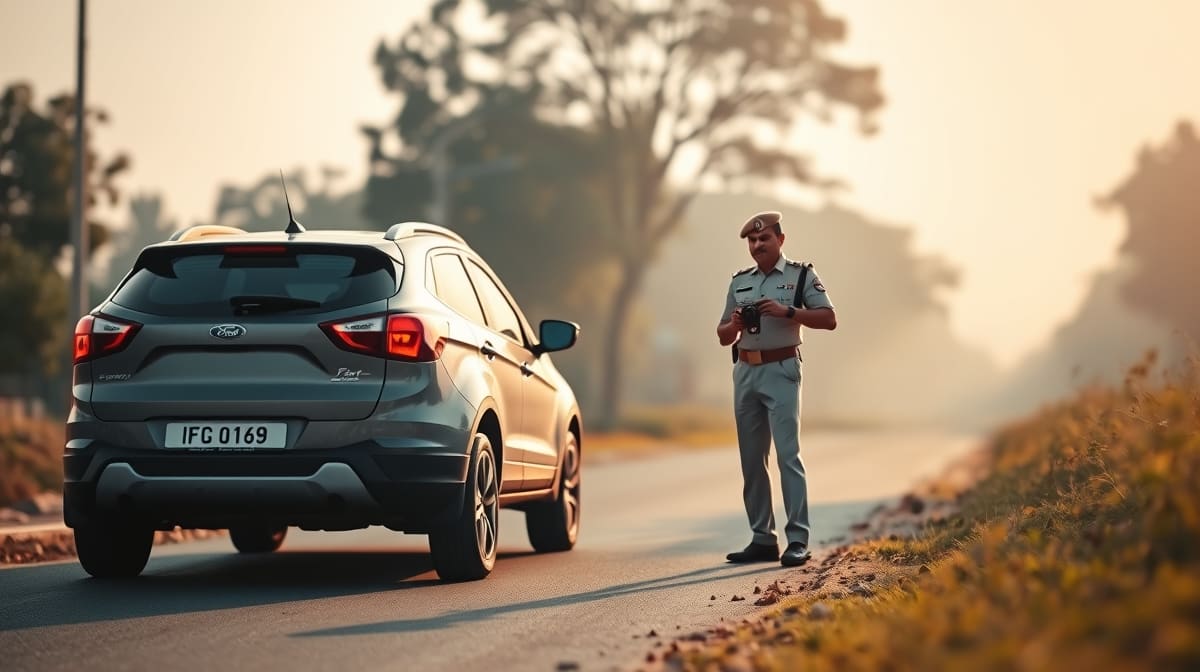
The petitioner, L. Gopi Krishna, sought the release of his Ford Eco Sport vehicle, bearing Registration No. KA 03 MU 3957, which was seized by the Parigi Police Station in connection with Crime No. 16 of 2024. The vehicle was impounded as material evidence following an alleged accident. The petitioner contended that prolonged detention without use was causing irreversible mechanical and structural damage, thereby prejudicing his property rights.
Key Facts
- The vehicle was seized on or about the date of the incident in Crime No. 16 of 2024, which occurred prior to the filing of the revision petition.
- The petitioner filed a petition before the Judicial Magistrate of First Class, Hindupur, seeking release of the vehicle.
- On 23.09.2025, the Magistrate dismissed the petition, refusing to release the vehicle.
- The petitioner challenged this order through the present Criminal Revision Case under Sections 438 and 442 of the Bharatiya Nagarik Suraksha Sanhita, 2023 (BNSS).
- The vehicle has not been used since seizure and remains in police custody.
- The petitioner is the registered owner and has produced the original Registration Certificate (R.C.) for verification.
Procedural History
- Date of incident: Prior to 2024 (exact date not specified in judgment)
- Date of seizure: Not explicitly stated, but occurred in connection with Crime No. 16 of 2024
- 23.09.2025: Judicial Magistrate of First Class, Hindupur, dismissed the petitioner’s application for release of the vehicle
- 09.04.2026: Criminal Revision Case No. 1220/2025 heard before the Andhra Pradesh High Court
The Parties' Positions
For the Petitioner
The petitioner’s counsel, Sri Seshadri Golla, argued that:
- The vehicle is a private asset and its prolonged detention without necessity constitutes undue hardship.
- Continuous non-use leads to depreciation, mechanical failure, and loss of value.
- The evidentiary value of the vehicle has already been recorded through photographs and forensic reports.
- The Court’s earlier decision in Criminal Petition No. 5470 of 2023, dated 05.09.2023, directly applies and should be followed.
For the Respondent
The Assistant Public Prosecutor, Ms. K. Priyanka Lakshmi, conceded that:
- The facts of the present case are squarely covered by the coordinate bench’s order in Criminal Petition No. 5470 of 2023.
- The vehicle is indeed material evidence, but its continued impoundment without use risks irreversible damage.
- The State does not oppose interim custody subject to appropriate safeguards.
Relief Sought
The petitioner sought:
- Setting aside of the Magistrate’s order dated 23.09.2025
- Release of the Ford Eco Sport (KA 03 MU 3957) on interim custody
- Conditions to ensure preservation of evidentiary value and prevent alienation
The Legal Issue
The central question was whether a seized vehicle, constituting material evidence in a criminal case, may be granted to the owner on interim custody under Sections 438 and 442 of the Bharatiya Nagarik Suraksha Sanhita, 2023, provided adequate safeguards are imposed to preserve its evidentiary integrity and prevent damage.
Arguments Presented
For the Petitioner
The petitioner relied on the precedent set by a coordinate bench of this Court in Criminal Petition No. 5470 of 2023, dated 05.09.2023, which held that when a vehicle is seized as material evidence but remains unused for prolonged periods, interim custody may be granted to prevent depreciation, provided the owner executes a bond and undertaking to preserve the vehicle and produce it on demand. The counsel emphasized that the BNSS, being a modernized criminal procedure code, permits flexible, proportionate measures that balance investigative needs with fundamental rights under Article 21.
For the Respondent
The State, through the Assistant Public Prosecutor, did not oppose the petitioner’s request. It acknowledged that the evidentiary value of the vehicle had been adequately documented and that continued impoundment served no further investigative purpose. The State agreed that interim custody with conditions would serve both the interests of justice and the preservation of property rights.
The Court's Analysis
The Court observed that while seized vehicles are critical to criminal investigations, their indefinite retention without use is neither mandated by law nor conducive to justice. The Court noted that the coordinate bench’s decision in Criminal Petition No. 5470 of 2023 had already established a precedent for granting interim custody under similar circumstances, and that the present case presented identical factual and legal contours.
"The Court is of the view that keeping the vehicle idle may result in damage, and it is appropriate to grant interim custody subject to certain conditions."
The Court emphasized that the BNSS, unlike the old CrPC, encourages pragmatic and rights-based procedural outcomes. The evidentiary value of the vehicle was not in dispute, but its physical preservation was. The Court held that videography of the vehicle prior to release, coupled with a self-bond, sureties, and a binding undertaking against alienation, would sufficiently safeguard the prosecution’s interests.
The Court further noted that the State’s concession on the applicability of the earlier precedent removed any need for extended deliberation. The focus shifted to ensuring that the conditions imposed were enforceable and would not compromise the trial’s integrity.
The Verdict
The Criminal Revision Petition is allowed. The Ford Eco Sport vehicle bearing Registration No. KA 03 MU 3957 is ordered to be placed in the interim custody of the petitioner subject to the following conditions:
- (a) The petitioner shall produce the original Registration Certificate and execute a self-bond for Rs. 2,00,000 with two sureties, each for the like sum, to the satisfaction of the jurisdictional Magistrate;
- (b) The petitioner shall execute an undertaking not to alienate, sell, transfer, or encumber the vehicle;
- (c) The petitioner shall produce the vehicle before the trial court whenever required until final disposal of Crime No. 16 of 2024;
- (d) The concerned police shall videograph the vehicle in its current condition prior to handing over custody and preserve the recording for evidentiary purposes.
What This Means For Similar Cases
Interim Custody Is Permissible Under BNSS
- Practitioners may now cite this judgment to seek interim release of seized vehicles in cases where prolonged impoundment risks damage and evidentiary documentation is complete.
- The burden is not on the accused to prove the vehicle is unnecessary for investigation, but on the prosecution to justify continued seizure.
Conditions Must Be Specific and Enforceable
- Self-bonds with sureties of equal value are now a recognized standard for securing custody.
- Undertakings against alienation and mandatory production orders are enforceable conditions under Section 442 BNSS.
- Videography of seized property before release is now a procedural best practice.
Coordinate Bench Precedents Are Binding
- Orders from coordinate benches on identical issues are binding unless overruled by a larger bench.
- Courts must apply consistent standards in similar factual matrices to avoid arbitrariness.