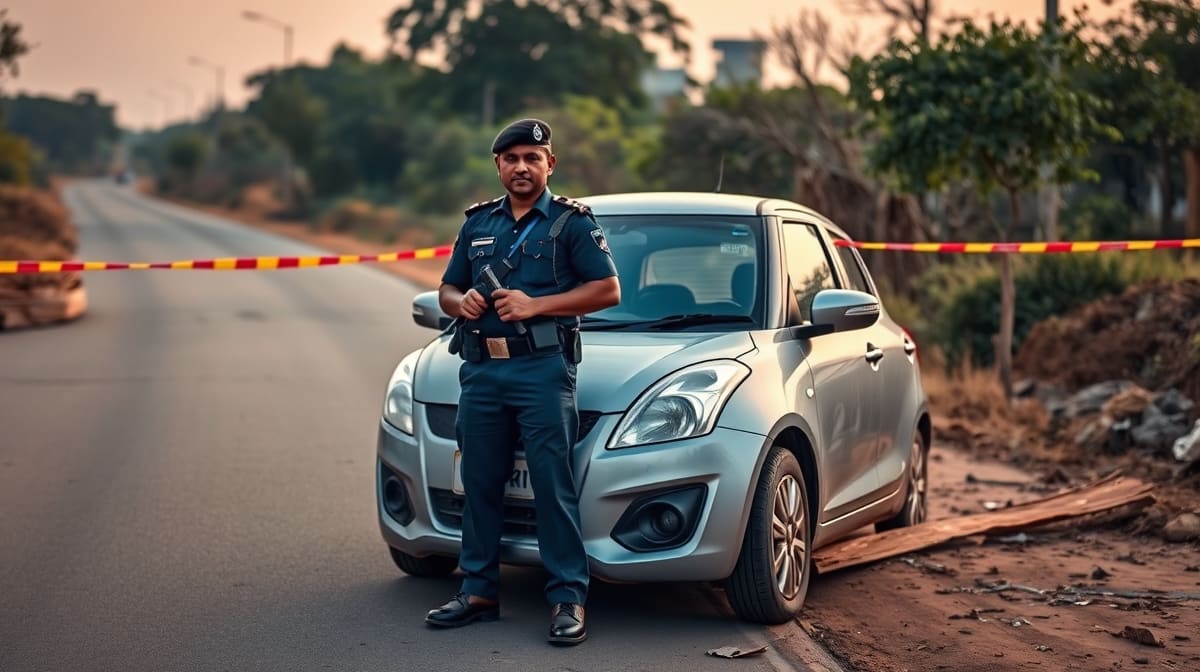
The Rajasthan High Court has affirmed that the release of a vehicle involved in a fatal road accident is contingent upon the owner furnishing a bank guarantee under statutory mandate, clarifying that such conditions are not discretionary but mandatory under amended rules. The judgment balances procedural fairness with victim protection, setting a precedent for courts across the state.
Background & Facts
The Dispute
The petitioner, Prem Raj, sought the release of his seized vehicle following a road accident on or about 15.01.2025 that resulted in the death of one person. The vehicle was seized by the police under Section 130 of the Motor Vehicles Act, 1988. On 12.02.2026, the Additional District and Sessions Judge, Balesar, in Case No. 166/2025, ordered the release of the vehicle subject to the condition that the petitioner furnish a bank guarantee of ₹5,00,000. The petitioner challenged this order, arguing that no claim petition had been filed, no liability had been determined, and the amount demanded exceeded the market value of the vehicle.
Key Facts
- The accident occurred on or about 15.01.2025 in Tehsil Osiya, District Jodhpur
- The vehicle was seized by police on 16.01.2025 under Section 130 of the Motor Vehicles Act
- No claim petition has been filed before any civil court as of the date of the judgment
- No compensation award has been passed against the petitioner
- The petitioner claims the market value of the vehicle is ₹4,00,000
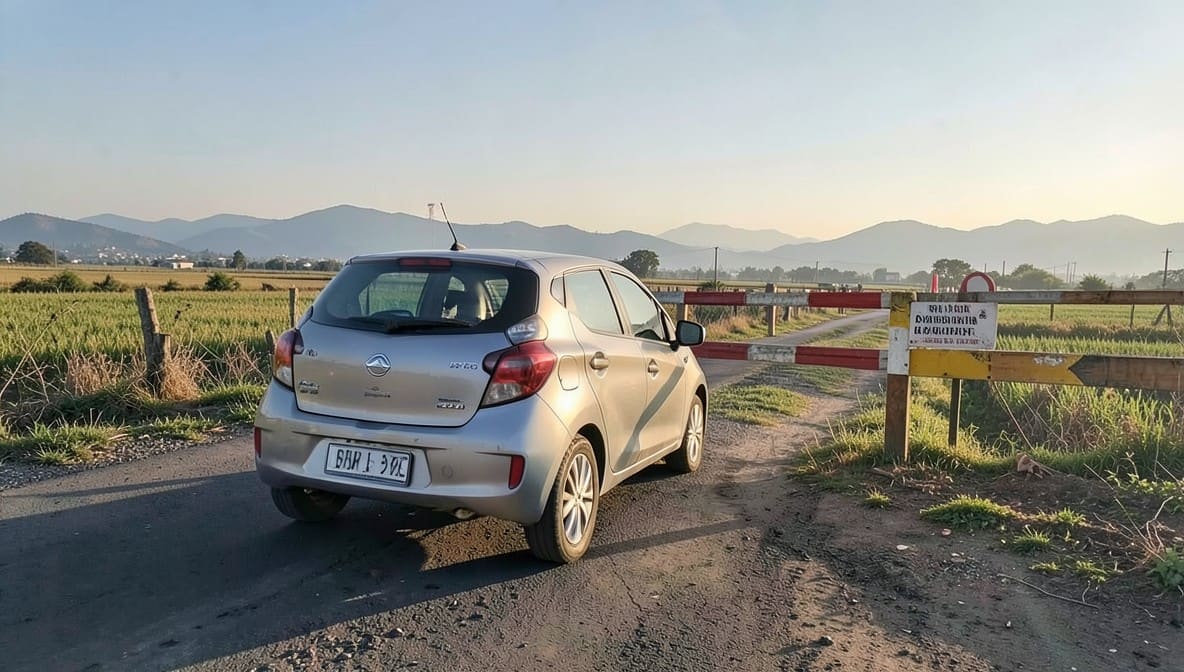
- The vehicle is a Maruti Suzuki Swift, registered in Rajasthan
- The deceased was a pedestrian with no known dependents or legal heirs yet to file a claim
Procedural History
- 15.01.2025: Fatal road accident involving petitioner’s vehicle
- 16.01.2025: Vehicle seized by police under Section 130, MV Act
- 12.02.2026: Additional District and Sessions Judge, Balesar, ordered release subject to ₹5,00,000 bank guarantee
- 07.03.2026: Petition filed under Section 482 CrPC before Rajasthan High Court
- 07.04.2026: Hearing concluded and judgment delivered
Relief Sought
The petitioner sought quashing of the order dated 12.02.2026, release of the vehicle without any bank guarantee, or in the alternative, reduction of the bank guarantee amount to reflect the vehicle’s market value of ₹4,00,000.
The Legal Issue
The central question was whether Rule 10.2A of the Rajasthan Motor Vehicles Rules, 1990 mandates the imposition of a bank guarantee for the release of a vehicle involved in a fatal accident, even in the absence of a filed claim or adjudicated liability.
Arguments Presented
For the Petitioner
Learned counsel relied on two prior judgments of the same High Court - Moti Ram v. State of Rajasthan and Roopa Ram v. State of Rajasthan - where the court had set aside similar conditions, holding that courts cannot impose bank guarantees without a crystallised claim. It was argued that the requirement was premature, arbitrary, and violated the principle of proportionality. The petitioner contended that the amount of ₹5,00,000 was excessive as the vehicle’s market value was only ₹4,00,000.
For the Respondent
The Public Prosecutor relied on Hetram v. State of Rajasthan and the Supreme Court’s judgment in Jai Prakash v. National Insurance Co. Ltd. (2010) 2 SCC 607. It was submitted that the 2019 amendment introducing Rule 10.2A was a direct implementation of the Supreme Court’s directive to ensure victims are not left uncompensated. The rule makes the furnishing of security mandatory, not discretionary, and the court’s duty is to ensure adequate security is provided.
The Court's Analysis
The Court began by acknowledging the Supreme Court’s holding in Jai Prakash v. National Insurance Co. Ltd., which directed state governments to amend rules to ensure that vehicles involved in fatal accidents are not released without security to meet potential compensation liabilities. The Court noted that the State of Rajasthan responded by inserting Rule 10.2A into the Rajasthan Motor Vehicles Rules, 1990, which states: "No vehicle involved in an accident resulting in death or grievous hurt shall be released without the owner furnishing sufficient security to the satisfaction of the Court to meet any potential compensation liability."
"The mandate under Rule 10.2A is not directory but mandatory, and the Court has no discretion to waive it."
The Court distinguished Moti Ram and Roopa Ram on the ground that those judgments were delivered before Rule 10.2A was brought into force and were therefore not apprised of the statutory amendment. The Court held that the earlier decisions could not override a subsequent statutory provision.
The Court further observed that while the imposition of a bank guarantee is mandatory, the quantum must be reasonable and proportionate. The petitioner’s contention that the vehicle’s market value is ₹4,00,000 was not disputed by the State. In the absence of any claim petition, medical bills, or evidence of potential liability exceeding this amount, the Court found the fixed sum of ₹5,00,000 to be disproportionate.
The Court emphasized that the purpose of the security is not punitive but protective - to ensure that future claimants are not left without recourse. Therefore, the amount must reflect the likely liability, not the maximum possible or arbitrary ceiling.
The Verdict
The petition was partly allowed. The order dated 12.02.2026 was modified to reduce the bank guarantee amount from ₹5,00,000 to ₹4,00,000. All other conditions imposed by the Additional District and Sessions Judge remain in force. The petitioner shall furnish the bank guarantee within 14 days from the date of this order. Failure to comply shall result in the vehicle remaining seized.
What This Means For Similar Cases
Bank Guarantee Is Mandatory, Not Optional
- Practitioners must now treat Rule 10.2A as a non-negotiable condition for vehicle release in fatal or grievous hurt accidents
- Courts cannot rely on pre-2019 judgments to waive the requirement
- The burden shifts to the accused to prove the proposed amount is excessive
Amount Must Be Proportionate to Market Value
- The bank guarantee amount cannot exceed the market value of the vehicle unless there is credible evidence of higher potential liability
- In the absence of a claim petition, medical reports, or income loss estimates, the vehicle’s market value is the default benchmark
- Courts must record reasons for exceeding market value, if any
No Claim Needed to Trigger Security
- The requirement is triggered by the nature of the accident (death/grievous hurt), not by the filing of a claim
- This prevents delay tactics by accused persons awaiting claim filings
- Legal aid societies and victim advocates should be notified immediately post-accident to facilitate claim filing