The Customs, Excise & Service Tax Appellate Tribunal (CESTAT), Mumbai, has clarified that the exemption from Special Additional Duty (SAD) under Notification No. 45/2005-Customs is available for goods transferred from a Free Trade Warehousing Zone (FTWZ) to the Domestic Tariff Area (DTA) on a stock transfer basis, provided the final sale in the DTA attracts VAT or sales tax. The Tribunal further held that the extended period of limitation under Section 28(4) of the Customs Act, 1962 cannot be invoked absent evidence of suppression or wilful misstatement.
Background & Facts
The Dispute
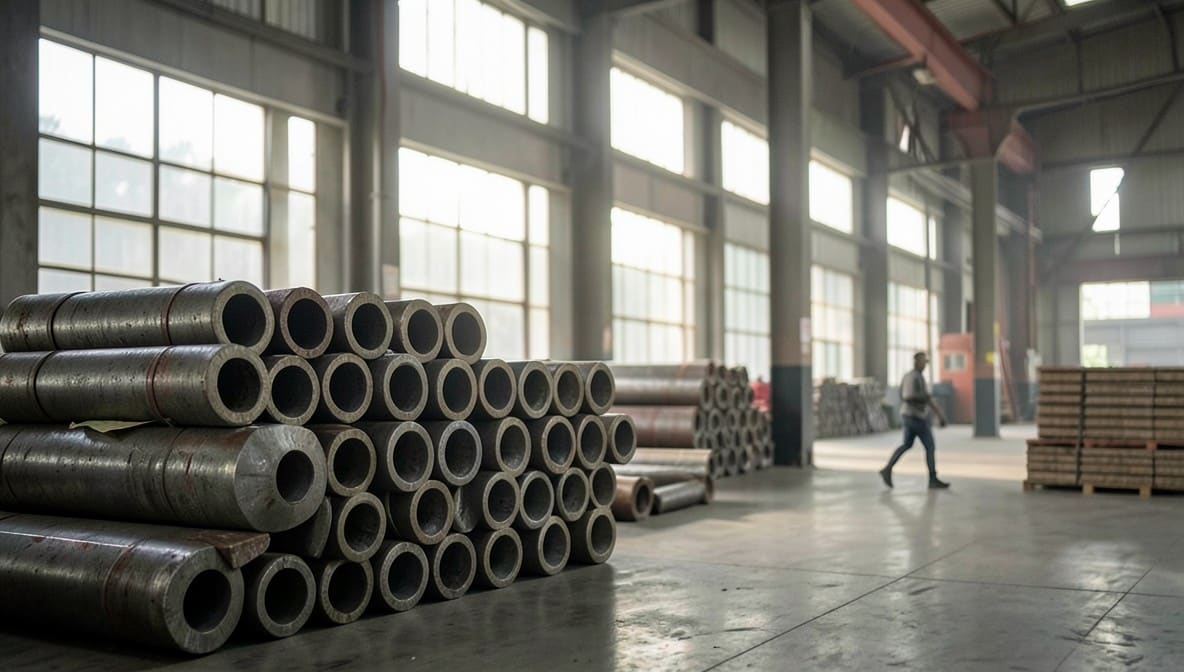
The appellant, India Steel Works Limited, imported stainless steel waste, billets, and ferro alloys through the FTWZ unit of M/s Arshiya Supply Chain Management Limited. These goods were transferred to its DTA unit for manufacturing stainless steel products, which were subsequently sold in the domestic market subject to VAT. The appellant claimed exemption from SAD under Notification No. 45/2005-Customs dated 16.05.2005, which provides full exemption from SAD on goods cleared from SEZ/FTWZ to DTA, provided such goods are not exempt from VAT/sales tax upon sale in the DTA. The appellant submitted undertakings and CA certificates confirming that VAT would be paid on final sale.
Key Facts
- The imported goods were used as raw materials for manufacturing stainless steel products
- Final products were sold in DTA subject to VAT at 5% (as confirmed by tax invoices)
- The appellant availed SAD exemption based on the condition in Notification No. 45/2005: exemption applies only if the goods are not exempt from VAT/sales tax upon sale
- The Department issued a Show Cause Notice (SCN) dated 16.06.2015 demanding SAD of Rs. 4,06,30,866 for the period April 2012 to March 2013
- The SCN invoked the extended period of limitation under Section 28(4) of the Customs Act, 1962, alleging suppression of facts
- The Principal Commissioner confirmed the demand, confiscation of goods under Section 111(o), and penalty under Sections 112 and 114AA
- The appellant argued that the clearance was a stock transfer, not a sale, and VAT liability was deferred until final sale
Procedural History
- April 2012 to March 2013: Period of imports and stock transfers under dispute
- 16.05.2005: Notification No. 45/2005-Customs issued, granting SAD exemption
- 16.06.2015: SCN issued by Department proposing demand, confiscation, and penalty
- 29.02.2016: Order-in-Original passed by Principal Commissioner confirming demand
- 17.11.2025: Hearing before CESTAT Mumbai
- 13.03.2026: Final Order passed by CESTAT Mumbai allowing appeals
The Parties' Positions
Appellants (India Steel Works Limited and Madhav Kanade):
- Argued that Notification No. 45/2005 does not distinguish between sale and stock transfer
- Emphasized that the proviso to the Notification only bars exemption if the goods are exempt from VAT - which they were not
- Cited multiple Tribunal and Supreme Court precedents including CRI Limited v. Commissioner of Customs (upheld by SC in 2024)
- Stated that the Department was aware of the nature of clearance as the Bills of Entry were countersigned by customs officers
- Contended that the undertaking and CA certificate were procedural compliance, not suppression
- Asserted that the SCN was issued beyond the normal limitation period of one year (October 2015), and the 2016 amendment to Section 28 was not retrospective
Respondent (Commissioner of Customs):
- Argued that stock transfer for self-consumption does not qualify for SAD exemption
- Relied on Customs Circular No. 44/2013 dated 30.12.2013, which stated exemption not available for stock transfers
- Alleged suppression of facts through misleading undertakings
- Claimed that the appellant knew the goods would be consumed internally and not sold, thus VAT would not be paid
- Invoked extended limitation period under Section 28(4) for alleged wilful misstatement
Relief Sought
The appellants sought:
- Setting aside of the impugned order dated 29.02.2016
- Cancellation of the SAD demand of Rs. 4,06,30,866
- Cancellation of confiscation of goods under Section 111(o)
- Cancellation of penalty under Sections 112 and 114AA
- Declaration that the extended period of limitation was not applicable
The Legal Issue
The central question was whether Notification No. 45/2005-Customs grants exemption from Special Additional Duty (SAD) on goods cleared from an FTWZ to a DTA unit on a stock transfer basis, where the final sale of the manufactured product attracts VAT, and whether the extended period of limitation under Section 28(4) of the Customs Act, 1962 can be invoked in the absence of suppression or wilful misstatement.
Arguments Presented
For the Appellant
The appellant relied on the strict interpretation of Notification No. 45/2005, which conditions exemption only on whether the goods are exempt from VAT upon sale - not on the nature of the transfer. The appellant cited CRI Limited v. Commissioner of Customs, upheld by the Supreme Court in 2024, which held that the proviso applies only if the goods themselves are VAT-exempt - which they were not. The appellant further argued that the Department had prior knowledge of the nature of clearance through countersigned Bills of Entry and that the CA certificate was a procedural requirement approved by the SEZ authorities. The appellant emphasized that the SCN was issued after the normal limitation period expired in October 2015, and the 2016 amendment extending limitation to two years was not retrospective.
For the Respondent
The Revenue relied on Customs Circular No. 44/2013, which stated that SAD exemption is not available for stock transfers for self-consumption. It contended that the appellant’s undertaking was misleading because the goods were consumed internally and not sold, thus VAT would never be paid. The Revenue argued that the appellant had a malafide intention to evade duty and that the extended period under Section 28(4) was rightly invoked. It also cited Lloyd Electric & Engineering to support its position, though the Tribunal later distinguished this precedent.
The Court's Analysis
The Tribunal conducted a detailed analysis of Notification No. 45/2005-Customs, which states: "...exempts all goods cleared from a special economic zone and brought to any other place in India... Provided that no such exemption shall be applicable if such goods, when sold in domestic tariff area, are exempted by the State Government from payment of sales tax or value added tax."
"The Notification exempts all goods 'cleared from a SEZ' and 'brought to any other place in India'. The nature of clearance, whether by way of sale or otherwise, is not qualified in any manner in the body of the Notification."
The Tribunal held that the proviso is triggered only if the goods themselves are VAT-exempt upon sale - not if the transfer is a stock transfer. In this case, the final product (stainless steel) attracted 5% VAT, as confirmed by tax invoices. Therefore, the proviso did not apply, and the exemption was available.
The Tribunal further rejected the Revenue’s reliance on Circular No. 44/2013, citing the Supreme Court’s ruling in Tata Tele Services that circulars cannot curtail the scope of a statutory exemption. The Tribunal noted that the Department had been informed of the nature of transactions through countersigned Bills of Entry and had even participated in SEZ committee meetings that endorsed the CA certificate mechanism.
"We find that the practice adopted by the appellants, neither had any malafide intention, nor was there any suppression of fact..."
Regarding limitation, the Tribunal held that the SCN dated 16.06.2015 covered imports from April 2012 to March 2013. The normal limitation period under Section 28(1) was one year, expiring in October 2013 for the earliest imports. Even after the 2016 amendment extending limitation to two years, the amendment was not retrospective. The Tribunal concluded that the demand was time-barred and the extended period could not be invoked without proof of suppression.
The Tribunal also relied on its own prior decision in CRI Limited, which was upheld by the Supreme Court, and held that identical facts could not be decided differently.
The Verdict
The appeals were allowed. The impugned order dated 29.02.2016 was set aside. The demand of SAD of Rs. 4,06,30,866 was cancelled. The confiscation of goods under Section 111(o) and the imposition of penalty under Sections 112 and 114AA were quashed. The Tribunal held that the extended period of limitation under Section 28(4) was not applicable due to absence of suppression, and the normal limitation period had expired.
What This Means For Similar Cases
Exemption Notifications Must Be Interpreted Strictly
- Practitioners can now confidently rely on the principle that exemption notifications are to be interpreted in favour of the taxpayer if the language is unambiguous
- Circulars or internal guidelines cannot override the clear terms of a statutory exemption
- The burden is on the Department to prove suppression - mere internal consumption does not equate to fraud
Limitation Periods Are Absolute Without Suppression
- The extended period under Section 28(4) requires proof of wilful misstatement or suppression - not mere disagreement on interpretation
- If the Department had access to documents (e.g., countersigned Bills of Entry), it cannot later claim ignorance
- Amendments extending limitation periods are prospective only; they cannot revive time-barred demands
Stock Transfers Are Not Automatically Disqualified
- Clearance from FTWZ/SEZ to DTA on a stock transfer basis qualifies for SAD exemption if the final sale attracts VAT
- CA certificates and undertakings are procedural safeguards, not evidence of fraud
- Industry-wide practices endorsed by SEZ authorities provide a strong defence against allegations of malafide intent