The Customs, Excise and Service Tax Appellate Tribunal (CESTAT) Chennai has clarified that the eligibility of CENVAT credit for outward transportation services hinges on the contractual terms governing the sale, not on generic invoice clauses. In a significant ruling, the Tribunal set aside a demand of over Rs. 4.66 crore in CENVAT credit recovery, holding that the extended period of limitation could not be invoked due to absence of wilful suppression, and that the buyer’s premises constituted the place of removal where installation and acceptance were contractually mandated.
Background & Facts
The Dispute
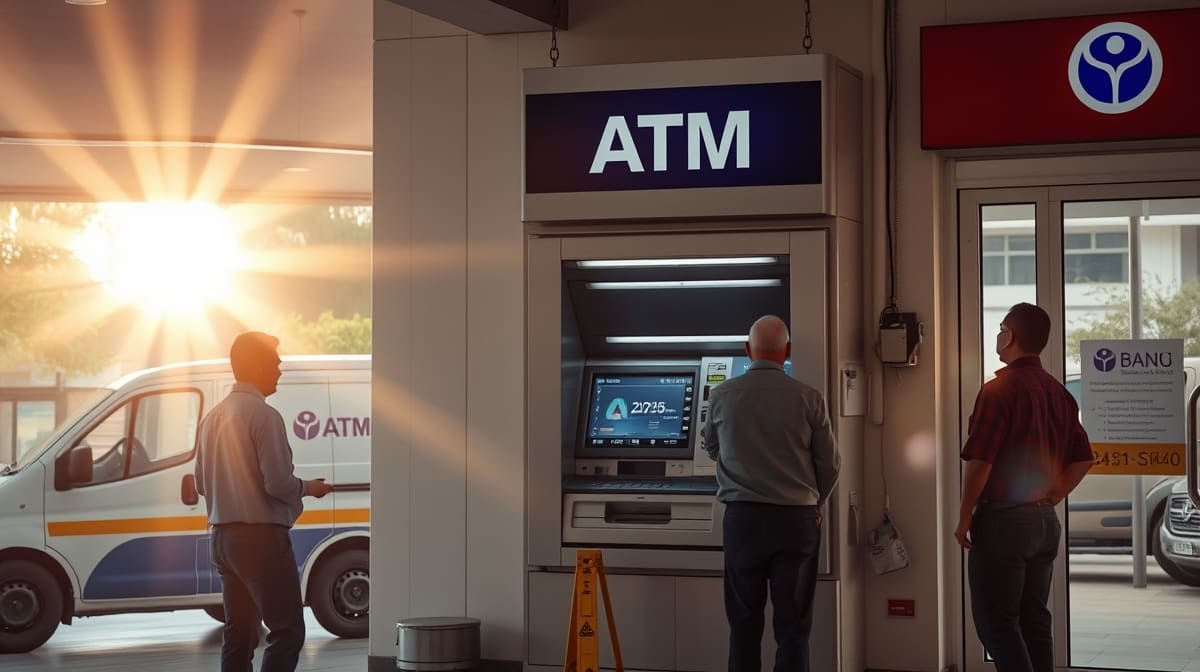
M/s. NCR Corporation India Pvt. Ltd., a 100% Export Oriented Unit engaged in manufacturing sub-assemblies of Automated Teller Machines (ATMs) classifiable under Chapter 84 of the Central Excise Tariff Act, 1985, availed CENVAT credit on service tax paid for courier services used to transport finished ATMs from its factory in Puducherry to customers’ premises. The department alleged that such transportation occurred beyond the factory gate - the so-called "place of removal" - and therefore the services were ineligible under Rule 2(l) of the CENVAT Credit Rules, 2004. A show cause notice dated 07.02.2017 proposed recovery of Rs. 4,66,99,006/- in CENVAT credit, along with interest and a penalty of Rs. 2,33,49,503/- under Rule 15(2) read with Section 11AC of the Central Excise Act, 1944. The Commissioner confirmed this demand in Order-in-Original No. 34/2017 dated 20.07.2017.
Key Facts
- The appellant manufactured ATMs and cleared goods both for export and to Domestic Tariff Area (DTA) customers.
- Courier services were used for transportation of ATMs to customer sites, including Safex Express and similar agencies.
- The appellant operated under a Customs bonded warehouse licence under the Customs Act, 1962.
- The credit was distributed to the manufacturing unit via Input Service Distributor (ISD) invoices issued by its registered ISD office.
- The appellant filed statutory returns regularly and disclosed all credit availments.
- Two representative contracts were submitted, detailing that delivery, installation, commissioning, and customer acceptance were mandatory conditions for completion of sale.
- Excise invoices contained a standard clause: "Seller shall not be responsible for any loss or damage to goods in transit."
- The period under dispute: June 2014 to January 2015.
- Show cause notice issued: 07.02.2017.
Procedural History
- June 2014 to January 2015: Period of CENVAT credit availed on courier services.
- 07.02.2017: Show cause notice issued proposing recovery of Rs. 4,66,99,006/- in CENVAT credit, interest, and penalty.
- 20.07.2017: Commissioner issued Order-in-Original No. 34/2017 confirming demand.
- 2017: Appeal filed before CESTAT Chennai (Excise Appeal No. 42169 of 2017).
- 05.01.2026: Hearing held before CESTAT Chennai.
- 27.03.2026: Final order passed allowing the appeal.
The Parties' Positions
For the Appellant
- Argued that the sale of ATMs was completed only after installation, commissioning, and acceptance at the customer’s premises.
- Relied on Sections 19 and 23 of the Sale of Goods Act, 1930, to show that transfer of property depended on contractual intent.
- Cited CCE v. Roofit Industries Ltd. and Madras Cements Ltd. to establish that where ownership and risk remain with the seller until delivery at buyer’s premises, that location is the place of removal.
- Contended that the ISD mechanism does not shift scrutiny responsibility from the recipient unit, but eligibility must be assessed on the nature of service used by the manufacturing unit.
- Asserted that the extended period of limitation under Section 11A was wrongly invoked, as there was no suppression of facts - only an interpretational dispute.
- Relied on Cosmic Dye Chemical v. CCE and Padmini Products v. CCE to argue that bona fide interpretation of law cannot attract extended limitation.
For the Respondent
- Maintained that the factory gate was the place of removal since goods were handed over to courier agencies there.
- Relied on CCE v. Ultra Tech Cement Ltd. and CCE v. Ispat Industries Ltd. to argue that transportation beyond factory gate is ineligible for CENVAT credit.
- Contended that the invoice clause absolving seller of transit risk indicated transfer of ownership at factory gate.
- Argued that the recipient unit (appellant) could be held liable for erroneous credit availed via ISD invoices, citing SKF India Ltd. and Roca Bathroom Products Pvt. Ltd.
Relief Sought
The appellant sought quashing of the impugned order dated 20.07.2017, cancellation of the demand of Rs. 4,66,99,006/- in CENVAT credit, Rs. 2,33,49,503/- penalty, and all interest, on grounds of incorrect determination of place of removal and barred limitation.
The Legal Issue
The central questions were: (1) Whether courier services for transportation of ATMs to customer premises qualify as "input service" under Rule 2(l) of the CENVAT Credit Rules, 2004, and (2) Whether the extended period of limitation under Section 11A of the Central Excise Act, 1944, can be invoked where the assessee has disclosed all facts and the dispute arises from interpretation of law.
Arguments Presented
For the Appellant
The appellant argued that the definition of "input service" under Rule 2(l) includes services used in relation to clearance of final products up to the place of removal. It contended that the place of removal is not mechanically the factory gate but is determined by the contractual terms governing transfer of ownership and risk. Citing Roofit Industries Ltd. and Madras Cements Ltd., it emphasized that where the seller retains ownership until installation and acceptance at the buyer’s premises, that location becomes the place of removal. It further argued that the ISD mechanism does not immunize the recipient unit from scrutiny, but the eligibility of the service must be judged at the recipient’s level based on its manufacturing activity. On limitation, it relied on Cosmic Dye Chemical and Padmini Products to assert that mere disagreement over legal interpretation, without wilful suppression, cannot trigger the extended period.
For the Respondent
The Revenue contended that the place of removal is the factory gate because goods were handed over to courier agencies there, and the invoice clause absolving the seller of transit risk indicated transfer of ownership. It relied on Ultra Tech Cement and Ispat Industries to argue that transportation beyond the factory gate is ineligible. It further contended that the recipient unit could be held liable for erroneous credit availed via ISD invoices, citing SKF India Ltd. and Roca Bathroom Products. It maintained that the appellant’s failure to disclose the nature of services rendered constituted suppression warranting extended limitation.
The Court's Analysis
The Tribunal undertook a detailed examination of the contractual terms governing the supply of ATMs. It found that Clause 3.10 and Clause 3.12 of the contracts explicitly stated that commissioning and acceptance by the buyer were mandatory conditions for completion of the supply. The Tribunal observed:
"The installation will be deemed as incomplete if any component of the CD and other equipments is not delivered or is delivered but not installed and/or not operational or not acceptable to the bank after acceptance testing/examination. In such an event the supply, installation and commissioning will be termed as incomplete and systems will not be accepted and the warranty period will not commence. The installation will be accepted only after complete commissioning of CD and other equipments."
This, the Tribunal held, demonstrated that ownership and risk remained with the appellant until the equipment was accepted at the customer’s premises. The Tribunal rejected the Revenue’s reliance on the invoice clause stating the seller was not responsible for transit damage, noting:
"A general clause printed in the invoice regarding transit risk cannot be interpreted so as to alter the contractual scheme governing transfer of property in the goods."
It further held that the Roofit Industries and Madras Cements precedents applied squarely, as they established that the place of removal is determined by the contractual intent, not by physical handover at the factory. The Tribunal also examined the ISD mechanism and concluded that while the recipient unit could be scrutinized for credit availed, the eligibility of the service must be judged on its nature and use in the manufacturing process, not on the ISD’s compliance alone.
On limitation, the Tribunal applied the Supreme Court’s ruling in Cosmic Dye Chemical and Padmini Products, holding that the extended period under Section 11A requires wilful suppression with intent to evade duty. Since the appellant had filed returns regularly and disclosed all credit availments, and the dispute arose from a bona fide interpretation of the definition of "input service" and "place of removal," the extended period could not be invoked. The show cause notice dated 07.02.2017, covering the period June 2014 to January 2015, was therefore barred by the normal three-year limitation period.
The Verdict
The appeal was allowed. The impugned Order-in-Original No. 34/2017 dated 20.07.2017 was set aside. The demand of Rs. 4,66,99,006/- in CENVAT credit, Rs. 2,33,49,503/- penalty, and all interest were cancelled. The Tribunal held that the extended period of limitation under Section 11A of the Central Excise Act, 1944, was not invocable due to absence of wilful suppression, and that the place of removal was the buyer’s premises as per contractual terms.
What This Means For Similar Cases
Contractual Terms Override Standard Invoice Clauses
- Practitioners must now prioritize substantive contracts over boilerplate invoice terms when determining the place of removal for CENVAT credit eligibility.
- Any attempt by tax authorities to rely on generic "risk transfer" clauses in invoices to deny credit will be invalid if the contract clearly states otherwise.
Place of Removal Is Fact-Specific and Contract-Driven
- For manufacturers delivering goods requiring installation, commissioning, or acceptance at customer sites, the place of removal is the customer’s premises.
- This applies to sectors like medical equipment, industrial machinery, ATMs, and IT hardware where post-delivery services are integral to the sale.
- Practitioners should ensure contracts explicitly state: ownership transfer occurs only after installation and acceptance.
Bona Fide Interpretation Shields Against Extended Limitation
-
Tax authorities cannot invoke extended limitation under Section 11A merely because they later disagree with the assessee’s interpretation of law.
-
Where statutory provisions are ambiguous and judicial precedents exist, the assessee’s belief qualifies as bona fide.
-
Regular filing of returns and disclosure of credit availed negates any claim of suppression.
-
Always retain signed contracts with clear delivery, installation, and acceptance clauses.
-
Maintain audit trails of ISD invoices and credit availments to demonstrate transparency.
-
In disputes over place of removal, cite Roofit Industries Ltd., Madras Cements Ltd., and Circular No. 988/12/2014-CX as binding authority.
-
Do not assume factory gate is default place of removal - always analyze contractual intent.
-
Do not concede extended limitation without proving absence of wilful suppression.