The Andhra Pradesh High Court recently dismissed a writ petition challenging the extension of a temple land lease without conducting a public auction, reinforcing the mandatory nature of Rules 7 and 8 of the Andhra Pradesh Charitable and Hindu Religious Institutions and Endowments Lease of Agricultural Lands Rules, 2003. The judgment underscores that lease extensions beyond three years require prior permission from the Commissioner of Endowments and must follow due process, including public auction, to prevent arbitrariness.
Background & Facts
The Dispute
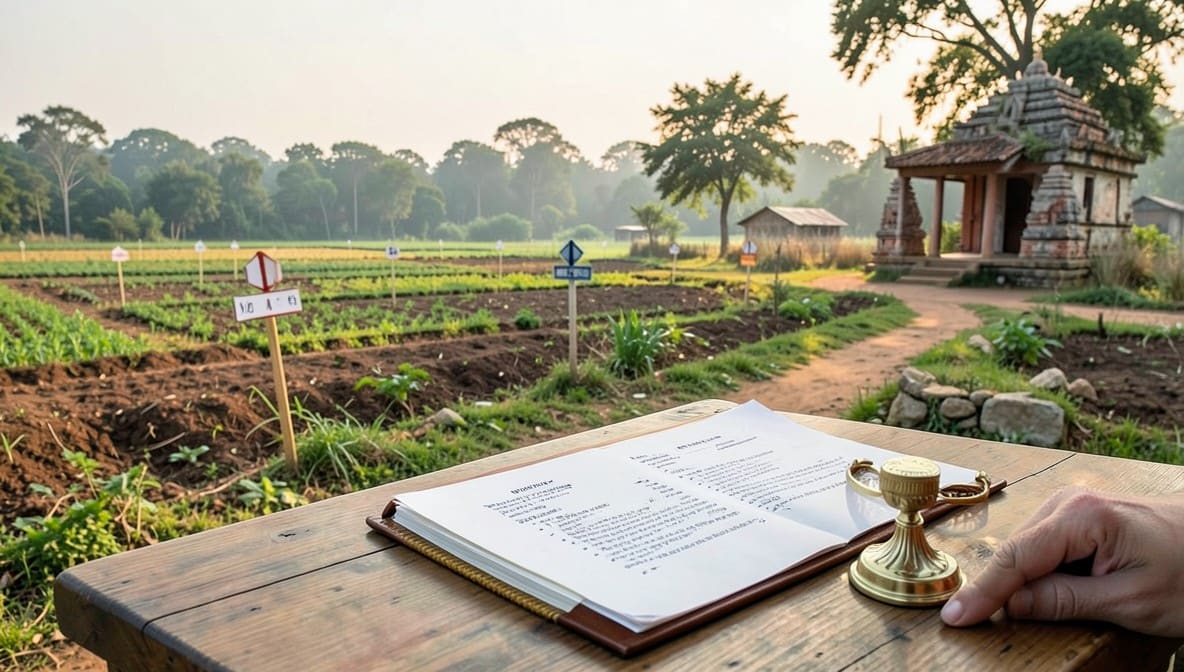
The petitioner, Paladugula Lakshmana Rao, a Sarpanch from Chidipi Village, Kovvuru Mandal, East Godavari District, challenged the lease extension granted by the 5th respondent (Sri Hatakeswara Swamy Temple) to the 6th respondent (Mankina Veeraju) for Ac.4.81 cents of temple land in R.S.No.42/1, Chidipi Village. The lease extension was granted vide Memo.In.Rc.No-COE-L2/18024(32)/18/2025, dated 30.05.2025, without conducting a public auction, allegedly violating G.O.Ms.No. 379, Rev.(Endowments.I), dated 11.03.2003, and the provisions of the Andhra Pradesh Charitable and Hindu Religious Institutions and Endowments Act, 1987 (hereinafter referred to as Act 30 of 1987).
Key Facts
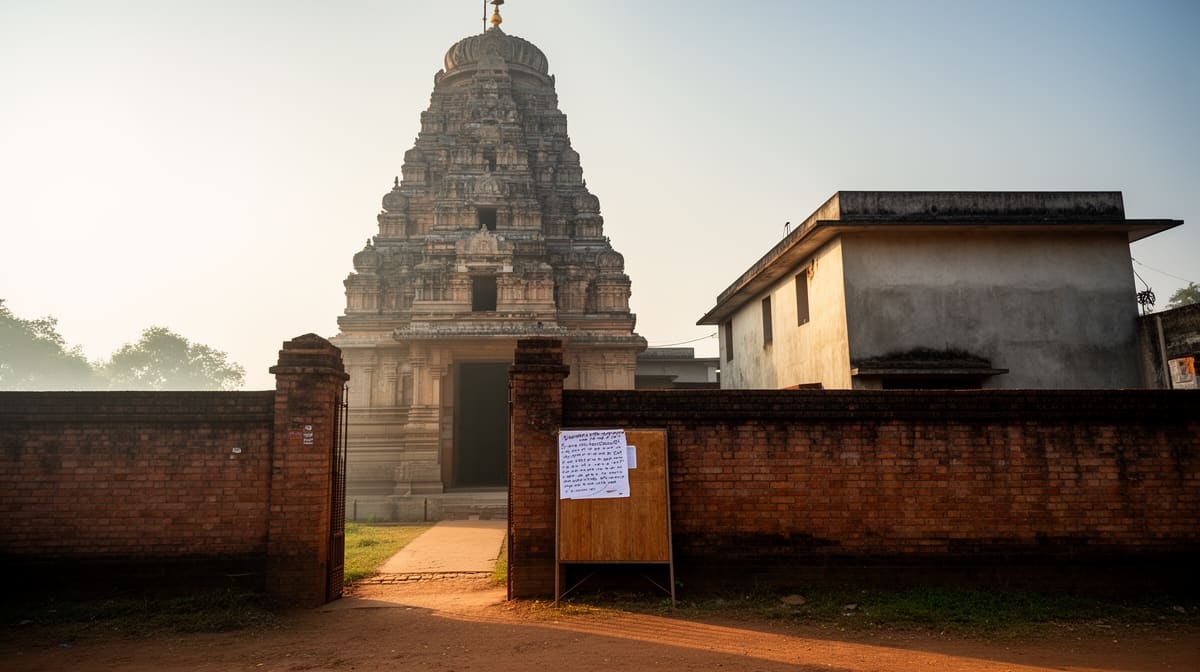
- The land, measuring Ac.4.81 cents, belongs to Sri Hatakeswara Swamy Temple, Chidipi Village.
- On 08.02.2022, the land was leased through public auction, where the 6th respondent emerged as the highest bidder at Rs. 2,99,000 for the entire extent.
- The lease period expired on 30.04.2025.
- Instead of conducting a fresh public auction, the 5th respondent extended the lease for another three years (2025-26 to 2027-28) at an enhanced rate of Rs. 3,97,670 (a 33% increase over the previous lease amount).
- The 6th respondent also invested in drilling a borewell, with a condition that it would be handed over to the temple.
- The petitioner alleged that the auction was intentionally scheduled on Good Friday (a public holiday), preventing participation.
Procedural History
- 30.05.2025: The 5th respondent issued Memo.In.Rc.No-COE-L2/18024(32)/18/2025, extending the lease without public auction.
- 2025: The petitioner filed Writ Petition No. 21542/2025 under Article 226 of the Constitution of India, seeking a Writ of Mandamus to:
- Declare the lease extension illegal, arbitrary, and violative of natural justice.
- Set aside the impugned memo.
- Direct compliance with Rules 7 and 8 of the Lease Rules, 2003.
Positions Before the Court
For the Petitioner
- Relied on Rules 7 and 8 of the Lease Rules, 2003, which mandate public auction for lease extensions beyond three years.
- Cited the judgment in Smt. Kuthuri Suryavathi v. State of Andhra Pradesh ((2015) 15 ALD 714) to argue that arbitrary administrative actions must be set aside.
- Contended that the auction was deliberately scheduled on a public holiday, violating procedural fairness.
- Asserted that the petitioner’s ancestors were founders of the temple and had donated the land for its benefit.
For the Respondents
- 6th respondent filed a counter-affidavit arguing:
- The lease extension was granted with a 33% enhancement in rent, from Rs. 2,99,000 to Rs. 3,97,670.
- The 6th respondent invested in a borewell, which would be handed over to the temple.
- Under Rule 3(3) of the Lease Rules, 2003, the existing lessee can be continued if the land is below Ac.5.00 cents, subject to 2/3 of market rent.
- Rule 8(2)(a) permits the Commissioner of Endowments to extend leases beyond three years (up to six years) with prior permission.
- The Commissioner granted permission in compliance with the Rules, making the extension statutorily valid.
- The writ petition was motivated by personal and political interests.
- Cited Ballapu Suresh v. K. Rama Koteswara Rao (2022 1 ALT 95) to argue that eviction must follow due process under Section 83 of Act 30 of 1987.
The Legal Issue
The central question before the Court was:
Whether the extension of a temple land lease beyond three years, without conducting a public auction and without obtaining prior permission from the Commissioner of Endowments, violates Rules 7 and 8 of the Andhra Pradesh Charitable and Hindu Religious Institutions and Endowments Lease of Agricultural Lands Rules, 2003, and amounts to arbitrary and illegal administrative action?
Arguments Presented
For the Petitioner
- Mandatory Public Auction: Under Rule 7(1)(b), the Executive Authority must conduct a tender-cum-public auction three months before the expiry of the lease, fixing an upset price based on prevailing rents.
- Lease Period Limitation: Rule 8(1) prohibits leases exceeding three years without prior permission from the Commissioner of Endowments.
- Violation of Natural Justice: The auction was scheduled on a public holiday, preventing fair participation.
- Precedent Reliance: Cited Smt. Kuthuri Suryavathi to argue that arbitrary administrative actions must be quashed.
For the Respondents
- Statutory Compliance: The Commissioner of Endowments granted permission under Rule 8(2)(a), making the extension valid.
- Enhancement of Rent: The lease was extended at a 33% higher rent, benefiting the temple.
- Investment by Lessee: The 6th respondent invested in a borewell, which would be handed over to the temple.
- No Legal Right: The petitioner had no vested right to claim continuation of the lease, as no valid lease existed in their favor.
- Motivated Petition: The writ petition was filed out of personal and political motives.
The Court's Analysis
The Court examined Rules 7 and 8 of the Lease Rules, 2003 in detail:
"Rule 7(1)(b) mandates that all leases shall be awarded through tender-cum-public auction on an Annual Advance Rental basis, with the rent fixed in cash. The Executive Authority is duty-bound to conduct the auction three months before the expiry of the existing lease and issue a public notice of ten days, mentioning the upset price based on prevailing rents."
"Rule 8(1) stipulates that no lease shall be granted for a period exceeding three years. Rule 8(2)(a) further provides that if a lease is proposed to exceed three years, the Executive Authority must obtain prior permission from the Commissioner of Endowments before publishing the notice under Rule 11."
The Court observed:
- The Commissioner of Endowments has the statutory power to extend leases beyond three years (up to six years) under Rule 8(2)(a).
- In this case, the Commissioner granted permission for the extension, and the lease was extended at an enhanced rent, benefiting the temple.
- The 6th respondent made significant investments (borewell), which would ultimately benefit the temple.
- The petitioner failed to demonstrate any intention to participate in the auction and did not challenge the upset price or auction process.
- The Court noted that the petitioner’s reliance on Smt. Kuthuri Suryavathi was misplaced, as the facts of that case were distinguishable.
The Court held:
"The purpose of issuing a tender is to invite maximum bids from qualified bidders so that the most competitive price can be obtained. In the present case, the lease was extended to the 6th respondent at an enhanced rate, and the 6th respondent invested in a borewell, which would be handed over to the temple. The petitioner has not asserted any intention to participate in the tender. Viewed from any perspective, the writ petition lacks merit."
The Verdict
The Court dismissed the writ petition with the following holdings:
- The lease extension granted vide Memo.In.Rc.No-COE-L2/18024(32)/18/2025, dated 30.05.2025, was valid and in compliance with Rules 7 and 8 of the Lease Rules, 2003.
- The Commissioner of Endowments had the statutory authority to extend the lease beyond three years, and the enhanced rent (Rs. 3,97,670) was beneficial to the temple.
- The 6th respondent’s investment in a borewell was a valuable addition to the temple’s assets.
- The petitioner failed to establish any legal right to the lease or any procedural irregularity.
- No costs were awarded.
What This Means For Similar Cases
Mandatory Compliance with Public Auction Rules
- Temple authorities and endowments departments must strictly adhere to Rules 7 and 8 of the Lease Rules, 2003.
- Public auctions must be conducted three months before lease expiry, with proper notice and upset price based on prevailing rents.
- Failure to conduct public auctions may render lease extensions arbitrary and illegal, inviting judicial scrutiny.
Commissioner’s Discretion Under Rule 8(2)(a)
- The Commissioner of Endowments has statutory discretion to extend leases beyond three years (up to six years) with prior permission.
- Enhancement of rent and investments by lessees (e.g., borewells, infrastructure) may justify lease extensions if they benefit the temple.
- Lessee investments can be a valid consideration for lease extensions, provided they are handed over to the temple.
Motivated Challenges and Burden of Proof
- Writ petitions challenging lease extensions must demonstrate procedural irregularities or violation of statutory provisions.
- Personal or political motives may weaken the petitioner’s case if no legal right or procedural lapse is established.
- Petitioners must show intent to participate in auctions and challenge upset prices or auction processes to succeed in such cases.
Courts are likely to uphold lease extensions if:
- The Commissioner’s permission is obtained.
- The rent is enhanced.
- The lessee makes investments benefiting the temple.
- The petitioner fails to establish a legal right or procedural irregularity.