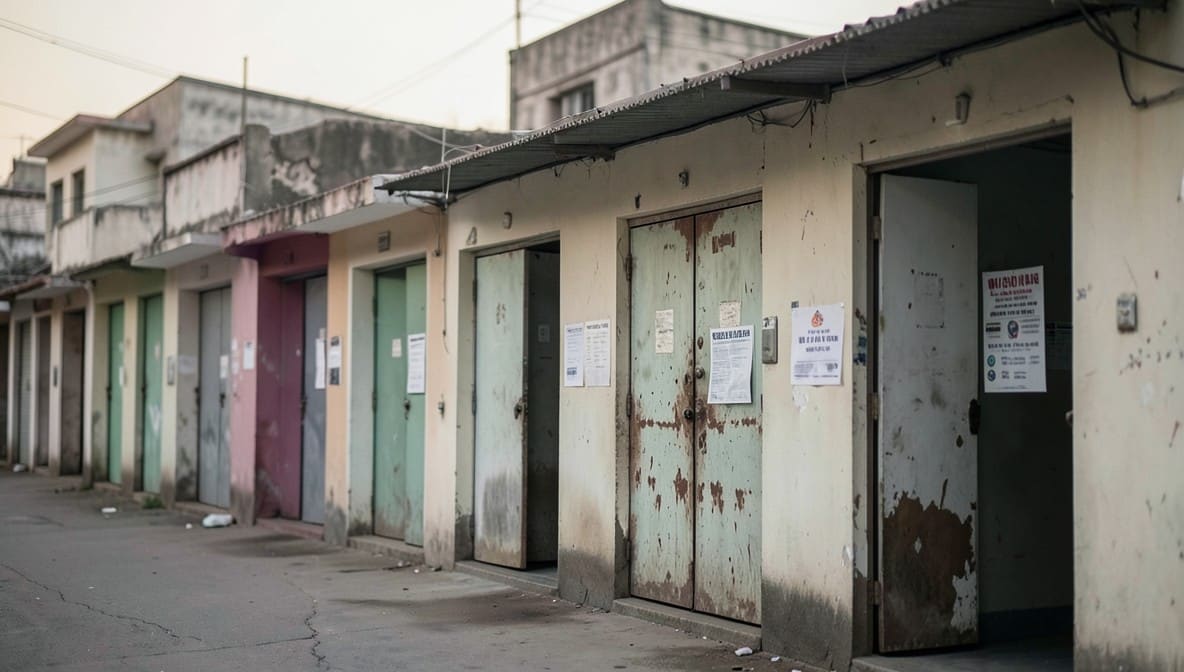
The Chhattisgarh High Court has affirmed that a public authority like Steel Authority of India Limited (SAIL) may lawfully impose new terms for the renewal of fixed-term leases on public premises, even where such terms significantly increase financial obligations. The judgment clarifies that renewal is not an automatic right but a fresh contractual grant, and judicial interference is barred absent arbitrariness or constitutional violation.
Background & Facts
The Dispute
The petitioner, Gulab Jain, is a long-standing lessee of commercial plots within the Bhilai Steel Plant Township, having acquired her leasehold interest through registered sale-lease deeds executed between 1989 and 1991. These deeds granted her possession for a fixed tenure of 30 to 33 years, with specific conditions governing rent and renewal. The core dispute arises from SAIL’s unilateral imposition of new renewal terms in 2008, which introduced substantial charges not contemplated in the original leases.
Key Facts
- The original lease deeds (Exhibits) dated 1989 - 1991 stipulated:
- Ground rent enhancement at renewal shall not exceed 50% of existing rent
- No renewal charges, lease premium, or additional fees payable
- Lease terms binding on both parties
- On 21.07.2008 and 25.07.2008, SAIL’s Board of Directors passed resolutions introducing a new lease renewal policy:
- Renewal charge: 25% of the Applicable Land Premium
- Ground rent: 1% of the Applicable Land Premium
- Service charge: 2% of the Applicable Land Premium
- The petitioner and other shopkeepers were notified of the new policy in 2008, but no immediate enforcement occurred.
- On 31.07.2019, the District Collector, Durg, issued a directive to SAIL stating:
- Premium or additional charges are payable only at initial lease grant
- No premium or extra charges may be imposed at renewal
- SAIL must comply with State Government rules
- On 23.11.2019, the Chief General Manager (TA), Bhilai Steel Plant, reiterated this directive to SAIL’s Corporate Office.
- Despite these directives, SAIL issued demand letters dated 01.04.2025 requiring payment of renewal charges, enhanced ground rent, and service charges based on the 2008 policy.
- The petitioner, along with other lessees, challenged the policy’s validity through writ petitions.
Procedural History
- 21.07.2008: SAIL Board passes resolution introducing new lease renewal terms
- 25.07.2008: Extended Board meeting confirms same policy
- 31.07.2019: District Collector, Durg, issues directive prohibiting renewal charges
- 23.11.2019: Bhilai Steel Plant management writes to SAIL Corporate reiterating Collector’s directive
- 01.04.2025: SAIL issues demand letters to lessees for renewal charges under 2008 policy
- 2025: Batch of writ petitions filed, including WPC No. 2337/2025 (lead case)
- 31.10.2025: Single Judge dismisses all writ petitions
- 02.02.2026: Chhattisgarh HC dismisses WA No. 35/2026 (related case) on identical issues
- 29.03.2026: Present writ appeal (WA No. 299/2026) filed by petitioner
Relief Sought
The petitioner sought:
- Declaration that SAIL’s 2008 lease renewal policy is unconstitutional, void ab initio, and violative of Article 14
- Quashing of the demand letter dated 01.04.2025
- Injunction against enforcement of renewal charges
- Restoration of lease renewal on original terms as per 1989 - 1991 deeds
The Legal Issue
The central question was whether a public authority like SAIL, as lessor of public premises, may unilaterally impose new financial conditions for lease renewal after the expiry of a fixed-term lease, and whether such a policy violates the original lease terms or constitutional guarantees under Article 14.
Arguments Presented
For the Petitioner
The petitioner’s counsel contended that:
- The 2008 policy is ultra vires the original lease deeds, which explicitly prohibited renewal charges
- The policy is arbitrary and discriminatory as it imposes disproportionate financial burdens on lessees who relied on the original terms
- The State Government’s 2019 directive explicitly prohibited renewal charges, making SAIL’s policy unlawful
- The Single Judge failed to specifically address the prayer for declaration of unconstitutionality, rendering the judgment perverse
- The reliance on Ashoka Marketing Ltd. was misplaced as it dealt with Estate Officers’ powers, not policy vires
For the Respondent/State
The State and SAIL contended that:
- SAIL, as owner of public premises, has the right to frame uniform policies for renewal of leases
- Renewal is not an automatic right but a fresh grant subject to new terms
- The original lease deeds did not create a vested right to renewal on identical terms
- The policy is non-discriminatory, based on market valuation, and applied uniformly to all lessees
- The judgment in Ashoka Marketing Ltd. establishes that public authorities may regulate occupancy rights through policy, absent arbitrariness or constitutional violation
- The District Collector’s 2019 letter is not binding on SAIL as it is an administrative communication, not a statutory directive
The Court's Analysis
The Court undertook a detailed examination of the nature of leasehold rights in public premises and the scope of judicial review over executive policy. It emphasized that the original lease deeds were for a fixed term and contained no provision for automatic renewal. The Court held that renewal is a fresh contractual arrangement, not an extension of the original lease.
"The challenge raised by the appellants essentially pertains to the terms of renewal of lease, which flow from a policy decision of SAIL, and not to any legislative action requiring strict scrutiny of vires."
The Court rejected the argument that the Single Judge failed to address the constitutional challenge. It observed that the dismissal of the writ petition necessarily entailed rejection of the claim that the policy was unconstitutional. The absence of the word "unconstitutional" in the judgment does not amount to perversity.
The Court relied on Ashoka Marketing Ltd. v. Punjab National Bank (1990) 4 SCC 406, noting that while the case arose in the context of Estate Officers, its core principle - that public authorities may frame policies governing occupancy of public premises - remains binding. The Court held:
"Where public premises belong to a statutory or public authority, the rights of occupants are governed primarily by the terms of allotment and the policy framed by the authority, and such policy decisions, unless shown to be arbitrary, discriminatory, or violative of constitutional mandates, are not open to judicial interference."
The Court further noted that the petitioner had accepted the original lease terms, which were time-bound, and could not claim a vested right to renewal on the same conditions. Mere financial burden, without evidence of arbitrariness or discrimination, does not render a policy unconstitutional.
The Court also affirmed that the District Collector’s 2019 letter was an administrative communication and did not override SAIL’s statutory powers as a public authority managing its own property.
The Verdict
The writ appeal was dismissed. The Court upheld the validity of SAIL’s 2008 lease renewal policy and confirmed that the demand letter dated 01.04.2025 is lawful. The petitioner’s claim to renewal on original terms was rejected. No costs were awarded. The Court held that renewal of lease is a fresh grant subject to the lessor’s policy, and no enforceable right exists to continue on pre-expiry terms.
What This Means For Similar Cases
Renewal Is Not a Right, But a Privilege
- Practitioners must advise clients that fixed-term leases on public premises do not confer a right to renewal on identical terms
- Lessees cannot rely on past concessions or historical rates to challenge new renewal policies
- The burden is on the lessee to prove arbitrariness, discrimination, or mala fides to invalidate a policy
Judicial Restraint in Policy Matters
- Courts will not substitute their commercial judgment for that of public authorities managing public property
- Administrative directives from state departments (e.g., District Collector) do not bind statutory corporations unless formally adopted as policy
- Challenges to policy must be grounded in constitutional violations, not mere economic hardship
Policy Must Be Uniform and Non-Discriminatory
- Public authorities may revise lease terms to reflect market realities, provided the policy is applied uniformly
- Valuation by certified professionals and transparent methodology strengthens policy validity
- Any differential treatment must be objectively justified