The Customs, Excise and Service Tax Appellate Tribunal (CESTAT) Chennai has clarified a critical principle in indirect tax jurisprudence: the mere issuance of invoices for capital goods, without their physical removal from factory premises, does not trigger the obligation to reverse CENVAT credit. This ruling resolves long-standing ambiguity for manufacturers who amortize tooling costs through customer invoices while retaining physical possession of moulds and dies.
Background & Facts
The Dispute
The appellant, M/s. TVS Novotema Elastomeric Engineered Products Pvt. Ltd., manufactures rubber components such as O-rings and gaskets under Chapter 40 of the Central Excise Tariff Act, 1985. These products are custom-made for customers using specialized, customer-specific moulds imported from M/s. Novotema, Italy. The appellant paid customs duties on these imports and availed CENVAT credit on the duties paid, treating the moulds as capital goods under Rule 2(a) of the CENVAT Credit Rules, 2004.
The dispute arose when the department audited the appellant’s records for the period April 2009 to June 2013. During this audit, it was observed that the appellant had raised invoices for the sale of moulds to customers under Rule 11 of the Central Excise Rules, 2002, and collected VAT on such invoices. The department contended that this invoicing constituted a 'removal' of capital goods under Rule 3(5) of the CENVAT Credit Rules, 2004, thereby requiring reversal of the CENVAT credit availed.
Key Facts
- Moulds were imported from Italy on payment of customs duty between 2005 and 2013
- CENVAT credit of Rs. 21,95,821/- was availed on duties paid on these moulds
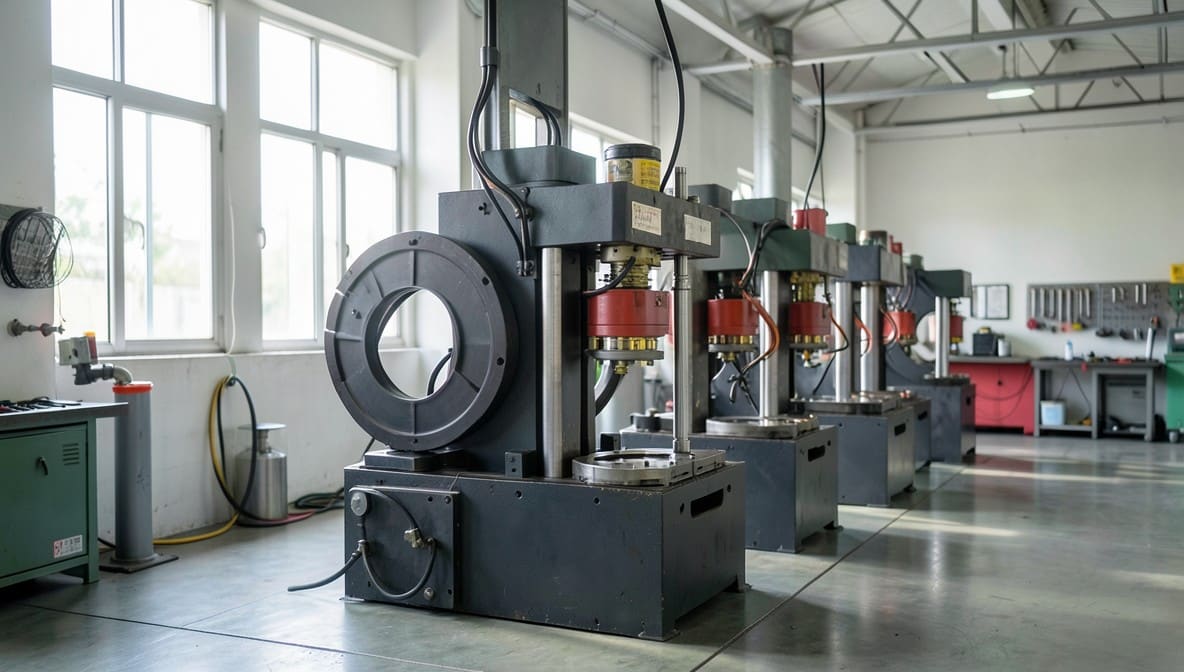
- Moulds remained installed and in continuous use within the appellant’s factory throughout the period
- Invoices for mould cost were raised to recover amortized expenses, as per pricing agreements with customers
- No physical movement of moulds from factory premises occurred at any time
- All transactions were recorded in books of account and reflected in ER-1 returns
- The appellant produced a certificate from a Chartered Engineer dated 2014 confirming the moulds were physically present and operational in the factory
Procedural History
- 06.01.2015: Show Cause Notice issued proposing reversal of CENVAT credit of Rs. 21,95,821/-, interest and penalties
- 12.06.2017: Order-in-Appeal No. 166/2017 passed by Commissioner of Central Excise (Appeals-I), Madurai, upholding the demand
- 12.06.2017: Appellant filed Excise Appeal No. 41993 of 2017 before CESTAT Chennai
- 06.01.2026: Hearing conducted before CESTAT Chennai
- 27.03.2026: Final Order No. 40440/2026 pronounced
Relief Sought
The appellant sought setting aside of the impugned order dated 12.06.2017, cancellation of the demand for reversal of CENVAT credit of Rs. 21,95,821/-, and quashing of interest and penalties imposed under the Central Excise Act, 1944 and CENVAT Credit Rules, 2004.
The Legal Issue
The central question was whether raising invoices for the sale of capital goods, without their physical removal from the factory premises, constitutes 'removal' under Rule 3(5) of the CENVAT Credit Rules, 2004, thereby mandating reversal of availed CENVAT credit.
Arguments Presented
For the Appellant
The appellant’s counsel, Ms. S. Uma Maheswari, argued that Rule 3(5) requires actual physical removal of capital goods from the factory for credit reversal to apply. She emphasized that the moulds remained installed and in continuous use for manufacturing final excisable goods. Raising invoices was merely a commercial mechanism to recover amortized costs, not a transfer of possession. Reliance was placed on J.K. Spinning and Weaving Mills Ltd. v. Union of India, Mutual Mecaplast Ltd. v. CCE, Polyplastics Industries (I) Ltd. v. CCE, and Grupo Antolin India Pvt. Ltd. v. Commissioner of Central Excise, all of which held that invoicing without physical movement does not amount to removal. She further contended that the extended period of limitation under Section 11A of the Central Excise Act was wrongly invoked, as there was no suppression of facts, and the appellant had maintained complete records. The absence of mens rea negated the imposition of penalties under Section 11AC.
For the Respondent
The authorized representative, Mr. M. Selvakumar, argued that the issuance of invoices for sale of moulds and collection of VAT indicated a transfer of ownership, which, under the department’s interpretation, triggered the obligation to reverse CENVAT credit under Rule 3(5). He maintained that the transaction, viewed as a sale, constituted removal irrespective of physical movement, and that the appellant’s conduct warranted penalty for non-compliance.
The Court's Analysis
The Tribunal undertook a detailed statutory interpretation of Rule 3(5) of the CENVAT Credit Rules, 2004, which states that CENVAT credit must be reversed when inputs or capital goods are removed "as such" from the factory. The Tribunal emphasized that the language of the rule is unambiguous: it requires physical removal. The rule contains no deeming fiction equating invoicing or transfer of ownership with removal.
"The statutory scheme therefore clearly contemplates physical removal of goods from the factory. The rule does not create any deeming fiction whereby mere transfer of ownership or issuance of an invoice would amount to removal of capital goods."
The Tribunal relied on the Supreme Court’s ruling in J.K. Spinning and Weaving Mills Ltd. v. Union of India, which held that excise duty is attracted on manufacture and removal, and that removal implies physical movement. The Tribunal further cited Polyplastics Industries (I) Ltd. v. CCE, where the Tribunal and the Punjab & Haryana High Court affirmed that a Chartered Engineer’s certificate confirming physical presence of moulds in the factory was decisive. The Tribunal also referenced Grupo Antolin India Pvt. Ltd., which held that absence of proof of physical removal negates the applicability of Rule 3(5).
On the issue of extended limitation under Section 11A, the Tribunal held that the dispute was purely interpretational, not involving suppression of facts. The appellant had filed returns regularly and maintained complete records. The Supreme Court in Tamil Nadu Housing Board v. CCE and the Gujarat High Court in CCE v. Dashion Ltd. were cited to support the proposition that extended limitation cannot be invoked where the issue is one of legal interpretation.
Regarding penalties under Section 11AC, the Tribunal found no evidence of fraud, wilful misstatement, or intent to evade duty. The appellant acted under a bona fide belief grounded in judicial precedents. The absence of mens rea rendered the penalty unsustainable.
The Verdict
The appellant succeeded in full. The Tribunal set aside the Order-in-Appeal dated 12.06.2017 and allowed the appeal. The demand for reversal of CENVAT credit of Rs. 21,95,821/-, along with interest and penalties, was cancelled. The Tribunal held that no duty, interest or penalty was payable as the moulds were not physically removed from the factory premises.
What This Means For Similar Cases
Invoicing Does Not Equal Removal
- Practitioners representing manufacturers using customer-specific moulds, dies, or tools can now confidently argue that invoicing for amortized tooling costs does not trigger CENVAT credit reversal under Rule 3(5)
- The burden shifts to the department to prove physical removal; mere invoice records are insufficient
- Commercial arrangements for cost recovery through invoicing are legally distinct from transfer of possession under excise law
Extended Limitation Requires Fraud, Not Interpretation
- Departments cannot invoke extended limitation under Section 11A merely because an assessee’s interpretation of Rule 3(5) differs from theirs
- Regular filing of returns and maintenance of records defeats allegations of suppression
- Interpretational disputes, even if later resolved against the assessee, do not constitute fraud
Penalties Require Mens Rea
- Penalties under Section 11AC cannot be imposed where the assessee acted in good faith based on judicial precedents
- Absence of intent to evade duty negates penalty even if the department’s view is later upheld
- Practitioners must emphasize the absence of mens rea in all penalty-related appeals