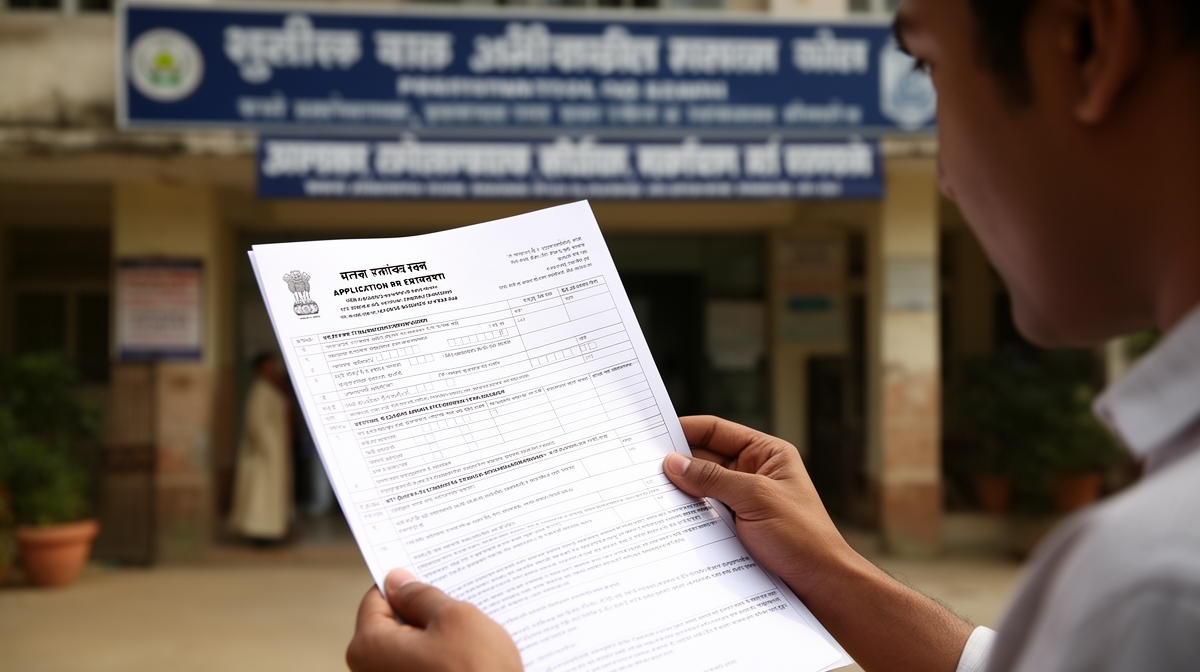
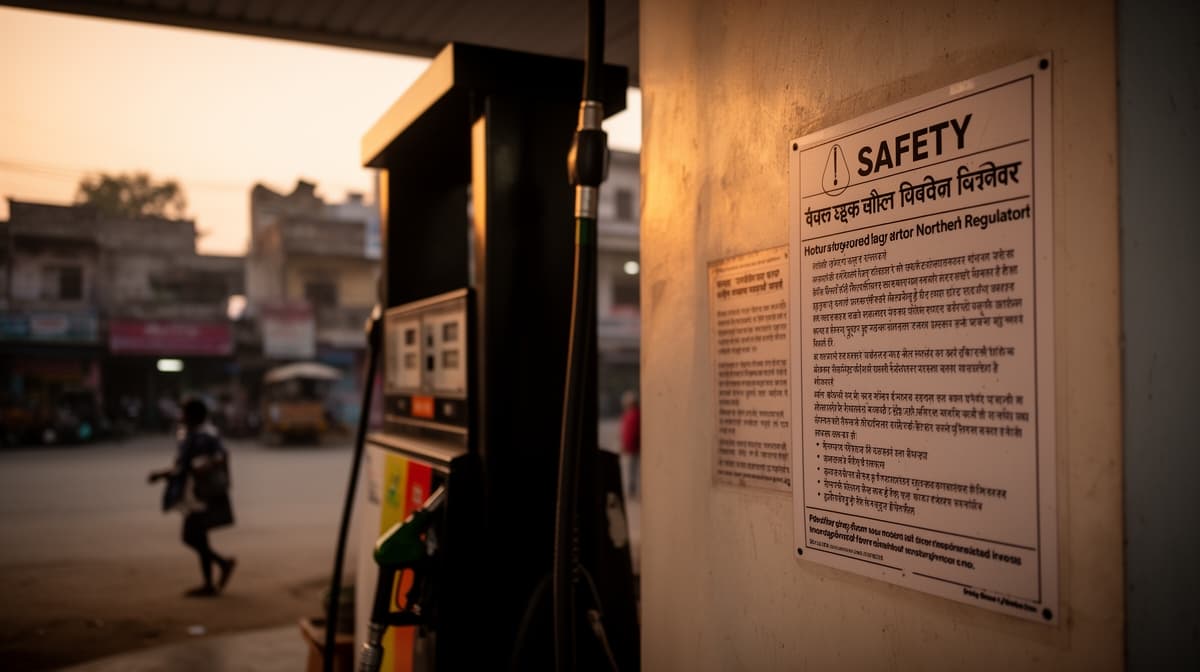
The Central Information Commission has delivered a significant clarification on the limits of commercial confidentiality under the Right to Information Act, 2005. In a case involving an explosive license for a petrol pump, the Commission held that public interest in safety-critical infrastructure cannot be subordinated to claims of competitive disadvantage, reinforcing the primacy of transparency in matters affecting public welfare.
Background & Facts
The Dispute
The appellant, Ravi Thakre, filed an RTI application on 18 June 2024 seeking two pieces of information regarding a Hindustan Petroleum Corporation Limited (HPCL) petrol pump in Mathura, Uttar Pradesh: (1) a certified copy of the valid Explosive License for the outlet, and (2) confirmation of whether the pump had been commissioned and, if so, the date of commissioning.
Procedural History
The case progressed through the following stages:
- 18 June 2024: RTI application filed by the appellant
- 15 July 2024: CPIO denied the request citing Section 8(1)(j) and Section 8(1)(d) of the RTI Act, claiming the information was third-party commercial confidential data
- 18 July 2024: First appeal filed by the appellant
- 5 August 2024: First Appellate Authority upheld the CPIO’s denial
- 29 August 2024: Second appeal filed before the Central Information Commission
Relief Sought
The appellant sought disclosure of the Explosive License and the commissioning date, arguing that the information pertained to public safety and regulatory compliance, and thus fell outside the scope of exempted information under the RTI Act.
The Legal Issue
The central question was whether Section 8(1)(d) of the RTI Act, 2005, which exempts information that would harm the competitive position of a third party, can validly be invoked to withhold an Explosive License for a petrol pump when public safety and regulatory oversight are at stake.
Arguments Presented
For the Petitioner
The appellant contended that the Explosive License is not merely commercial information but a statutory document issued under the Explosives Act, 1884, and is inherently tied to public safety. Disclosure of such a license does not reveal trade secrets but confirms compliance with mandatory safety regulations. The appellant relied on Central Information Commission v. State of Bihar to argue that information concerning public health and safety cannot be denied under the guise of commercial confidentiality.
For the Respondent
Hindustan Petroleum argued that the Explosive License contained technical drawings of storage tanks and layout plans, which constituted trade secrets under Section 8(1)(d). It further claimed that disclosure could enable competitors to replicate operational designs, thereby harming its competitive position. The respondent also cited Section 8(1)(j), asserting that the license contained personal details of the licensee, though no such personal data was identified in the record.
The Court's Analysis
The Commission undertook a purposive interpretation of Section 8(1)(d), emphasizing that exemptions under the RTI Act must be narrowly construed. It noted that the Explosive License is not a private commercial contract but a public regulatory instrument issued by the Petroleum and Explosives Safety Organisation (PESO) under statutory authority. The Commission observed that the license’s purpose is to ensure compliance with safety norms for handling hazardous materials in densely populated areas.
"The information sought is not a proprietary design document but a regulatory certification required for lawful operation of a facility handling explosive substances. Its disclosure serves the public interest in verifying compliance with safety standards."
The Commission rejected the claim that layout drawings in the license constituted trade secrets, noting that such details are routinely inspected by regulatory authorities and are not confidential in nature when the facility is operational in a public space. It further held that Section 8(1)(j) was inapplicable as no personal data of the licensee was identified or claimed.
Regarding the commissioning date, the Commission noted that while the CPIO had erroneously withheld this information on the ground that the outlet was not commissioned at the time of reply, the respondent voluntarily disclosed during the hearing that commissioning occurred on 20 January 2025. The Commission found this disclosure sufficient and declined to issue a direction on this point.
The Verdict
The appeal was dismissed as the commissioning date was disclosed during the hearing. However, the Commission implicitly rejected the respondent’s grounds for withholding the Explosive License, holding that Section 8(1)(d) cannot override public safety interests. No further relief was ordered because the information was already provided.
What This Means For Similar Cases
Public Safety Overrides Commercial Confidentiality
- Practitioners must now argue that any document issued under a safety or regulatory statute - such as explosives, fire, or environmental licenses - cannot be withheld under Section 8(1)(d)
- RTI applicants should cite the statutory purpose of the document, not its format or technical detail, to establish public interest
Regulatory Certificates Are Not Trade Secrets
- Technical drawings or layouts in licenses issued by PESO, DGCA, or other regulators are not protected as trade secrets if they relate to public infrastructure
- Even if third-party information is involved, the public interest test under Section 11(1) must be applied rigorously before denial
Procedural Compliance in RTI Denials Is Non-Negotiable
- CPIOs must specify which exact information is claimed as confidential, not rely on blanket exemptions
- Failure to identify personal or proprietary data under Section 8(1)(j) or Section 8(1)(d) renders the denial legally unsustainable