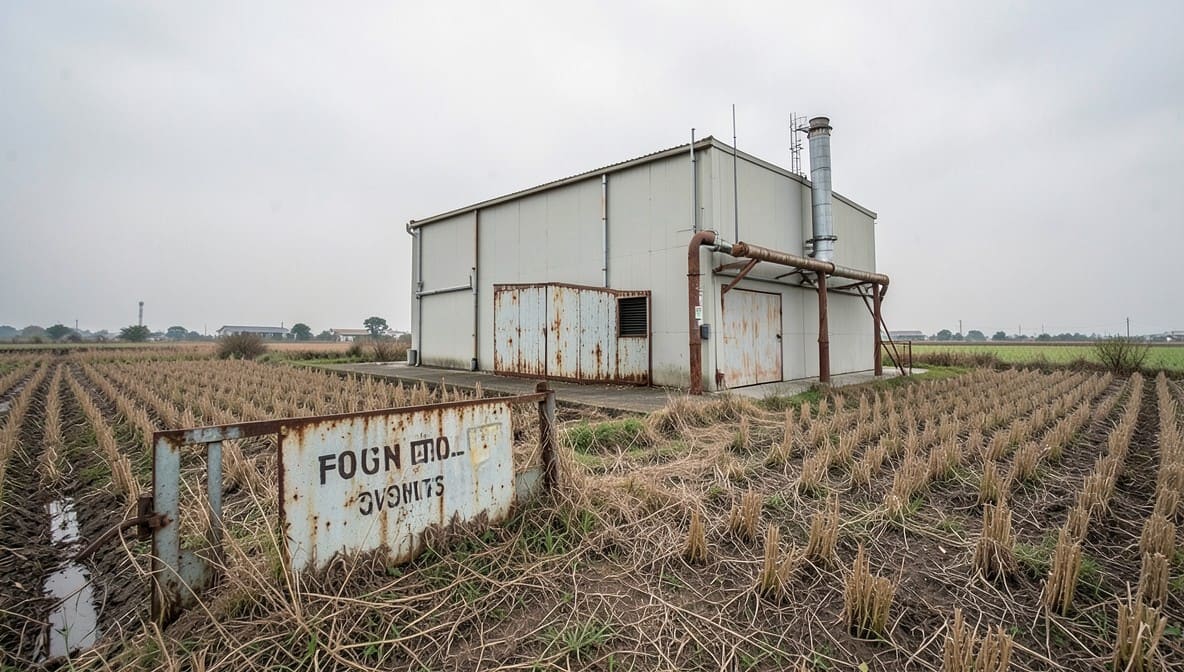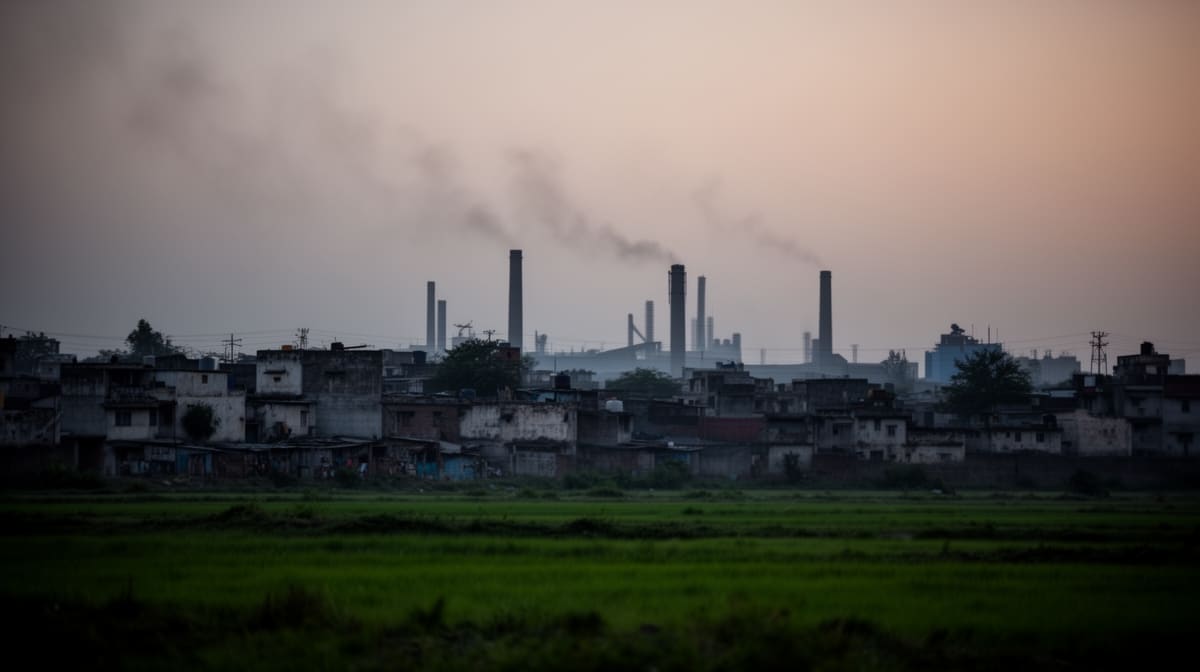
The National Green Tribunal’s dismissal of an application seeking permanent closure of a calcined petroleum coke plant underscores a critical doctrinal boundary: environmental harm must be proven through objective, measurable data - not anecdotal claims or statistical outliers. This judgment reinforces that regulatory compliance, not public apprehension, governs industrial operations under India’s environmental jurisprudence.
Background & Facts
The Dispute
The applicants, comprising local residents’ associations and social justice groups from Sao Jose De Areal, Goa, sought the permanent closure or relocation of Goa Carbon Limited’s calcination plant, alleging chronic air pollution since its inception in 1980. They claimed the plant emitted toxic levels of Particulate Matter (PM), Sulphur Dioxide (SO2), and Nitrogen Oxides, causing widespread respiratory illnesses among villagers, including COPD, asthma, and bronchitis. The petition cited decades of complaints, a 2022 Goa Human Rights Commission (GHRC) report, and 221 instances of PM emissions exceeding 150 mg/Nm3 between January 2023 and January 2024.
Procedural History
- 1980: Goa Carbon Limited commenced operations in Sao Jose De Areal.
- 2016: Villagers filed a complaint with the Goa Human Rights Commission.
- 2022: GHRC issued an inquiry report concluding the plant violated consent conditions and caused human rights violations.
- 2023: MoEF&CC notified new emission standards for Calcined Petroleum Coke units, effective June 5, 2025.
- 2024: Original Application No. 80 of 2024 filed before NGT, seeking closure and non-renewal of Consent to Operate.
- 2024: NGT constituted a Joint Committee to inspect compliance.
- 2024: GSPCB issued a new Consent to Operate (CTO) on March 3, 2024, valid until 2029.
Relief Sought
The applicants sought: (1) permanent closure or relocation of the plant outside residential zones; (2) revocation or non-renewal of the CTO; and (3) environmental restitution, including air quality restoration in the village.
The Legal Issue
The central question was whether isolated spikes in stack emissions, absent proof of sustained violation of Consent to Operate conditions or ambient air quality standards, justify the closure of an industrial unit under Section 15 of the National Green Tribunal Act, 2010.
Arguments Presented
For the Petitioner
The applicants relied on the GHRC’s 2022 report, which found consistent breach of CTO conditions and a direct correlation between pollution and health impacts. They cited 221 instances of PM exceeding 150 mg/Nm3 as evidence of systemic non-compliance. They argued that the plant’s location within a village violated the CPCB’s “siting criteria” for Red-category industries and that medical reports from villagers substantiated causal harm. They contended that the NGT’s jurisdiction under Section 15 extends to remedying ongoing environmental degradation, regardless of pending appeals under the Air or Water Acts.
For the Respondent
Goa Carbon Limited countered that the 221 exceedances represented only 0.59% of 37,440 total readings, well within acceptable error margins. It emphasized compliance with CTO standards, ambient air monitoring data showing adherence to NAAQS, and proactive investments in pollution control - including replacement of 560 filter bags and installation of a ₹3.5 crore FGD system. It argued that the application was a disguised appeal against the CTO, barred by limitation under Section 28 of the Water Act and Section 31 of the Air Act, and that the GHRC report was not a judicial finding. It further challenged the medical evidence as unverified and statistically unreliable.
The Court's Analysis
The Tribunal conducted a rigorous distinction between stack emissions and ambient air quality standards. It held that the applicants’ reliance on stack emission data to prove violation of NAAQS was legally flawed, as the former measures point-source discharge while the latter assesses ambient exposure. The Court noted that the new 2023 notification setting stricter PM limits was not yet in force, rendering its application premature.
"Stack emission data cannot be compared at all with 'ambient air quality' standards and therefore, this allegation is per se incorrect and illogical."
The Tribunal accepted the Joint Committee’s finding that the plant had largely complied with CTO conditions, including installation of dust extraction systems, road sweeping, and water sprinklers. It dismissed the applicants’ claim that inspections were staged, finding no evidence to support the allegation that trucks were diverted to mask emissions.
Regarding health impacts, the Court found the medical reports submitted by applicants to be uniform, uncorroborated, and lacking specific diagnoses of occupational disease. In contrast, the respondent’s independent medical examinations of its employees showed no occupational health hazards. The Court emphasized that correlation does not equate to causation without epidemiological or longitudinal data.
On limitation, the Tribunal accepted the applicants’ argument that the GHRC report of March 15, 2022, constituted the first authoritative finding of violation, thereby triggering the five-year limitation period under Section 15. The application filed on March 26, 2024, was thus held to be within time.
Ultimately, the Court held that the existence of a valid, current CTO - issued after full compliance review - precluded judicial interference absent demonstrable, ongoing illegality. The principle of proportionality and regulatory finality governed the outcome.
The Verdict
The applicants lost. The National Green Tribunal held that isolated emission spikes, absent proof of systemic non-compliance with Consent to Operate conditions or ambient standards, do not justify closure or relocation of an industry. The Tribunal upheld the validity of the renewed CTO and dismissed the application, emphasizing that environmental regulation must be grounded in objective compliance, not speculative harm.
What This Means For Similar Cases
Compliance with Consent to Operate Is Conclusive
- Practitioners must prioritize reviewing the Consent to Operate conditions and compliance records before filing NGT applications.
- A valid, current CTO issued after inspection creates a rebuttable presumption of legality; challengers bear the burden of proving material breach.
- Applications seeking closure based on historical violations are likely to fail if the industry has since remediated.
Ambient Standards Trump Stack Emission Spikes
- Stack emission data cannot be used to prove violation of NAAQS; they are legally distinct metrics.
- A single year’s data with minor exceedances (e.g., <1%) is insufficient to establish non-compliance if the annual average remains within limits.
- Petitioners must submit ambient air monitoring data from accredited third-party labs to substantiate health claims.
Medical Evidence Must Be Credible and Independent
- Medical reports from a single doctor for dozens of claimants are prima facie unreliable.
- To establish causation, petitioners must provide: (a) individualized diagnoses, (b) temporal correlation with exposure, and (c) exclusion of confounding factors (e.g., smoking, diet).
- Employer medical records showing no occupational illness can significantly undermine health-based claims.