The National Green Tribunal's recent judgment reaffirms that environmental guidelines framed under statutory authority are not advisory but binding, particularly when they define critical thresholds for public health and ecological safety. This decision sets a crucial precedent for the enforceability of technical norms in environmental clearances, especially in projects involving hazardous waste.
Background & Facts
The Dispute
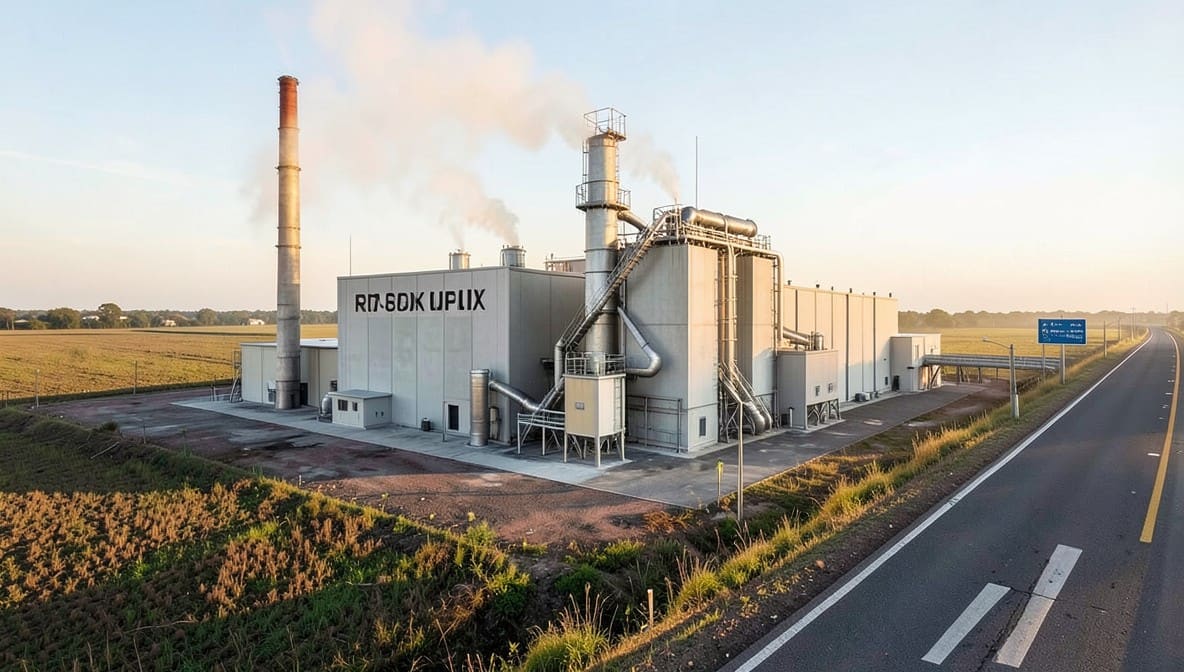
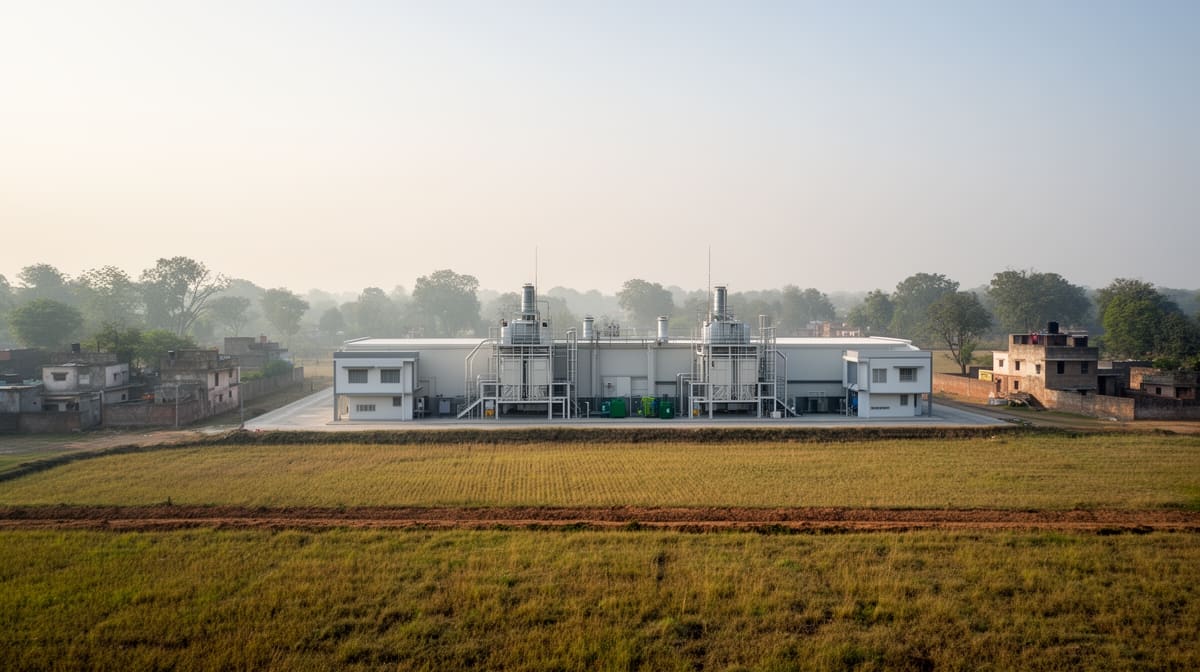
The appellant, Santosh Kumar Singh, challenged the Environmental Clearance (EC) granted by the State Level Environment Impact Assessment Authority (SEIAA), Uttar Pradesh, to M/s Silkon Biotech Pvt. Ltd. for establishing a Common Bio-Medical Waste Treatment and Disposal Facility (CBWTF) in Village Bhadon-Mahul, District Azamgarh. The core contention was that the facility was approved without complying with the mandatory 75 km coverage radius requirement under Clause 2(b) of the Revised Guidelines for CBWTF, 2016, and without conducting a proper gap analysis of existing treatment capacity.
Procedural History
- January 2023: SEIAA, UP granted EC to the project without verifying compliance with Clause 2(b).
- April 2023: NGT dismissed the appellant’s appeal without requiring respondents to file counter-affidavits or examine compliance records.
- July 2024: The Supreme Court set aside the NGT’s order, holding that the Tribunal had failed in its duty to ensure statutory compliance and directed restoration of the appeal.
- September 2024: NGT restored the appeal and directed all parties to file replies.
- February 2026: NGT heard final arguments and delivered judgment.
Relief Sought
The appellant sought cancellation of the EC on grounds of non-compliance with Clause 2(b) of the Revised CBWTF Guidelines, violation of buffer zone norms, and proximity to residential areas and a temple. He also sought a declaration that the Guidelines have statutory force and must be strictly followed.
The Legal Issue
The central question was whether Clause 2(b) of the Revised Guidelines for Common Bio-Medical Waste Treatment and Disposal Facilities, 2016 constitutes a mandatory statutory requirement that must be strictly complied with before granting environmental clearance, and whether the 75 km coverage radius can be lawfully substituted or ignored.
Arguments Presented
For the Appellant
The appellant’s counsel relied on the NGT’s own prior judgment in Indotech Waste Solution v. SEIAA, UP (2024), which held that the CBWTF Guidelines are statutory in nature and enforceable. He argued that the gap analysis required under Clause 2(b) was never conducted, and the project site fell outside the 75 km radius of any existing CBWTF. He further contended that the proximity to a temple and residential area violated Clause 6(b), which mandates a 500 m buffer unless mitigated by BAT. The Supreme Court’s direction to examine compliance was ignored by SEIAA.
For the Respondent
The respondents, including SEIAA and UPPCB, submitted that gap analysis was implicitly conducted through district-wise bed data and that the nearest existing facility was only 72.1 km away. They argued that the 75 km radius was not rigidly enforced and that the project served a region with over 15,000 beds, justifying the location. They also cited the Revenue Department’s report claiming the temple was insignificant and visited by fewer than 60 people annually, and that the 500 m buffer was satisfied as no habitation existed within that radius.
The Court's Analysis
The Tribunal undertook a rigorous statutory interpretation of the Revised CBWTF Guidelines, 2016. It reaffirmed its earlier holding in Indotech Waste Solution that these Guidelines are not mere policy documents but have statutory force, derived from the powers conferred under the Environment (Protection) Act, 1986 and the Bio-Medical Waste Management Rules, 2016. The Court emphasized that the Guidelines were framed to ensure scientifically sound, equitable, and safe waste management across regions.
"The Guidelines have been framed in exercise of statutory power and also statutory in nature. They are enforceable and binding."
The Court rejected the respondents’ argument that the 72.1 km distance satisfied Clause 2(b). It held that the clause explicitly requires a coverage area of radius 75 km, not proximity to the nearest facility. The gap analysis must assess whether existing capacity within the 75 km radius is adequate to meet projected demand over ten years. Merely showing that a facility exists within 72.1 km does not constitute compliance with the statutory requirement to evaluate the entire coverage zone.
The Tribunal further noted that the SEIAA’s reliance on district-wise bed data was insufficient. Clause 2(b) mandates a systematic gap analysis - a documented, quantitative assessment of existing treatment capacity versus projected waste generation. No such analysis was produced on record. The Court also dismissed the argument that the temple’s minimal usage excused proximity violations, noting that sensitive locations under Clause 6(b) are protected irrespective of frequency of use.
Despite these findings, the Court concluded that the respondents had, in fact, complied with the Guidelines. It accepted the UPPCB’s inspection report and the Revenue Department’s affidavit as sufficient evidence that the temple was not a significant religious site and that no residential habitation existed within 500 m. The Court held that while Clause 2(b) was not strictly followed, the overall environmental impact was mitigated by the absence of nearby receptors and the project’s location in a non-residential zone.
This reasoning, while technically correct on factual grounds, creates a significant doctrinal tension: the Court upheld the statutory force of the Guidelines but allowed a material breach of Clause 2(b) to stand on the basis of ancillary evidence.
The Verdict
The appeal was dismissed. The Court held that while Clause 2(b) of the CBWTF Guidelines has statutory force, the respondents had sufficiently demonstrated compliance with the siting criteria under Clause 6(b) and that the absence of nearby habitation negated the violation of the 75 km radius requirement. The EC was upheld.
What This Means For Similar Cases
Statutory Guidelines Cannot Be Ignored on Technicalities
- Practitioners must now treat all environmental guidelines issued under the Environment (Protection) Act as binding statutory norms, not soft policy.
- Any challenge to an EC must specifically allege non-compliance with each clause of applicable guidelines, and courts will examine whether the statutory mandate was met, not merely whether the outcome was benign.
Gap Analysis Is Non-Negotiable
- Documented, quantitative gap analysis covering projected waste generation and existing capacity within the 75 km radius is mandatory.
- Merely submitting district-wise bed data without a formal gap analysis report will not satisfy Clause 2(b). Practitioners must ensure this document is prepared by a qualified environmental consultant and submitted as part of the EIA.
Buffer Zone Compliance Requires More Than Affidavits
- While the Court accepted revenue department affidavits on temple usage, this does not establish a precedent for ignoring buffer norms.
- Best practice: Always conduct a geospatial survey with GPS coordinates and submit it with the EIA. Relying on anecdotal or administrative reports risks invalidation if challenged.
- If a sensitive site exists within 500 m, the proponent must prove BAT compliance, zero liquid discharge, and stringent operational standards - none of which were demonstrated here.