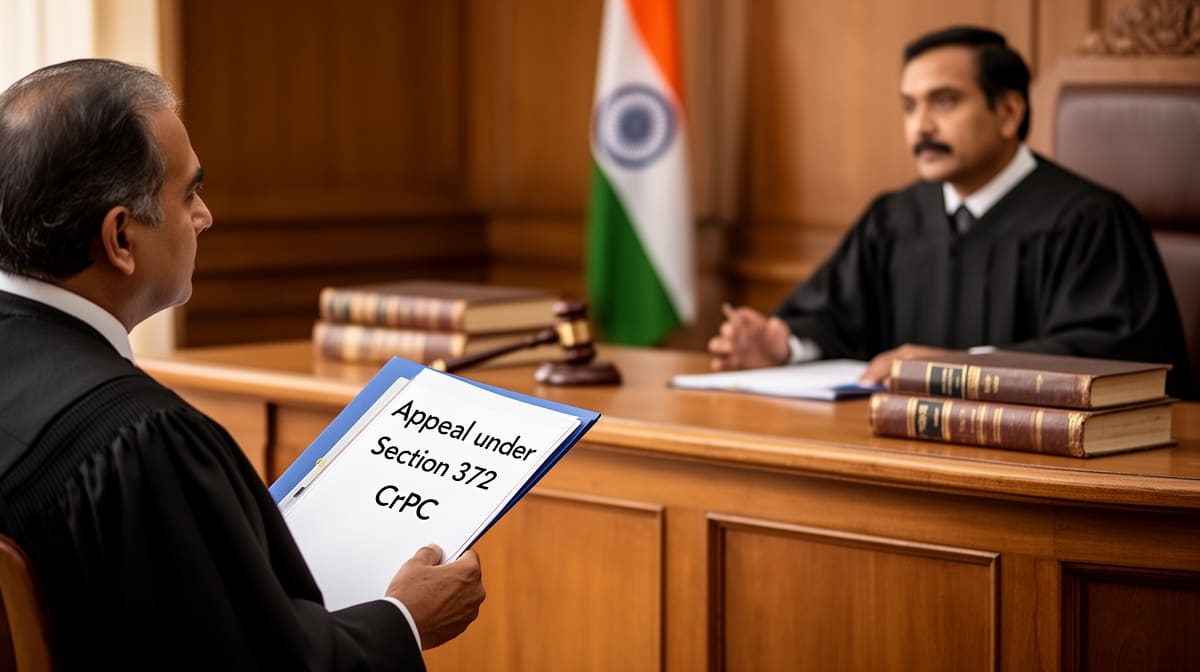
The Calcutta High Court has affirmed a fundamental principle of criminal procedure: an accused person possesses the right to voluntarily withdraw an appeal filed under Section 374(2) of the Code of Criminal Procedure, 1973, provided no prejudice is caused to the State. This ruling clarifies a long-standing ambiguity in appellate practice and reinforces the principle that appeal is a right, not an obligation.
Background & Facts
The Dispute
The appellant, Santosh Pandey, was convicted and sentenced by the Additional District & Sessions Judge, 2nd Fast Track Court, Calcutta, on April 11, 2022, for multiple offences under the Indian Penal Code and the Unlawful Activities (Prevention) Act. He pleaded guilty at the stage of framing of charges, leading to conviction under Section 229 CrPC.
Key Facts
- The appellant was sentenced to five years rigorous imprisonment and a fine of Rs. 50,000 for the offence under Section 489B IPC
- He received three years rigorous imprisonment for the offence under Section 489C IPC
- He was sentenced to five years rigorous imprisonment and a fine of Rs. 10,000 for the offence under Section 16 of the UAPA
- He received five years rigorous imprisonment and a fine of Rs. 10,000 for the offence under Section 17 of the UAPA
- In default of fine payment, additional terms of rigorous imprisonment were imposed: six months for Section 489B, two months each for Sections 16 and 17 of UAPA
- The appellant filed an appeal under Section 374(2) CrPC challenging only the quantum of sentence and fine, not the conviction
- The appellant has already undergone the entire term of imprisonment, including remission granted under Section 432 CrPC
- The appellant expressed a clear intention to withdraw the appeal and to pay the fine to avoid default imprisonment
Procedural History
- 11.04.2022: Conviction and sentencing order passed by the Trial Court
- Post-April 2022: Appeal filed under Section 374(2) CrPC by the appellant
- 20.03.2026: Hearing concluded before the Division Bench of the Calcutta High Court
- 23.03.2026: Judgment delivered by Justice Kausik Chanda
Relief Sought
The appellant sought permission to withdraw his appeal under Section 374(2) CrPC, to deposit the fine imposed by the Trial Court, and to avoid the default sentences for non-payment of fine.
The Legal Issue
The central question was whether an accused person has the legal right to withdraw an appeal filed under Section 374(2) of the Code of Criminal Procedure, 1973, after having filed it, and whether the Appellate Court may permit such withdrawal without entering into the merits of the conviction.
Arguments Presented
For the Appellant
Mr. Manjit Singh, Senior Advocate, submitted that the appellant has fully served his sentence, including remission, and no purpose is served by continuing the appeal. He relied on Shaji v. State of Kerala (2025 SCC OnLine Ker 7436), where the Kerala High Court permitted withdrawal of a similar appeal. He argued that since appeal is a statutory right, its continuation cannot be compelled, and the accused’s voluntary abandonment must be respected under Section 386(e) CrPC, which permits any just or proper consequential order.
For the Respondent
Mr. Rudradipta Nandy, Additional Public Prosecutor, opposed withdrawal, citing K.S. Panduranga v. State of Karnataka, Shyam Deo Pandey v. State of Bihar, and Bani Singh v. State of U.P. He contended that appellate courts must decide appeals on merits regardless of the appellant’s conduct, and that dismissal for non-prosecution without examining the record is impermissible. He argued that allowing withdrawal would undermine the public interest in punishing offences under UAPA and IPC.
The Court's Analysis
The Court distinguished the precedents relied upon by the State. While Bani Singh and its progeny prohibit dismissal of appeals for non-prosecution due to absence or non-appearance, they do not address voluntary withdrawal by the appellant. The Court emphasized that absence is not equivalent to abandonment. Here, the appellant had actively and consciously expressed his desire to withdraw.
"An appeal is a statutory right, not a duty. No one is compelled to file an appeal. So logically there cannot be any compulsion to continue it."
The Court held that Section 386(e) CrPC, which empowers the Appellate Court to pass "any consequential or incidental order that may be just or proper," provides sufficient statutory basis to permit withdrawal. The absence of a specific provision analogous to Order XXIII CPC does not negate the inherent power to dispose of appeals justly.
The Court further noted that an appeal under Section 374(2) CrPC does not confer any right upon the State to seek enhancement of sentence. The State’s interest is limited to upholding the conviction and sentence as passed. Since the appellant has already served the sentence and seeks only to pay the fine to avoid default imprisonment, no prejudice arises from withdrawal.
The Court also clarified that the position would differ if the appeal were filed by the State under Section 377 CrPC, where the accused has a reciprocal right to seek acquittal or reduction. In such cases, withdrawal by the State does not extinguish the Appellate Court’s power to review the sentence.
The Verdict
The appellant succeeded. The Calcutta High Court permitted the withdrawal of C.R.A. (SB) No. 47 of 2025. The appeal is dismissed as withdrawn. The appellant is directed to deposit the fine of Rs. 50,000 (for Section 489B IPC) and Rs. 10,000 each (for Sections 16 and 17 of UAPA) before the Trial Court within two weeks from the date of this order. The records of the Trial Court are to be sent back forthwith. The appellant shall deposit the requisite fees for Special Messenger costs on the same day.
What This Means For Similar Cases
Withdrawal Is Permissible When Voluntary and Non-Prejudicial
- Practitioners may now file applications for withdrawal of appeals under Section 374(2) CrPC where the accused has served the sentence or has no further interest in contesting the appeal
- The application must be accompanied by a sworn affidavit or statement affirming voluntary intent to withdraw
- No formal consent from the State is required, but the Court will assess whether any public interest or legal prejudice arises
Section 386(e) CrPC Is a Broad Discretionary Tool
- Courts may now invoke Section 386(e) CrPC to permit withdrawal, even in absence of a specific provision, as long as the order is "just or proper"
- This opens the door for similar applications in appeals against conviction under Section 374(1) CrPC, provided the accused is not challenging the conviction itself
- The ruling aligns with the principle of personal autonomy in criminal proceedings
State Cannot Seek Enhancement in Accused’s Appeal
- This judgment reinforces that the State has no right to seek enhancement of sentence in an appeal filed by the accused
- Any argument that withdrawal would deprive the State of an opportunity to seek enhancement is legally untenable
- This principle must be raised in opposition to withdrawal applications to be legally valid