The Chhattisgarh High Court has reaffirmed that the right to cross-examine a witness is a fundamental component of natural justice and cannot be forfeited on procedural grounds alone, particularly when the party demonstrates willingness to comply with court-issued commissions. This judgment clarifies the limits of judicial discretion in restricting cross-examination under the guise of procedural delays.
Background & Facts
The Dispute
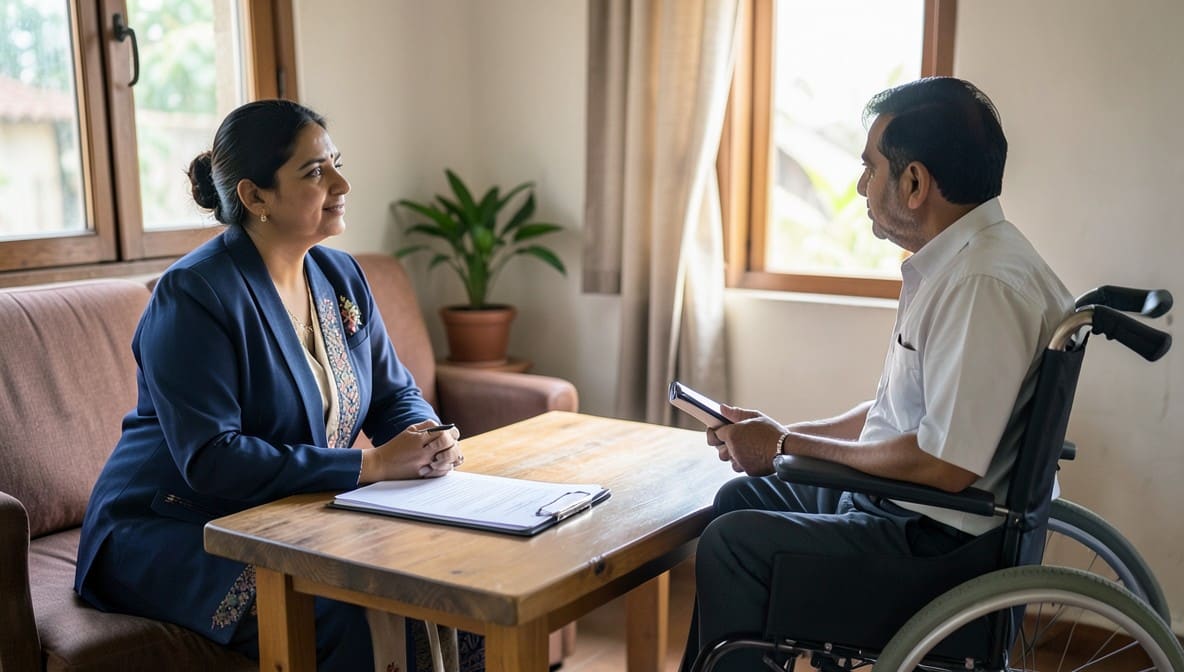
The petitioner, Smt. Nilima, wife of the respondent Hitendra Kumar, is a non-applicant in a divorce petition filed by the respondent under Section 13(1)(a) and (b) of the Hindu Marriage Act, 1955. The respondent, who is differently abled with a 40 percent partial disability, sought to have his evidence recorded at his residence through a Commissioner appointed by the Family Court. The petitioner sought to cross-examine the respondent at the Family Court premises, arguing that conducting the examination at his residence risked procedural irregularities and compromised the integrity of the record.
Key Facts
- The divorce petition (Case No. 958 of 2023) was filed by the respondent on grounds of cruelty and desertion.
- The Family Court issued a commission on an earlier date to record the respondent’s evidence at his residence in Durg, Chhattisgarh.
- The petitioner appeared before the Family Court on 09.02.2026 to cross-examine the respondent but requested that the examination be conducted in court.
- The Family Court rejected this request, forfeiting the petitioner’s right to cross-examine the respondent, while explicitly preserving her right to cross-examine other witnesses.
- The petitioner had previously sought multiple adjournments for cross-examination, which the Family Court cited as grounds for forfeiture.
- The petitioner is willing to conduct the cross-examination at the respondent’s residence under the existing commission and has offered to forgo any further adjournments.
Procedural History
- 2023: Divorce petition filed by respondent under Section 13(1)(a)&(b) of the Hindu Marriage Act.
- Prior to 09.02.2026: Multiple dates of adjournments sought by petitioner for cross-examination.
- 09.02.2026: Family Court forfeited petitioner’s right to cross-examine the respondent, citing repeated delays.
- 09.02.2026: Family Court permitted cross-examination of other plaintiff witnesses.
- 24.03.2026: Writ petition filed under Article 227 of the Constitution before the Chhattisgarh High Court.
The Parties' Positions
For the Petitioner
The petitioner, through her counsel, contended that:
- The right to cross-examine is a statutory and constitutional right under Article 21.
- The Family Court’s forfeiture order was arbitrary and violated the principle of audi alteram partem.
- She had no objection to conducting the cross-examination at the respondent’s residence under the existing commission.
- She undertook not to seek any further adjournments.
- The Family Court’s order was disproportionate and not based on any actual prejudice caused.
For the Respondent
The respondent’s counsel opposed the petition, arguing that:
- The petitioner had repeatedly delayed proceedings.
- The Family Court’s order was a legitimate exercise of discretion to prevent abuse of process.
- The respondent’s disability necessitated recording evidence at home, and the petitioner’s insistence on court-based examination was an attempt to circumvent the commission.
Relief Sought
The petitioner sought:
- Quashing of the Family Court’s order dated 09.02.2026 forfeiting her right to cross-examine the respondent.
- Direction to the Family Court to permit cross-examination of the respondent at his residence under the existing commission.
- No further adjournments to be granted.
- Costs to be borne by the petitioner.
The Legal Issue
The central question was whether the right to cross-examine a witness under the Code of Civil Procedure and principles of natural justice can be forfeited solely because the party seeks to conduct the examination in court rather than at the witness’s residence under a court-issued commission.
Arguments Presented
For the Petitioner
The petitioner’s counsel relied on the foundational principle that cross-examination is not a privilege but a right essential to a fair trial. Citing State of U.P. v. Krishna Mishra and Rajesh Kumar v. State of Haryana, counsel argued that forfeiture of this right without a finding of mala fide or deliberate obstruction is violative of Article 21. The petitioner’s willingness to comply with the commission and forego further adjournments demonstrated good faith, making the forfeiture disproportionate.
For the Respondent
The respondent’s counsel contended that the Family Court’s discretion under Section 151 CPC to regulate procedure was properly exercised. They emphasized the respondent’s physical disability and the need to minimize inconvenience. The repeated delays, they argued, justified the sanction, and the petitioner’s request to shift venue was an attempt to prolong litigation.
The Court's Analysis
The Court examined the nature of cross-examination under the Code of Civil Procedure and the Hindu Marriage Act, noting that while procedural flexibility is permitted, substantive rights cannot be extinguished on technical grounds. The Court observed that the Family Court had not found the petitioner to be acting in bad faith or with intent to delay, but merely noted her failure to appear for cross-examination at the residence.
"The right to cross-examine is not a mere formality; it is a vital safeguard against unsubstantiated allegations and a cornerstone of adversarial justice. To forfeit it on the ground that the party prefers a different venue - especially when she is ready to comply with the existing commission - strikes at the heart of fair procedure."
The Court distinguished between procedural non-compliance and substantive denial of rights. It held that the Family Court’s order was excessive and not proportionate to the alleged misconduct. The petitioner’s offer to conduct the examination under the existing commission, coupled with her undertaking not to seek further adjournments, rendered the forfeiture unnecessary.
The Court further noted that the Family Court had explicitly preserved the petitioner’s right to cross-examine other witnesses, indicating that the issue was not about general delay but a specific objection to venue. This selective forfeiture, the Court held, lacked legal basis.
The Verdict
The writ petition was allowed. The Chhattisgarh High Court set aside the Family Court’s order dated 09.02.2026 forfeiting the petitioner’s right to cross-examine the respondent. The Family Court is directed to fix a date for the cross-examination of the respondent at his residence under the existing commission, with the petitioner to pay Rs. 3,000 as cost to the respondent. No further adjournments shall be granted to the petitioner for this purpose, except in case of unavoidable impediment.
What This Means For Similar Cases
Cross-Examination Rights Are Non-Negotiable
- Practitioners must assert that forfeiture of cross-examination rights requires clear evidence of mala fide intent or deliberate obstruction - not mere inconvenience or venue preference.
- Courts cannot treat requests for procedural adjustments as grounds for extinguishing fundamental rights.
Commission-Based Evidence Does Not Override Fair Trial Rights
- A commission issued for recording evidence does not automatically restrict the manner of cross-examination.
- Parties retain the right to seek cross-examination in court unless the witness’s condition makes it impossible - and even then, alternatives must be explored, not rights revoked.
Proportionality Must Guide Judicial Discretion
- Sanctions like forfeiture must be proportionate to the misconduct.
- Courts must consider undertakings to comply (e.g., no further adjournments) before imposing irreversible penalties.
- This judgment reinforces that procedural fairness trumps administrative convenience in family law proceedings.