
The Madhya Pradesh High Court has reaffirmed that the right to cross-examine prosecution witnesses is not a mere formality but a constitutional safeguard essential to a fair trial. In a decisive ruling, the Court set aside an order that arbitrarily terminated cross-examination, emphasizing that judicial discretion must be exercised with restraint and grounded in substantive grounds.
Background & Facts
The Dispute
The revision petitioner, Yogesh @ Radhe, is facing trial under Sections 109, 132, 121(2), 296, and 118(2) of the Bharatiya Nyaya Sanhita (BNSS), 2023, arising from an incident on 6 March 2025 in which Head Constable Shivpal Singh Sisodiya sustained injuries. The prosecution’s key witness, Sub Inspector Deepak Damor (P.W.8), testified that he observed the accused at the crime scene. During cross-examination, the trial court abruptly terminated the petitioner’s right to further questioning, citing repetition and abuse of process.
Procedural History
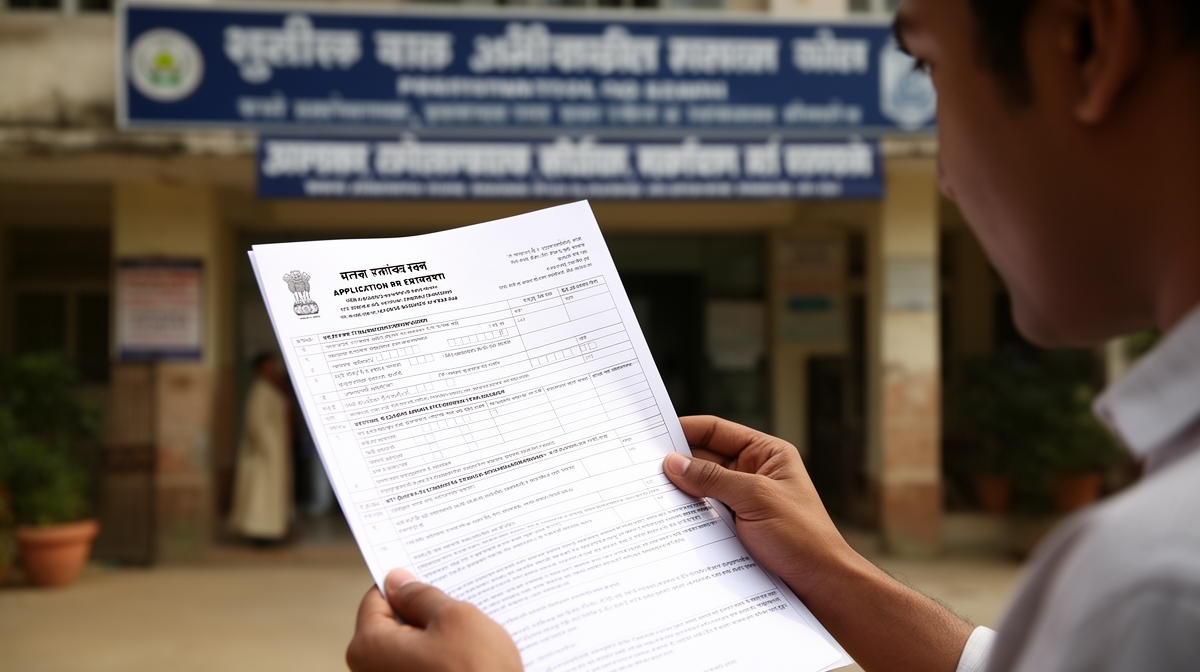
- 17 December 2025: Sessions Judge, Ratlam, ordered forfeiture of the right to further cross-examination of P.W.8, claiming all relevant questions had been asked.
- January 2026: Revision petition filed under Section 438 read with Section 442 of BNSS, 2023, and alternatively under Section 397 read with Section 401 of CrPC, 1973.
- 23 January 2026: Hearing conducted; petitioner directed to submit unanswered questions.
- 28 January 2026: High Court delivered judgment allowing the revision.
Relief Sought
The petitioner sought quashing of the order denying further cross-examination and requested permission to examine the witness on 14 specific questions concerning procedural lapses, delay in FIR registration, and inconsistencies in the witness’s official record.
The Legal Issue
The central question was whether a trial court may unilaterally terminate the right to cross-examine a prosecution witness based on a subjective determination of repetition, without evaluating the relevance or materiality of the proposed questions under Section 138 of the BNSS and the right to a fair trial under Article 21 of the Constitution.
Arguments Presented
For the Petitioner
Counsel relied on State of U.P. v. Krishna Kumar and Rajendra Prasad v. State of U.P. to argue that cross-examination is a vital tool to test the credibility of prosecution evidence. He contended that the 14 questions pertained to material inconsistencies in the witness’s official conduct - delay in FIR registration, failure to maintain daily diary entries, and deviation from standard procedure - which directly impacted the reliability of his testimony. The termination of cross-examination, he argued, amounted to a denial of natural justice and violated the principle of adversarial fairness.
For the Respondent/State
The Government Advocate submitted that the trial court had rightly curtailed repetitive questioning on the witness’s official position, which had already been exhaustively covered. He argued that the proposed questions were irrelevant to the core issue of identification and that allowing them would unduly prolong the trial. The State relied on State of Maharashtra v. Madhukar Narayan Mardikar to assert that courts have discretion to prevent harassment or delay.
The Court's Analysis
The Court rejected the State’s contention that the questions were merely repetitive. It held that the trial court’s order was based on a superficial assessment, failing to examine whether the proposed questions sought to expose contradictions in the witness’s official conduct or procedural violations that could undermine the prosecution’s case. The Court emphasized that cross-examination is not a privilege but a right, and its curtailment must be justified by clear, objective grounds.
"The right to cross-examine is not confined to challenging the veracity of the witness alone; it extends to probing the integrity of the investigation itself. To deny this right on the ground of repetition, without scrutinizing the substance of the questions, strikes at the very foundation of a fair trial."
The Court distinguished Madhukar Narayan Mardikar by noting that the precedent permits curtailment only when questions are frivolous, harassing, or irrelevant - not when they seek to expose systemic lapses in police procedure. It further held that under Section 138 of the BNSS, which mandates a fair and expeditious trial, the trial court’s duty is to ensure meaningful cross-examination, not to abbreviate it.
The Court also noted that the questions raised were not about the witness’s personal opinion but about his official duties, record-keeping, and compliance with statutory obligations under BNSS. These were directly relevant to the credibility of the prosecution’s narrative and the reliability of the evidence.
The Verdict
The petitioner succeeded. The Court held that the right to cross-examine cannot be curtailed without a reasoned, case-specific evaluation of the proposed questions’ materiality. The impugned order was set aside, and the petitioner was granted leave to examine the witness on all 14 questions submitted.
What This Means For Similar Cases
Cross-Examination Cannot Be Curtailed on Grounds of Repetition Alone
- Practitioners must now insist that trial courts record a specific finding on the relevance of each proposed question before denying further cross-examination.
- A blanket assertion that questions are "repetitive" is insufficient; the court must analyze whether the repetition serves to expose contradictions or procedural irregularities.
- Any order curtailing cross-examination must be appealable under Section 438 BNSS as a denial of fair trial.
Procedural Lapses in Police Conduct Are Valid Subject Matter for Cross-Examination
- Questions targeting delays in FIR registration, non-maintenance of daily diaries, or deviation from standard operating procedures are not collateral - they go to the heart of evidentiary reliability.
- Defense counsel should systematically document such lapses and frame questions under Section 138 BNSS to challenge the integrity of the investigation.
- Courts must treat such inquiries as integral to testing the prosecution’s case, not as distractions.
Judicial Discretion Must Be Exercised with Procedural Rigor
- Trial judges must avoid using procedural efficiency as a pretext to limit defense rights.
- The burden is on the court to justify any restriction on cross-examination with written reasons tied to the specific questions.
- Failure to do so renders the order liable to be set aside on revision, as demonstrated in this case.