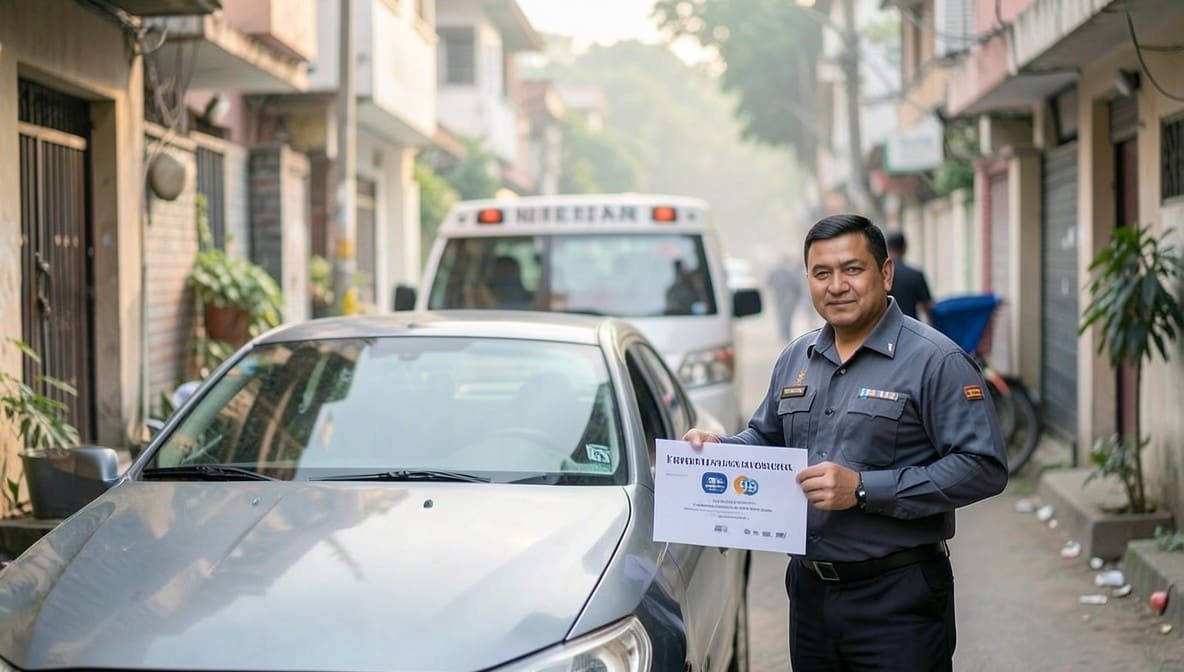
The High Court of Kerala has established a critical precedent in finance lease enforcement by mandating that repossession of a secured asset must be balanced against the debtor’s capacity to repay and willingness to comply with a structured payment plan. This ruling recalibrates the power imbalance between financial institutions and individual borrowers under secured transactions.
Background & Facts
The Dispute
The petitioner, Soju Thankachan, financed a vehicle through M/s Shriram Finance Limited under a hire-purchase agreement. After defaulting on payments, the financier initiated recovery proceedings before the Commercial Court, Kollam, leading to the appointment of an Advocate Commissioner to repossess the vehicle. The petitioner, a daily wage earner, argued that the vehicle is essential for his livelihood and that he is willing to clear dues through structured instalments.
Procedural History
- August 2024: Vehicle registered in petitioner’s name under finance agreement
- September 2025: Respondent filed M.A. (Arb.) No. 140 of 2025 seeking repossession
- September 2025: Commercial Court ordered repossession and appointed Advocate Commissioner
- January 2026: Petitioner paid ₹1,04,000 towards outstanding dues as proof of bonafides
- February 2026: Original Petition filed before Kerala High Court challenging repossession
Relief Sought
The petitioner sought release of the vehicle and permission to repay the outstanding amount in monthly instalments, arguing that repossession would deprive him of his means of livelihood and violate principles of proportionality under Article 21.
The Legal Issue
The central question was whether a financial institution may proceed with repossession of a secured asset under a hire-purchase agreement without considering the debtor’s capacity to repay, willingness to settle, or the proportionality of the remedy under the principle of natural justice.
Arguments Presented
For the Petitioner
The petitioner relied on the doctrine of proportionality and the right to livelihood under Article 21 of the Constitution. He cited Maneka Gandhi v. Union of India to argue that any deprivation of property must be fair, just, and reasonable. He emphasized that he had already paid ₹1,04,000 and offered to repay the balance in 12 monthly instalments, demonstrating bonafide intent. The petitioner contended that repossession was disproportionate where a feasible repayment plan existed.
For the Respondent
The respondent argued that the hire-purchase agreement granted them an absolute right to repossess upon default, as per the terms of the contract and Section 176 of the Indian Contract Act, 1872. They contended that the petitioner’s default was prolonged and that allowing instalments would undermine contractual certainty and expose lenders to undue risk. They asserted that the Commercial Court’s order was procedurally valid and should not be interfered with.
The Court's Analysis
The Court rejected the notion that contractual rights under a finance agreement are absolute and immune to equitable considerations. It held that while lenders have a right to security, the remedy of repossession must be exercised in a manner consistent with natural justice and proportionality. The Court observed that the petitioner had not absconded, had made a substantial payment, and had consistently expressed willingness to pay.
"The right to recover a secured asset cannot be exercised in a manner that renders the debtor destitute, especially when a feasible repayment plan is offered and accepted in good faith."
The Court distinguished this case from those involving fraudulent defaults or deliberate evasion, noting that the petitioner’s conduct indicated a desire to fulfill obligations. It emphasized that the balance of convenience and public interest in preserving livelihood outweighed the immediate interest in repossession. The Court further noted that the financier could protect its interest through a legally enforceable undertaking for return of the vehicle upon default.
The Verdict
The petitioner succeeded. The Court held that repossession of a vehicle essential to livelihood cannot be enforced without offering a reasonable repayment plan. The vehicle was ordered released within one week, subject to 12 monthly instalments and a binding undertaking.
What This Means For Similar Cases
Repossession Is Not Automatic Upon Default
- Practitioners must now argue that repossession under hire-purchase or lease agreements must satisfy the proportionality test under Article 21
- Financial institutions cannot rely solely on contractual clauses to justify immediate seizure
- Courts will examine the debtor’s conduct, payment history, and economic vulnerability before granting recovery orders
Payment Undertakings Are Legally Enforceable Safeguards
- A written undertaking to return the asset upon default is a valid alternative to repossession
- Such undertakings provide lenders with enforceable remedies without depriving borrowers of livelihood assets
- Courts will favor structured repayment over asset seizure where bonafide intent is demonstrated
Commercial Courts Must Apply Equitable Principles
- Commercial Courts are not mere enforcers of contracts but must apply principles of fairness under Section 151 CPC
- Judges should actively inquire into the debtor’s capacity to pay before granting interim recovery orders
- This judgment elevates the role of equitable discretion in commercial disputes involving vulnerable borrowers