The National Consumer Disputes Redressal Commission (NCDRC) has dismissed a revision petition filed by M/s Shriram Transport Finance Co. Limited, affirming concurrent findings that the forcible repossession of a financed vehicle during the pendency of an appeal, without proper notice and for dues of another vehicle, constitutes unfair trade practice and deficiency in service. The Commission also noted that the finance company's failure to sell the repossessed vehicle for years, allowing it to rust in their yard, further substantiated the claim of unfair practice.
Background & Facts
The Dispute
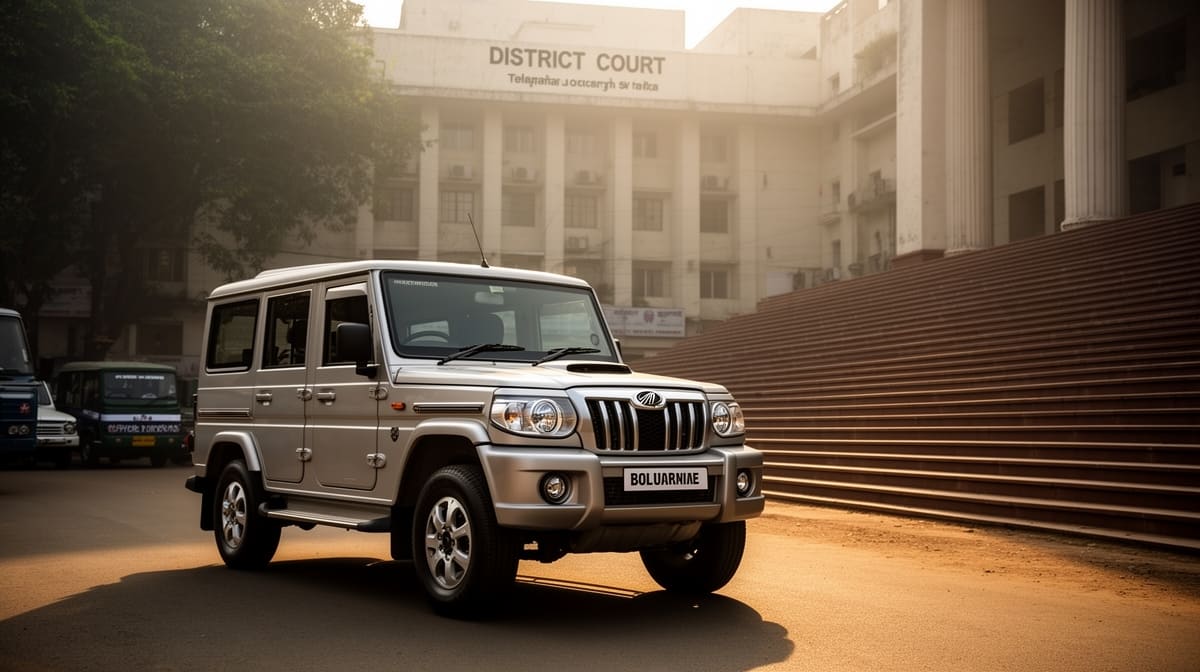
The Respondent, Smt. Chanchia Kumari, filed a consumer complaint alleging unfair trade practice on the part of the Petitioner, M/s Shriram Transport Finance Co. Limited, for having unauthorizedly repossessed her vehicle, a Mahindra Bolero Pickup bearing Registration No. BR-06G-7832. The vehicle was financed in 2010 for a sum of Rs. 2,00,754/-, repayable in 32 instalments between 05.10.2010 and 05.04.2013.
Key Facts
- The vehicle was allegedly seized forcibly without any notice on 27.12.2011.
- On enquiry, the Respondent was informed that there were some outstanding instalments payable.
- The Complainant made payments on 16.01.2012, but the vehicle was not released.
- A legal notice was sent, but the Petitioner Company demanded payment of outstanding instalments in respect of another vehicle, bearing registration no. BR-06P-1430, which was in the name of the Complainant's husband.
- The Company was compelling the Complainant to act accordingly, despite there being no relation between the two vehicles.
- The vehicle was released on 13.12.2012 pursuant to an interim order dated 08.11.2012 from the District Commission.
- Further payments were made, including three instalments after the release of the vehicle.
- The vehicle was again repossessed by the finance company on 24.01.2015, during the pendency of the appeal before the State Commission.
- The Respondent alleged that the vehicle was sold by the Petitioner on 21.06.2018 to one Bhagwan Lal Rai.
Procedural History
- CC/18/2012: Complaint instituted before DCDRC, Muzaffarpur.
- 08.11.2012: Interim application for release of vehicle allowed by District Commission.
- 13.12.2012: Vehicle released to the Complainant.
- 04.01.2014: District Commission allowed the Complaint, directing the Petitioner to pay compensation.
- 10.02.2014: Petitioner filed First Appeal No. 60/2014 before the State Consumer Disputes Redressal Commission, Bihar.
- 18.02.2014: Respondent filed Execution Application No. 15 of 2014 before the District Commission.
- 24.01.2015: Vehicle forcibly repossessed again by the Petitioner during pendency of the appeal.
- 13.03.2015: State Commission dismissed the Appeal, affirming the District Commission's order.
- 04.04.2015: District Commission issued warrants against the Petitioner in execution proceedings.
- 2015: Present Revision Petition (RP/1501/2015) filed before the NCDRC.
- 23.04.2025: NCDRC heard the matter and passed an order noting the Respondent's claim that the vehicle had been sold.
- 29.07.2025: Affidavit filed by the Respondent's counsel detailing the events.
- 19.05.2026: Petitioner filed an affidavit stating the vehicle was in their possession, lying in their yard.
Relief Sought
The District Commission, in its final order dated 04.01.2014, directed the Petitioner to pay the Complainant a sum of Rs. 3,60,000/- as compensation for the period of seizing the vehicle, a sum of Rs. 2,63,800/- (calculated as Rs. 4,15,000/- minus Rs. 1,51,210/-), Rs. 40,000/- towards expenses incurred in repairing the vehicle after release, Rs. 10,000/- for mental agony, and Rs. 5,000/- as litigation cost, to be paid within 30 days, failing which 10% annual interest would be payable.
The Legal Issue
The central questions before the NCDRC were: (1) whether the Respondent was a 'consumer' under the Consumer Protection Act, 1986; (2) whether the repossession of the vehicle was justified under Clause 6(b) of the Hypothecation Agreement, which allowed repossession without notice; and (3) whether the District Commission exceeded its jurisdiction by calculating damages without proper evidence.
Arguments Presented
For the Petitioner (Finance Company)
Learned counsel for the Petitioner relied heavily on the interim order passed by the District Commission on 08.11.2012, which allowed release of the vehicle subject to satisfaction of instalments, and noted that in default, the Company would be entitled to repossess the vehicle. It was argued that an affidavit had been filed by the Complainant to that effect on 10.12.2012, and since there was a default in payment, the Company had a right to repossess the vehicle under Clause 6 of the Agreement. The counsel cited Magma Fincorp Ltd. v. Rajesh Kumar Tiwari (2020) 10 SCC 399, Orix Auto Finance (India) Ltd. v. Jagmander Singh (2006) 2 SCC 598, and Win Medicare Pvt. Ltd. v. McLaren Biotech (P) Ltd. to support the contention that notice was not required. It was also submitted that the Respondent was not a 'consumer' and that there was no pleading or proof regarding the claim of damages.
For the Respondent (Complainant)
The Respondent contended that the vehicle was forcibly repossessed without any notice on 27.12.2011 and again on 24.01.2015, during the pendency of the appeal. It was argued that the repossession was for the dues of another vehicle belonging to the Complainant's husband, for which the Complainant was not a guarantor. The Respondent claimed that the vehicle was sold on 21.06.2018, and the Petitioner had failed to provide any details of the sale or the amount realized. The Respondent sought further compensation for the losses suffered due to being deprived of the vehicle, which was their sole source of livelihood.
The Court's Analysis
The NCDRC, presided over by Justice A.P. Sahi, examined the facts and the submissions. The Commission noted that the vehicle was admittedly repossessed on 24.01.2015 during the pendency of the appeal before the State Commission. The Commission observed that this repossession appeared to be forcible and had nowhere been justified by the Petitioner as having been lawfully done. There was no evidence to substantiate the Petitioner's claim of a default.
The Commission also took serious note of the Petitioner's response regarding the sale of the vehicle. When the Respondent claimed the vehicle had been sold in 2018, the Petitioner failed to provide an effective denial. Instead, in an affidavit filed on 19.05.2026, the Petitioner stated that the vehicle was lying in their yard, and photographs appended showed the vehicle had rusted and was in a dilapidated condition.
The Commission found that the Petitioner had deliberately withheld complete information regarding the repossession and sale. The Commission reasoned that if there was a default, the Petitioner should have sold the vehicle to recover the dues. The explanation that the matter was sub judice was not found to be genuine or worthwhile, as the vehicle was repossessed in 2015 itself.
The Commission held:
"The presumption therefore, is that the Petitioner, without having sold off the vehicle or otherwise having negotiated the vehicle, has not secured any amount of remittance by disposing off the vehicle which could have satisfied any outstanding demand as alleged by the Petitioners. This is clearly an unfair trade practice and the seizure as well as the confiscation of the vehicle by the Petitioner in the above given circumstances, cannot be justified and consequently, the concurrent findings of fact by the fora below in this background do not call for any interference in this Revision Petition."
The Commission reiterated the limited and narrow scope of a Revision Petition, citing Rubi (Chandra) Dutta v. United India Insurance Company (2011) 11 SCC 269, Sunil Kumar Maity v. SBI, and Rajiv Shukla v. Gold Rush Sales and Services Ltd., and found no reason to invoke its revisional powers.
The Verdict
The Revision Petition filed by M/s Shriram Transport Finance Co. Limited was dismissed. The NCDRC upheld the concurrent findings of the District Commission and the State Commission, which had held the finance company liable for unfair trade practice and deficiency in service. The Petitioner was directed to pay the compensation as awarded by the District Commission, which included Rs. 3,60,000/- for the period of seizure, Rs. 2,63,800/- as calculated, Rs. 40,000/- for repair expenses, Rs. 10,000/- for mental agony, and Rs. 5,000/- as litigation costs, with 10% annual interest for delayed payment.
What This Means For Similar Cases
Repossession During Pendency of Appeal Is Unlawful
This judgment establishes a clear principle that a finance company cannot repossess a vehicle during the pendency of an appeal or legal proceedings without prior permission from the court. Such action, taken without notice and while the matter is sub judice, constitutes a grave deficiency in service and unfair trade practice. Practitioners representing borrowers should highlight this point when challenging repossession actions.
Failure to Sell Repossessed Asset Strengthens Consumer's Case
A significant takeaway is that when a finance company repossesses a vehicle but fails to sell it for years, allowing it to depreciate and rust, the presumption is that the company has not acted in good faith to mitigate losses. This inaction undermines the company's claim of default and supports the consumer's allegation of unfair practice. This principle can be used to argue that the finance company's conduct is not bona fide.
Revisional Jurisdiction Remains Narrow
The NCDRC reiterated that its revisional jurisdiction is limited and narrow. It will not interfere with concurrent findings of fact unless there is a jurisdictional error or a patent illegality. This means that parties should not expect a re-appreciation of evidence at the revisional stage, and the focus should be on demonstrating a clear error of law or jurisdiction.