The High Court of Telangana has affirmed that prolonged inaction by revenue authorities on F-line applications for land survey and demarcation constitutes a violation of the right to property under Article 300A of the Constitution. This judgment reinforces the duty of state agencies to act expeditiously on citizen applications, particularly where procedural compliance has been met and prior court directions exist.
Background & Facts
The Dispute
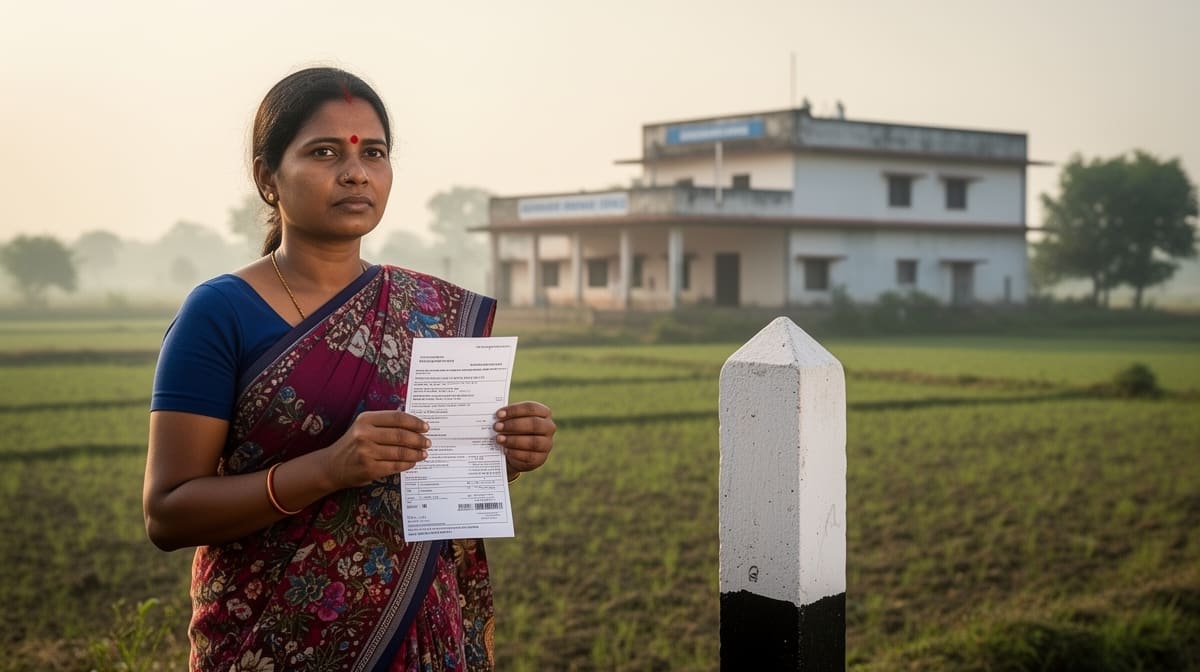
The petitioner, M/s. Anand Firms, is the registered owner of land admeasuring Ac.2-24 Guntas in Survey No.175/AA/AA at Dulapalle Village, Medchal-Malkajgiri District. The land was acquired through a registered sale deed dated 15.03.2004 and is reflected in the Khata passbook with Khata No.3150. Despite repeated requests, the revenue authorities failed to conduct the legally mandated survey, demarcation, and sub-division of the land.
Procedural History
- 2023: Petitioner filed an online F-line application for survey and demarcation on 21.05.2023.
- November 2023: The High Court, in W.P. No.27540 of 2023, directed the respondents to complete the survey within two months.
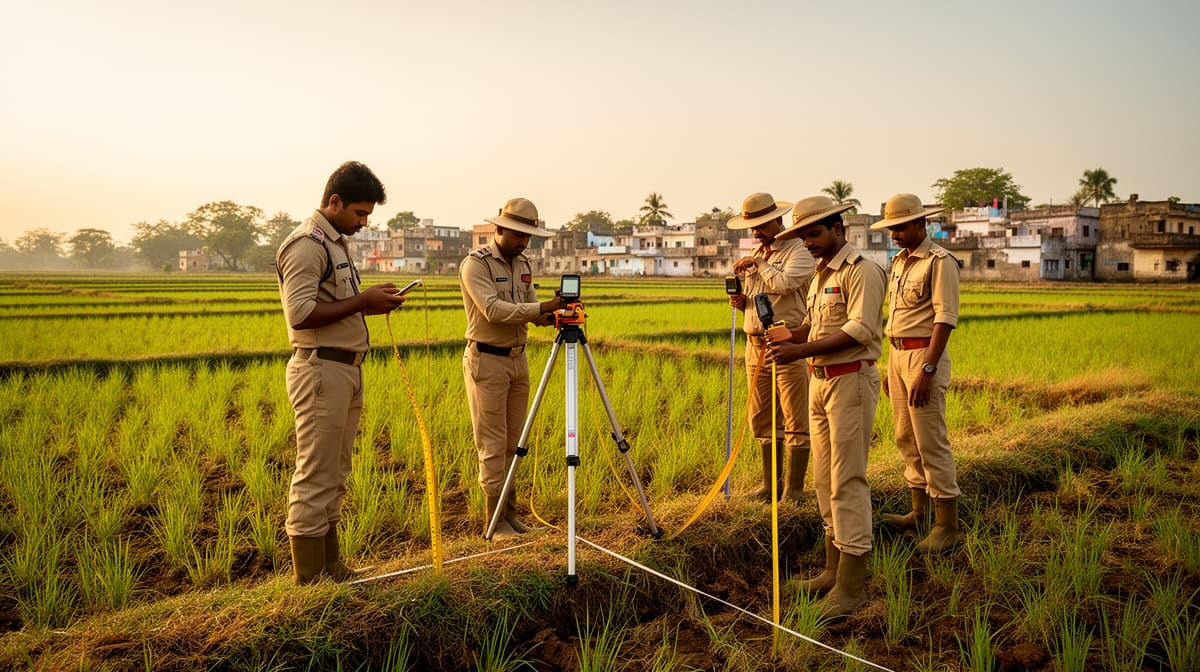
- Post-2023: Authorities erroneously surveyed a different parcel (Ac.11-11 Guntas in Survey No.175) instead of the petitioner’s land.
- 2025: Petitioner filed a contempt petition (C.C. No.69 of 2025) for non-compliance.
- December 2025: Petitioner submitted a fresh F-line application (No.DER022501238691) seeking correct survey of Ac.2-24 Guntas.
- February 2026: No action taken on the new application, prompting the present writ petition.
Relief Sought
The petitioner sought a writ of mandamus directing the revenue authorities to process the F-line application dated 09.12.2025, conduct accurate survey and demarcation, and comply with the Court’s earlier guidelines in W.P. No.12785 of 2022.
The Legal Issue
The central question was whether administrative inaction on a valid F-line application for land survey and demarcation, despite prior court directions and statutory obligations, amounts to a violation of the right to property under Article 300A and justifies the issuance of a writ of mandamus.
Arguments Presented
For the Petitioner
Learned Senior Counsel argued that the authorities’ failure to act on the F-line application, even after a prior court order, amounted to arbitrary and unconstitutional conduct. Reliance was placed on State of Haryana v. Bhagwan Das and the Court’s own order in W.P. No.12785 of 2022, which mandated timely disposal of such applications under Circular No.N1/1409/07 dated 11.07.2007. It was contended that delay defeats remedy and that the petitioner’s right to enjoy and dispose of property is rendered illusory without formal demarcation.
For the Respondent
The Assistant Government Pleader for Revenue conceded that the authorities had failed to act expeditiously but submitted that appropriate action would be taken in accordance with the Court’s 2022 guidelines. No substantive legal defense was offered against the claim of violation of constitutional rights.
The Court's Analysis
The Court examined the nature of the petitioner’s claim and the obligations of revenue authorities under the Telangana Land Revenue Code and relevant circulars. It emphasized that land survey and demarcation are not discretionary acts but statutory duties owed to landowners to secure their property rights. The Court noted that the petitioner had complied with all procedural requirements: registration of title, Khata issuance, and submission of two successive F-line applications.
"The State cannot remain a silent spectator to the erosion of a citizen’s right to property by inaction, especially when judicial directions have been issued and the statutory framework is clear."
The Court distinguished this case from mere administrative delays by highlighting the existence of a binding precedent (W.P. No.12785 of 2022) that had already laid down the procedure and timeline for such surveys. The authorities’ failure to follow this precedent, coupled with the erroneous survey of a different parcel, demonstrated a pattern of non-compliance. The Court held that Article 300A imposes a positive obligation on the State to protect property rights through timely and accurate administrative action.
The Court further observed that mandamus is an appropriate remedy where a public authority has a clear legal duty and refuses or neglects to perform it. The petitioner’s repeated attempts to secure compliance, including contempt proceedings, established the necessity of judicial intervention.
The Verdict
The petitioner succeeded. The Court held that administrative delay in processing F-line applications for land survey violates the right to property under Article 300A and directed the respondents to act on the application dated 09.12.2025 within 45 days, in accordance with the 2022 guidelines. No costs were imposed.
What This Means For Similar Cases
Administrative Inaction Is Not a Defense
- Practitioners must now treat delayed F-line applications as actionable violations of constitutional rights, not mere bureaucratic lapses.
- A prior court order directing action strengthens the case for mandamus; non-compliance can be raised as contempt or grounds for immediate writ relief.
- Revenue authorities cannot evade duty by claiming pending internal reviews or workload.
F-line Applications Are Legally Binding Requests
- Submission of a valid F-line application triggers a statutory duty, not a discretionary privilege.
- Survey errors or misidentification of land parcels constitute procedural illegality, not technical oversight.
- Petitioners should attach copies of prior court orders and Khata records to establish standing and compliance.
Mandamus Is the Correct Remedy for Property Rights Enforcement
- Writ petitions under Article 226 are not excessive for land survey delays - they are essential to uphold Article 300A.
- Courts will not tolerate repeated non-compliance even if the State promises future action.
- The 45-day timeline set here may serve as a benchmark for similar cases across Telangana and other states with comparable land revenue systems.