The High Court of Kerala has reaffirmed that in matrimonial disputes involving recovery of gold and cash, documentary evidence carries decisive weight over uncorroborated oral testimony. This judgment clarifies the standard for proving entrustment and misappropriation in family court proceedings, offering critical guidance for practitioners handling asset recovery claims under Muslim personal law and the Domestic Violence Act.
Background & Facts
The Dispute
The appellant, Jaslin, sought recovery of approximately 15.5 sovereigns of gold ornaments and Rs.2,00,000/- from her husband and in-laws following her divorce by talaq. She alleged that at the time of Nikkah and marriage, her father entrusted Rs.1,00,000/- to the second respondent and another Rs.1,00,000/- in February 2008, and that 45.5 sovereigns of gold were given to her as stridhan. One month after marriage, the respondents allegedly seized all the ornaments.
Procedural History
- 2007: Nikkah ceremony conducted on 19.11.2007
- 2008: Marriage solemnized on 04.05.2008; alleged transfer of gold and cash
- 2012: Appellant filed criminal complaint under Sections 498A, 406, 511 IPC; police seized 30 sovereigns, later returned
- 2013: Family Court, Vadakara, filed petition for recovery of remaining gold and cash
- 2014: Family Court dismissed petition, finding no proof of entrustment or misappropriation
- 2015: Appeal filed before Kerala High Court
Relief Sought
The appellant sought recovery of 15.5 sovereigns of gold (or its market value) and Rs.2,00,000/-, alleging unlawful retention of stridhan and financial contributions made by her father.
The Legal Issue
The central question was whether oral testimony alone, unsupported by documentary evidence, can establish the entrustment of gold or cash in a matrimonial dispute, or whether documentary proof of deposit and transaction must prevail in the absence of credible corroboration.
Arguments Presented
For the Appellant
The appellant’s counsel argued that the respondents’ admission of selling 15 sovereigns and depositing proceeds in KRS did not absolve them of liability, as the sale was unauthorized. She contended that the respondents failed to prove the sale was done at her father’s request, and that the trial court erred in discrediting her testimony. Reliance was placed on S. R. Batra v. S. Taruna Batra to assert that stridhan must be returned irrespective of marital breakdown.
For the Respondent
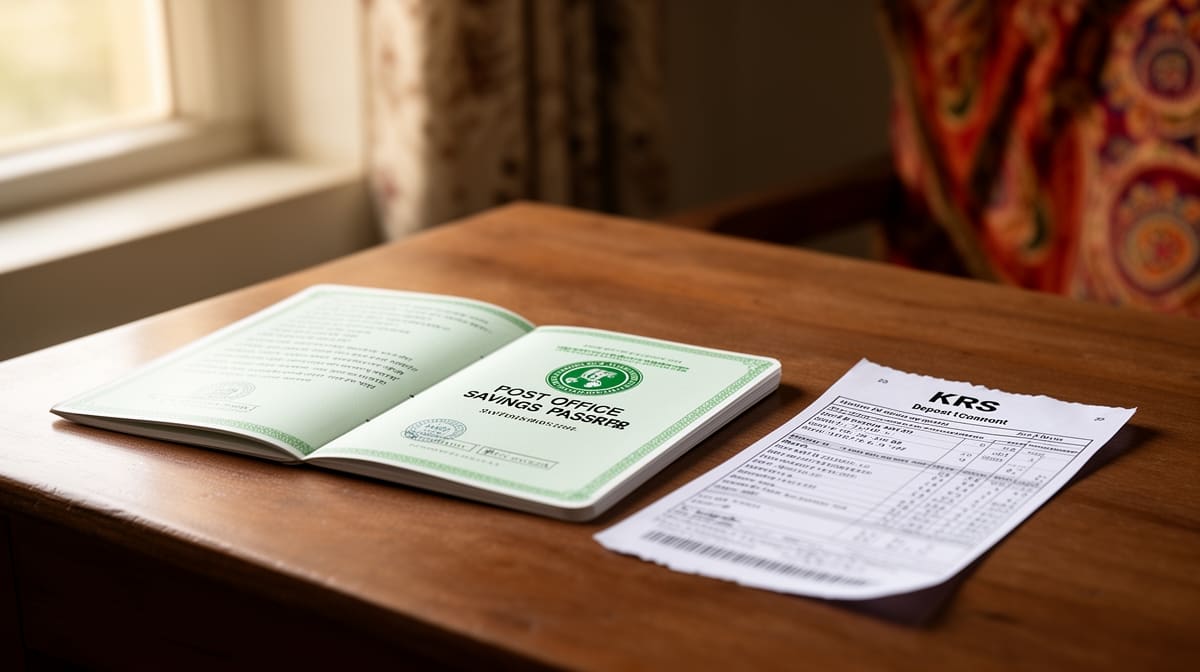
The respondents contended that the sale of 15 sovereigns and deposit of Rs.1,50,000/- in KRS was done at the explicit instruction of the appellant’s father, PW2, who was employed with KRS at the time. They produced Ext.B5 (KRS deposit receipt) and Ext.B6 (Post Office Recurring Deposit passbook) as conclusive proof. They argued that the appellant’s claims were fabricated after a civil suit was filed against her, and that PW2’s evasive testimony during cross-examination undermined her credibility.
The Court's Analysis
The Court conducted a meticulous evaluation of the evidence, emphasizing the primacy of documentary proof over oral assertions. It noted that while the appellant claimed ownership of 45.5 sovereigns and alleged misappropriation, the respondents admitted to selling 15 sovereigns and depositing the proceeds - thereby shifting the burden to them to prove lawful authority for the transaction.
"The fact that [PW2] was working in KRS in 2009, coupled with the evasive nature of his answer, is significant. When directly confronted with the suggestion that everything was done at his request, he merely stated that he did not know whether it was done as per his instructions."
The Court found that PW2’s admission of employment at KRS, combined with the existence of Ext.B5 and Ext.B6, rendered the respondents’ version highly probable. The appellant’s failure to produce Khalid, the alleged intermediary for the Rs.2,00,000/-, and the absence of any bank records or financial capacity proof from her father, further weakened her case.
The Court also rejected the appellant’s argument regarding gold prices in 2008, noting that the suggestion was never properly put to RW1 during cross-examination, and thus could not be grounds for reversal. The trial court’s assessment of witness demeanor and credibility, particularly regarding PW3’s status as an interested witness, was upheld.
Crucially, the Court held that while the appellant failed to prove the entrustment of Rs.2,00,000/- or the unlawful retention of 15.5 sovereigns, the respondents’ admission of depositing Rs.1,50,000/- in KRS and maintaining a Recurring Deposit in her name created a moral and legal obligation to return those funds.
The Verdict
The appellant won in part. The Court held that documentary evidence of deposit and recurring accounts supersedes uncorroborated oral claims in matrimonial asset disputes. The appellant is entitled to recover Rs.1,50,000/- from KRS (Ext.B5) and the balance in the Post Office Recurring Deposit (Ext.B6), with accrued interest. The trial court was directed to return the original documents to enable recovery.
What This Means For Similar Cases
Documentary Evidence Prevails Over Oral Testimony
- Practitioners must prioritize securing bank records, deposit receipts, and passbooks in stridhan and cash recovery cases
- Oral testimony without corroboration, especially from interested parties, is unlikely to sustain a claim
- Courts will favor contemporaneous documents over retrospective assertions
Burden of Proof Shifts Upon Admission of Transaction
- Once a respondent admits to handling marital assets (e.g., selling gold, depositing proceeds), they must prove lawful authority
- Failure to do so creates an obligation to return the proceeds, even if the original asset is no longer in possession
- This applies regardless of whether the transaction was authorized by the wife or her family
Strategic Use of Cross-Examination Is Critical
-
Counsel must explicitly confront witnesses with contradictory evidence (e.g., gold prices, financial capacity)
-
Failure to do so waives the right to challenge the evidence on appeal
-
Evasive answers during cross-examination can be used to discredit the entire testimony
-
Always obtain original copies of deposit receipts and passbooks as evidence
-
File applications under Section 91 CrPC to compel production of financial records
-
Avoid relying on unexamined third parties (e.g., Khalid in this case) to prove financial transactions