The Kerala High Court has clarified that allegations of misappropriation of marital assets - particularly cash deposits - cannot be sustained without concrete documentary evidence. This judgment reinforces the principle that speculative claims, even in emotionally charged matrimonial disputes, must be anchored in verifiable proof.
Background & Facts
The Dispute
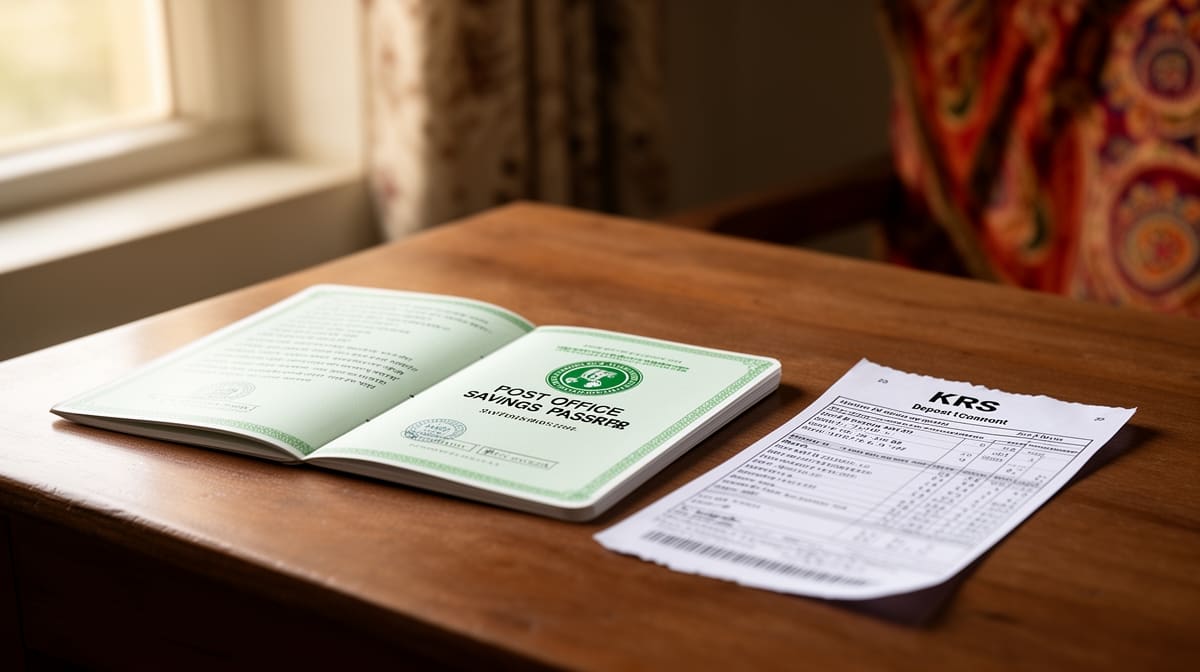
The petitioner, Keeri Haseena, filed a petition seeking recovery of gold ornaments and monetary assets allegedly given to her husband, Abdul Saleem, at the time of marriage and thereafter. She claimed to have received 30 sovereigns of gold, Rs.1,00,000 in cash, and household articles, all of which she alleged were misappropriated by the respondent for constructing a residential house. She further claimed that Rs.6,08,000 deposited in her bank account was withdrawn by the husband without her consent.
Procedural History
- 2015: Petition filed before the Family Court, Malappuram, seeking recovery of gold, cash, and household items.
- 2018: Family Court granted decree for 33.5 sovereigns of gold, Rs.1,00,000, Rs.6,08,000, and household articles valued at Rs.1,32,000 with 6% interest.
- 2018: Husband filed this appeal challenging the decree.
Relief Sought
The appellant sought modification or setting aside of the Family Court’s decree, particularly with respect to the cash amounts and interest awarded, arguing lack of corroborative evidence.
The Legal Issue
The central question was whether allegations of misappropriation of bank deposits in a matrimonial dispute can be upheld solely on the petitioner’s testimony and an incomplete bank passbook, or whether documentary evidence is indispensable to establish such claims.
Arguments Presented
For the Appellant
The appellant’s counsel argued that the Family Court erred in relying on the petitioner’s uncorroborated testimony regarding Rs.6,08,000. They emphasized that Ext.A2, the bank passbook, showed no withdrawals by the respondent and that the petitioner had no verifiable source of income, having filed a maintenance petition under Section 125 of the Cr.P.C. The absence of bank statements, transaction records, or witness testimony rendered the claim speculative.
For the Respondent
The respondent’s counsel contended that the husband’s denial of receiving the cash, coupled with his employment in Saudi Arabia, created a reasonable doubt. However, they conceded that the gold ornaments and household articles were in his possession. They argued that the Family Court’s findings on gold and household items were factually sound and should be upheld.
The Court's Analysis
The Court undertook a meticulous review of evidentiary standards in matrimonial property disputes. It affirmed the Family Court’s acceptance of Ext.A1 and the testimony of PW3 regarding the 33.5 sovereigns of gold, noting that the bill and witness testimony provided a credible chain of evidence. The Court also accepted the claim of the gold ring and Rs.1,00,000 as part of the mahr, finding them plausible and consistent with customary practice.
"The claim that an amount of Rs.6,08,000/- deposited in the bank account was misappropriated by the respondent, remains unestablished."
Regarding the Rs.6,08,000 claim, the Court held that a bank passbook alone, without withdrawal slips, ATM records, or third-party testimony, cannot establish misappropriation. The petitioner’s lack of independent income and failure to produce any corroborative documentation rendered the claim legally insufficient. The Court emphasized that burden of proof lies on the claimant, and mere assertion does not discharge it.
On household articles, the Court acknowledged their presence with the respondent but noted that depreciation over time must be factored into valuation. Awarding interest at 6% on the original purchase value was deemed unjustified, as the articles had been in use for over a decade.
The Verdict
The appellant succeeded in part. The Kerala High Court held that the decree for Rs.6,08,000 must be set aside due to lack of evidence, and interest on household articles must be deleted. The decree for gold ornaments and Rs.1,00,000 was affirmed. The total monetary award was reduced from Rs.7,08,000 to Rs.1,00,000.
What This Means For Similar Cases
Documentary Evidence Is Non-Negotiable
- Practitioners must insist on bank statements, withdrawal records, or digital transaction trails before advancing claims of cash misappropriation.
- Oral testimony alone, even from the aggrieved spouse, is insufficient to prove financial wrongdoing without supporting documents.
- Courts will not infer misappropriation from circumstantial silence - mere non-production of evidence by the accused does not automatically validate the claimant’s assertion.
Depreciation Must Be Accounted For in Asset Valuation
- Claims for household items must reflect current market value, not original purchase price.
- Awarding interest on depreciated assets without justification violates equitable principles.
- Practitioners should submit valuation reports or expert opinions for household goods to avoid arbitrary awards.
Mahr and Dowry Claims Require Cultural Context
- Gifts given as mahr (dower) are legally enforceable and distinct from dowry.
- Courts may accept customary practices as evidence if consistent with testimony and documentation.
- Advocates should document cultural norms through witness testimony or expert affidavits to strengthen such claims.