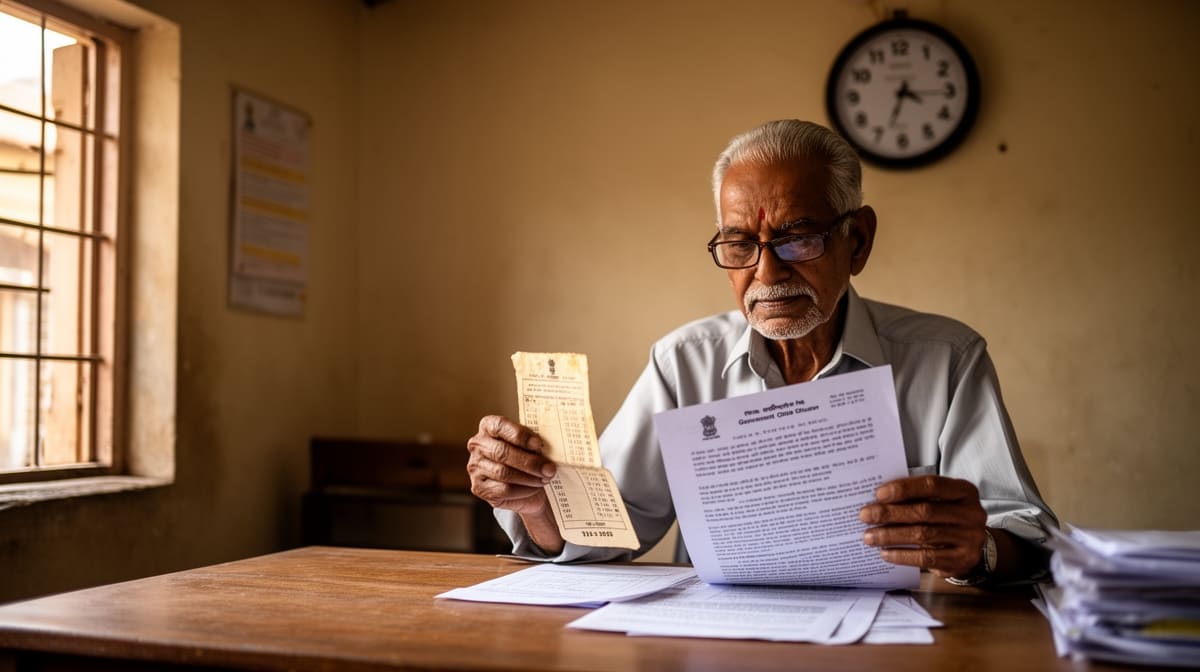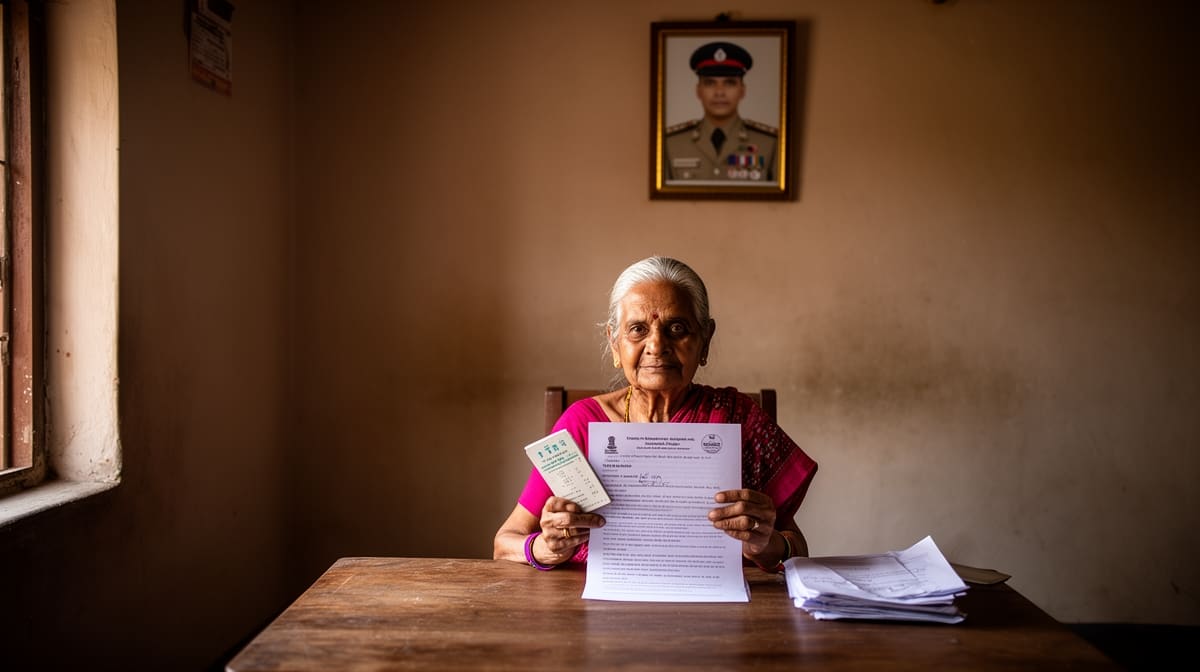
The Central Administrative Tribunal, Mumbai Bench, has held that recovery of Rs. 2,14,168 from the retirement dues of a Group 'C' railway employee, effected without any show cause notice and after a lapse of over 13 years, is unsustainable in law. Applying the principles in State of Punjab v. Rafiq Masih (White Washer) and Thomas Daniel v. State of Kerala, the Tribunal quashed the impugned orders and directed restoration of the applicant's basic pay to Rs. 87,700.
Background & Facts
The Applicant's Service and Pay Fixation
The applicant, Shri Virendra Singh, was a Senior Section Engineer (Special) in the South East Central Railway, Nagpur Division. He retired on superannuation on 31.12.2019. The dispute arose from the fixation of his pay following his promotion on 16.09.2005 to the post of Senior Section Engineer (P.Way) in the pay scale of Rs. 7450-11500.
The applicant's case was that he was entitled to a promotional increment on the date of promotion. However, being aware of the upcoming change in the uniform date of increment to 1st July, he was advised to opt for the promotional increment in February, 2006, which was his normal date of increment. He was accordingly granted both the promotional increment and the normal increment in February, 2006. Since another increment fell due on 01.07.2006 on account of the change in the date of increment, he was granted a further increment on that date.
The Impugned Orders and Recovery
The respondents, however, later withdrew the increment granted in February, 2006, effectively wiping out the applicant's promotional increment entirely. This was done through an impugned order dated 24/26.12.2016 (though the Tribunal found it was actually issued in 2019), which reduced his basic pay from Rs. 87,700 to Rs. 85,100 with effect from the year 2006. The order was communicated just four days before his retirement.
Pursuant to this pay reduction, the respondents calculated an overpayment for the period from 01.01.2006 to 31.12.2019 and recovered a sum of Rs. 2,14,168 from the applicant's retirement dues. The applicant made a representation on 27.12.2019, but the recovery was effected.
Procedural History
- 16.09.2005: Applicant promoted as Senior Section Engineer (P.Way) in the scale of Rs. 7450-11500.
- 17.09.2005: Applicant made a representation requesting pay fixation in the higher scale after getting his normal increment in February, 2006.
- February, 2006: Applicant granted promotional increment and normal increment.
- 01.07.2006: Applicant granted further increment due to change in the date of increment.
- 24/26.12.2016: Impugned order issued (allegedly) reducing basic pay from Rs. 87,700 to Rs. 85,100.
- 31.12.2019: Applicant retired on superannuation.
- 26.12.2019: Applicant received the impugned communication (as per his representation dated 27.12.2019).
- 27.12.2019: Applicant made a representation against the pay reduction.
- 19.01.2021: Applicant filed the Original Application (OA No. 189/2021) before the Central Administrative Tribunal, Mumbai Bench.
- 11.09.2026: Tribunal pronounced its order.
Relief Sought
The applicant sought the following reliefs:
- Quashing of the letters dated 24/26.12.2016 and 10.02.2020 (communicated vide letter dated 10.03.2020) with all consequential benefits.
- Restoration of his basic pay of Rs. 87,100 and refixation of pension and pensionary benefits with arrears along with interest at 12% p.a.
- Refund of the recovered amount of Rs. 2,14,168 with interest at 12% p.a. from 01.01.2020 till the date of actual payment.
- Costs of the application.
The Legal Issue
The central question was whether the respondents could lawfully reduce the basic pay of a Group 'C' employee after a lapse of over 13 years and recover the resultant overpayment of Rs. 2,14,168 from his retirement dues, without issuing any show cause notice, particularly when the employee was due to retire within days of the impugned order.
Arguments Presented
For the Applicant
Learned counsel Shri Vishal Shirke argued that the impugned action was in gross violation of the judgment of the Supreme Court in State of Punjab v. Rafiq Masih (White Washer), (2015) 4 SCC 334. He submitted that the recovery was made from a Group 'C' employee, the period of recovery was in excess of 5 years, and the recovery was effected at the time of retirement. He further contended that no show cause notice was given before passing the impugned order, which violated the principles of natural justice. He placed reliance on Thomas Daniel v. State of Kerala, Civil Appeal No. 7115 of 2010, decided on 02.05.2022.
For the Respondents
Learned counsel Dr. V.S. Masurkar argued that the pay fixation on promotion was erroneous and the respondents were entitled to rectify the error. He contended that the applicant was aware of the excess payment as he received pay slips every month. He submitted that no show cause notice is required for correction of an error in pay fixation as it is not a penalty. He also argued that the applicant had suppressed the promotion order dated 15.09.2005 and had himself requested for pay fixation in the higher scale after February, 2006 increment. He placed reliance on State of Kerala v. P.V. Neelakandan Nair, Registrar, Cooperative Societies Haryana v. Israil Khan, and High Court of Punjab and Haryana v. Jagdev Singh.
The Court's Analysis
The Tribunal first addressed the factual dispute regarding the date of the impugned order. While the respondents claimed it was dated 24/26.12.2016, the Tribunal noted from the pay slip for October, 2019 that the applicant was still receiving a basic pay of Rs. 87,700 in that month. This indicated that the impugned communication was actually issued in 2019, not 2016. The respondents did not dispute the applicant's representation dated 27.12.2019, in which he stated he received the communication on 26.12.2019.
The Tribunal then examined the applicability of Rafiq Masih (White Washer). It quoted paragraph 18 of the judgment, which summarises situations where recovery by employers would be impermissible:
"(i) Recovery from the employees belonging to Class III and Class IV service (or Group C and Group D service). (ii) Recovery from the retired employees, or the employees who are due to retire within one year, of the order of recovery. (iii) Recovery from the employees, when the excess payment has been made for a period in excess of five years, before the order of recovery is issued."
The Tribunal observed that the applicant was a Group 'C' employee, squarely covered by clause (i). The recovery was also from an employee due to retire within one year (clause ii) and the excess payment was for a period in excess of five years (clause iii).
The Tribunal then considered the judgment in Thomas Daniel v. State of Kerala, which applied Rafiq Masih and held that recovery after ten years of retirement was unjustified. The Tribunal noted that in Thomas Daniel, the Supreme Court emphasised that the employee's right to be protected from recovery outbalances the employer's right to recover when the recovery would be iniquitous, harsh, or arbitrary.
The Tribunal distinguished the cases relied upon by the respondents. It noted that in Jagdev Singh, the officer had furnished an undertaking while opting for the revised pay scale, making him bound by the undertaking. In the present case, the applicant had never given any such undertaking. He had only made a request for pay fixation in the higher scale. Furthermore, the officer in Jagdev Singh was a Civil Judge (Junior Division), not a Group 'C' employee.
The Tribunal also rejected the respondents' argument that the applicant was aware of the excess payment through monthly pay slips. It observed that the Railway has a robust accounting system with a full-fledged Accounts and Finance Department and the Indian Railway Accounts Service (IRAS). Therefore, the respondents could not take the plea that the pay was fixed as per the applicant's representation dated 17.09.2005. The Tribunal noted that it was not the respondents' case that the applicant made any wrong representation or played any fraud.
Finally, the Tribunal held that reducing the basic pay and recovering the amount without giving any opportunity of being heard was a violation of the principles of natural justice.
The Verdict
The Tribunal partly allowed the Original Application. It held that the reduction of basic pay from Rs. 87,700 to Rs. 85,100 and the recovery of Rs. 2,14,168 were not in accordance with rules and could not be sustained. The Tribunal:
- Quashed and set aside the impugned communications.
- Directed the respondents to refund the amount of Rs. 2,14,168, if recovered from the applicant.
- Directed restoration of the applicant's basic pay to Rs. 87,700 and issuance of a revised Pension Payment Order (PPO) accordingly.
- Directed compliance within a period of 90 days from the date of receipt of a certified copy of the order.
- Rejected the applicant's claim for interest at 12% p.a. on the arrears.
- Made no order as to costs.
What This Means For Similar Cases
Recovery From Group 'C' Employees Is Impermissible
This judgment reinforces the absolute bar on recovery from Group 'C' and Group 'D' employees, as laid down in Rafiq Masih. The Tribunal has made it clear that this protection applies regardless of the length of service or the quantum of overpayment. Practitioners representing such employees can now confidently argue that recovery is impermissible without needing to establish any additional hardship.
No Undertaking, No Recovery
The distinction drawn between Jagdev Singh and the present case is crucial. The presence of an undertaking given by an employee while opting for a revised pay scale can defeat the protection under Rafiq Masih. However, in the absence of such an undertaking, the employer cannot recover excess payments from Group 'C' employees. This distinction provides a clear checklist for practitioners to examine.
Natural Justice Cannot Be Bypassed
The Tribunal's observation that no show cause notice was given before the pay reduction is significant. Even for correction of errors, the principles of natural justice must be followed. This judgment reinforces that a unilateral reduction of pay without affording an opportunity of being heard is a substantive violation that vitiates the entire action.
The Employer's Own System Cannot Be Used as a Shield
The Tribunal's rejection of the respondents' argument based on the applicant's awareness through pay slips is notable. The Railway's robust accounting system was held against it, with the Tribunal observing that the employer cannot take the plea of the employee's representation when it has a full-fledged accounts department. This places the burden on the employer to ensure correct pay fixation at the outset.