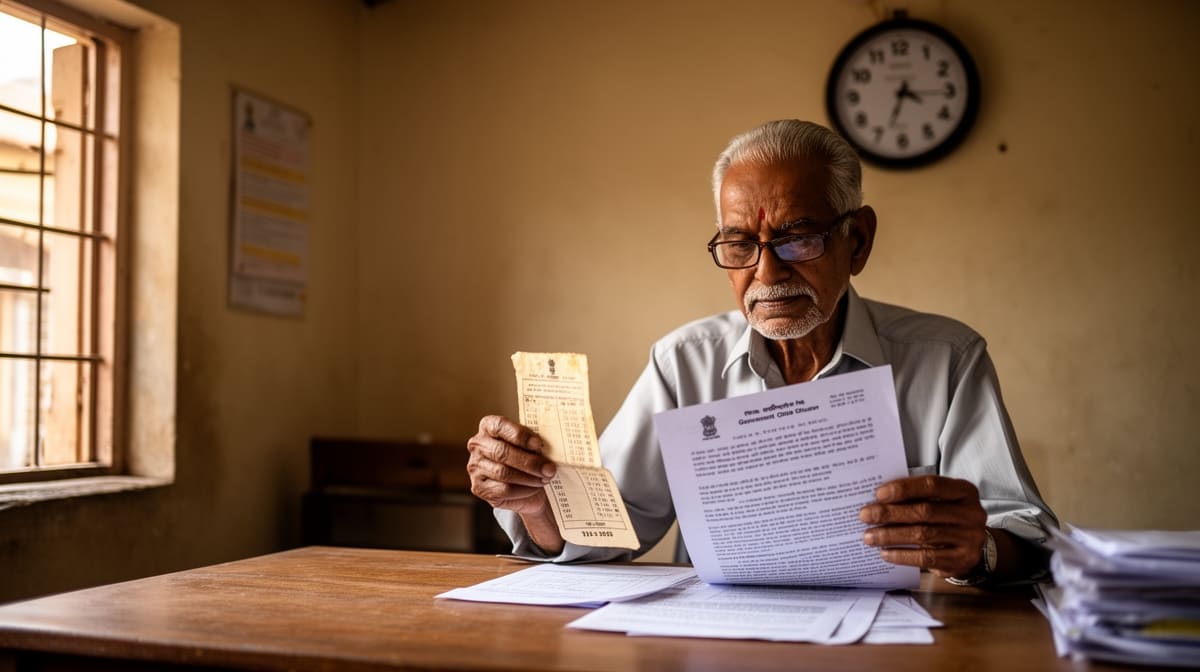
The Patna High Court has dismissed a writ petition filed by the Union of India and railway authorities challenging a Central Administrative Tribunal order that quashed the recovery of Rs 4,87,348 from a railway employee who had been granted premature financial upgradation under the Modified Assured Career Progression scheme due to a departmental error. The Division Bench held that well-settled Supreme Court precedent bars recovery when excess payment results from a bona fide mistake by the employer and the employee has not committed misrepresentation or fraud.
Background & Facts
The Dispute
The petitioners, comprising the Union of India through the General Manager of East Central Railway and senior railway officials at Danapur, sought to recover Rs 4,87,348 from the respondent, Arun Kumar Dwivedi, a Train Manager (Mail/Express) posted at Patna Junction. The recovery arose from an erroneous grant of third financial upgradation under the MACP scheme with effect from 1 September 2008 instead of the correct date of 12 October 2012.
Key Facts
- The respondent joined Indian Railways as Assistant Driver in the pay scale of Rs 950-1500 with effect from 06.04.1989
- He was posted as Assistant Weigh Clerk with effect from 18.10.1992
- Promoted to Weigh Clerk in pay scale of Rs 1200-2040 with effect from 05.04.1996 in the Commercial Department
- Promoted to Goods Guard with effect from 12.10.2002
- Inadvertently granted financial upgradation of Grade Pay Rs 4200 in pay scale Rs 9300-34,800 under MACP with effect from 01.09.2008 instead of 12.10.2012 (the date of completion of 10 years in the existing scale of Grade Pay 2800)
- The error resulted in the pay scale of Rs 1200-2040 (4th CPC) being converted to Rs 4500-7000 (5th CPC) prematurely
- As per MACP rules, the respondent was entitled to third financial upgradation only after completion of 10 years in the existing scale, i.e., from 12.10.2012, having already received two promotional benefits (05.04.1996 and 12.10.2002)
- The administration detected the error and issued corrective measures: office letter dated 01.09.2023 communicating recovery, followed by order dated 04.09.2023 (wrongly typed as 04.09.2022) directing recovery of Rs 4,87,348 in 19 equal monthly installments from September 2023 to March 2025
- The respondent filed representation on 22.09.2024 and subsequent representations, all rejected
- No misrepresentation or fraud was alleged against the respondent
Procedural History
- 02.04.2026: Ld. Central Administrative Tribunal, Patna Bench, allowed Original Application No. 050/00755/2024, quashing the recovery order dated 04.09.2023 as arbitrary, unjust and unsustainable
- 08.09.2026: Present writ petition (CWJC No. 12591 of 2026) filed before Patna High Court challenging the CAT order
- 08.09.2026: Division Bench heard the matter and reserved judgment
- 08.09.2026: Judgment pronounced dismissing the writ petition
Relief Sought
The petitioners sought quashing of the CAT order dated 02.04.2026 and validation of the recovery of Rs 4,87,348 in 19 monthly installments from the respondent's salary.
The Legal Issue
Whether recovery of excess salary paid to a government servant due to a bona fide departmental error in granting premature MACP financial upgradation - where no misrepresentation or fraud is attributable to the employee - is permissible in law.
Arguments Presented
For the Petitioners
Mr. Vishwajeet Kumar Mishra, Senior Panel Counsel, contended that the excess payment was admittedly made due to an administrative mistake and the administration had taken corrective measures as per extant rules. He argued that the Supreme Court judgment in State of Punjab & Others v. Rafiq Masih (2015) 4 SCC 334 was inapplicable because recovery in the present case would not cause hardship to the employee. The petitioners maintained that since the excess amount was quantifiable and the recovery schedule was clear (19 installments), the CAT erred in quashing the recovery order.
For the Respondent
The respondent did not appear through counsel. The Court proceeded on the basis of the record and the CAT's findings that the excess payment resulted solely from departmental error with no misrepresentation by the respondent.
The Court's Analysis
The Division Bench, per Justice Mohit Kumar Shah, examined a catena of Supreme Court judgments establishing the principles governing recovery of excess payments from government servants. The Court referred to ten precedents including Shyam Babu Verma v. Union of India (1994) 2 SCC 52, Sahib Ram v. State of Haryana (1995) Suppl.1 SCC 80, B. Ganga Ram v. Regional Joint Director (1997) 6 SCC 139, Bihar State Electricity Board v. Bijay Bhadur (2000) 10 SCC 99, Punjab National Bank v. Manjeet Singh (2006) 8 SCC 647, Purshottam Lal Das v. State of Bihar (2006) 11 SCC 492, B.J. Akkara v. Government of India University (2006) 11 SCC 709, Syed Abdul Qadir v. State of Bihar (2009) 3 SCC 475, State of Punjab v. Rafique Masih (2015) 4 SCC 334, and Thomas Daniel v. State of Kerala (2022) SCC Online SCC 536.
The Court extensively quoted from Syed Abdul Qadir (paragraphs 57-59) where a Three-Judge Bench held:
"This Court, in a catena of decisions, has granted relief against recovery of excess payment of emoluments/allowances if (a) the excess amount was not paid on account of any misrepresentation or fraud on the part of the employee, and (b) if such excess payment was made by the employer by applying a wrong principle for calculating the pay/allowance or on the basis of a particular interpretation of rule/order, which is subsequently found to be erroneous."
"The relief against recovery is granted by courts not because of any right in the employees, but in equity, exercising judicial discretion to relieve the employees from the hardship that will be caused if recovery is ordered."
The Court also reproduced paragraphs 9, 11, and 14-16 from Thomas Daniel, which reiterated the dual conditions for barring recovery: (a) no misrepresentation or fraud by the employee, and (b) excess payment made by employer applying a wrong principle or erroneous interpretation of rules. The Thomas Daniel judgment emphasized that relief is granted in equity to prevent hardship, particularly where the employee has spent the excess amount genuinely believing it to be due.
From Rafiq Masih, the Court cited paragraph 18 summarizing situations where recovery is impermissible, including recovery from Group C and Group D employees, retired employees or those due to retire within one year, and cases where excess payment has continued for over five years before recovery is ordered.
Applying these principles, the Court found that: (i) the excess payment was admittedly due to a bona fide mistake by the department; (ii) no misrepresentation or fraud was alleged against the respondent; (iii) the error persisted for a significant period (from 2008 to 2023); and (iv) the respondent, a Group C employee, would face undue hardship if recovery were enforced after such delay.
The Verdict
The writ petition was dismissed as bereft of merit. The Court upheld the CAT order dated 02.04.2026 quashing the recovery order dated 04.09.2023. No recovery of Rs 4,87,348 can be made from the respondent. The Court made no order as to costs.
What This Means For Similar Cases
Departmental Error Does Not Justify Recovery
When excess payment results from a bona fide administrative mistake in interpreting or applying service rules - such as premature MACP upgradation - and the employee has not misrepresented facts, courts will bar recovery in equity. Practitioners should immediately flag the absence of employee fault and the department's own admission of error.
Hardship Presumption For Long-Standing Overpayments
The Rafiq Masih framework creates a strong presumption against recovery where: (a) the employee belongs to Group C or D; (b) the excess payment has continued for more than five years before detection; or (c) the employee is retired or nearing retirement. In this case, the error persisted for approximately 15 years (2008-2023), squarely attracting the five-year threshold.
Equity Overrides Employer's Right To Recover
The Supreme Court has consistently held that the employer's right to recover public money yields to equitable considerations when the employee received excess payment without fault and has likely spent it on family upkeep. Lawyers should argue hardship concretely: family commitments, loan obligations, retirement planning based on the inflated salary, and the temporal distance from the original error.
- Actionable takeaway: In MACP or pay fixation error cases, file representations immediately upon receipt of recovery notice citing Syed Abdul Qadir, Thomas Daniel, and Rafiq Masih.
- Actionable takeaway: Obtain the department's written admission of error - it is the single most critical piece of evidence.
- Actionable takeaway: If the employee is Group C/D, retired, or within one year of retirement, or if the overpayment exceeds five years, recovery is presumptively barred.
- Actionable takeaway: The employer bears the burden of proving employee knowledge of excess payment or fraud to overcome the equity bar.