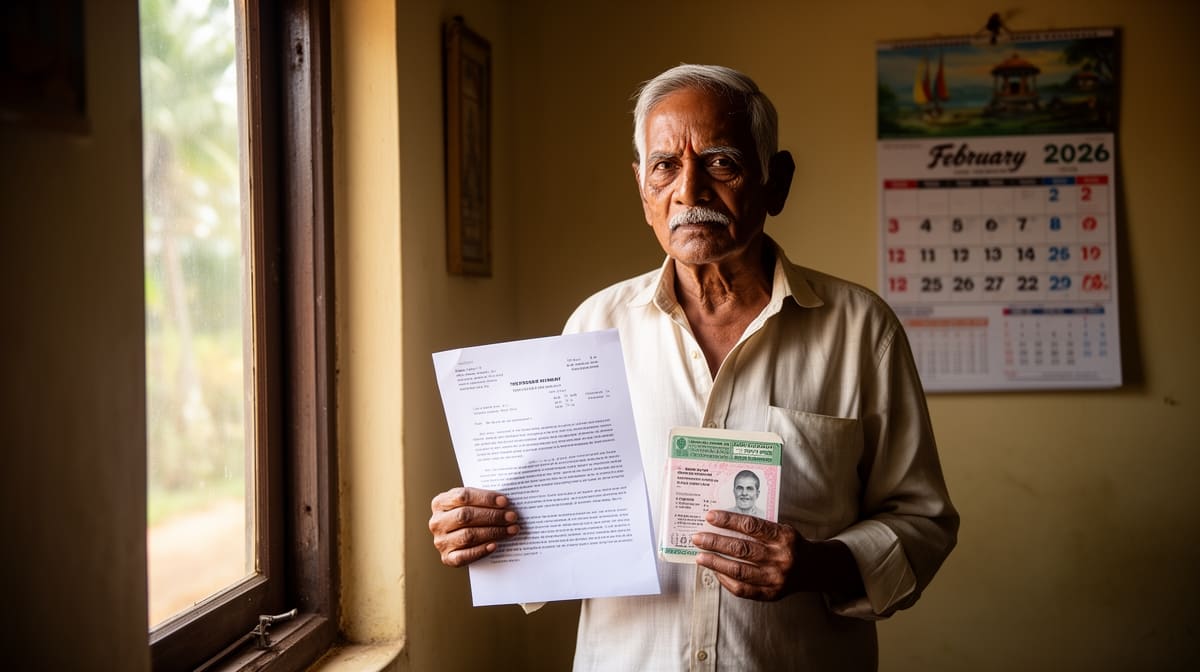
The Central Administrative Tribunal, Allahabad, has reaffirmed that recovery of excess pay under the MACP Scheme from a Group C employee, absent fraud or misrepresentation and without adherence to natural justice, is legally impermissible. This ruling reinforces the protective jurisprudence established by the Supreme Court in Rafiq Masih and provides critical guidance for pensionary and post-retirement benefit disputes.
Background & Facts
The Dispute
The applicant, Dal Chand, a retired Postal Assistant, was granted financial upgradation under the Modified Assured Career Progression (MACP) Scheme with effect from 01.09.2008, pursuant to Office Order dated 10.05.2010. He received the higher pay scale continuously until his retirement on 30.09.2012. After retirement, the respondents unilaterally reduced his last pay from Rs. 17,850/- to Rs. 15,770/- and recovered Rs. 1,40,122/- from his Death Cum Retirement Gratuity (DCRG), alleging wrongful fixation of pay. The applicant challenged this action through the present Original Application, seeking quashing of the recovery order, restoration of his pay scale, refund of the recovered amount with interest, and costs.
Key Facts
- The applicant was appointed to a Group 'D' post on 01.10.1983
- He was promoted to the post of Postal Assistant (Group 'C') on 23.07.1988
- He was granted MACP benefit w.e.f. 01.09.2008 by Office Order dated 10.05.2010
- He received the higher pay scale without interruption until his retirement on 30.09.2012
- His basic pay was reduced from Rs. 17,850/- to Rs. 15,770/- effective 03.09.2012 (post-retirement)
- An amount of Rs. 1,40,122/- was recovered from his DCRG
- The reduction and recovery were effected without any show cause notice, hearing, or written order
- The applicant submitted representations on multiple occasions, all of which were ignored
- The applicant was a Group 'C' employee at the time of retirement
Procedural History
- 10.05.2010: MACP benefit granted w.e.f. 01.09.2008
- 30.09.2012: Applicant retired upon superannuation
- 03.09.2012: Order issued to refix pay and initiate recovery (post-retirement)
- 28.04.2013: Impugned order passed by Senior Superintendent of Post Offices, Aligarh (Respondent No. 5)
- 12.06.2013: Original Application No. 1031 of 2013 filed before CAT, Allahabad
- 27.04.2026: Reserved judgment
- 29.04.2026: Judgment delivered
The Parties' Positions
Applicant: Argued that he committed no fraud or misrepresentation; the error in pay fixation was entirely on the part of the department; recovery without notice or hearing violates principles of natural justice; and recovery from a Group C employee, especially post-retirement, is barred under Rafiq Masih.
Respondents: Contended that the applicant was not entitled to MACP benefit as he had not completed the requisite service period; the overpayment was due to administrative error; recovery was lawful to correct the mistake; and no procedural flaw existed.
Relief Sought
The applicant sought:
- Quashing of the impugned order dated 28.04.2013
- Restoration of his pay scale as on the date of retirement (Rs. 17,850/-)
- Refund of Rs. 1,40,122/- recovered from DCRG
- 18% interest on the recovered amount
- Costs of the proceedings
The Legal Issue
The central question was whether recovery of excess MACP benefits from a Group C employee, who retired without fraud or misrepresentation and without being afforded a hearing, is lawful under the principles of natural justice and the precedent in Rafiq Masih v. State of Punjab.
Arguments Presented
For the Appellant
Learned counsel for the applicant relied on the Supreme Court’s judgment in State of Punjab & Ors v. Rafiq Masih to argue that recovery from Group C employees is impermissible under five specific conditions, including where the employee is a Group C worker, has retired, and has not committed fraud. He emphasized that the department’s error in pay fixation could not be visited upon the employee, especially when no show cause notice was issued and no opportunity of hearing was granted. He further contended that the recovery of over Rs. 1.4 lakh from post-retiral dues would cause undue hardship and violate Article 14 and Article 21 of the Constitution.
For the Respondent
Learned counsel for the respondents argued that the MACP benefit was erroneously granted due to administrative oversight and that the department had a duty to recover the overpayment. He submitted that the applicant was not entitled to the benefit as he had not completed the required service period for MACP, and that the recovery was a legitimate exercise of the employer’s right to correct erroneous payments. He did not dispute the absence of a show cause notice but claimed it was a procedural lapse, not a legal infirmity.
The Court's Analysis
The Tribunal examined the facts and the law laid down in Rafiq Masih with meticulous care. It noted that the applicant had been paid the higher scale for over four years without objection, and crucially, there was no allegation of fraud, misrepresentation, or concealment on his part. The Tribunal held that the department’s failure to issue a show cause notice or afford a hearing before initiating recovery was a clear violation of the principles of natural justice.
"It is not possible to postulate all situations of hardship, which would govern employees on the issue of recovery, where payments have mistakenly been made by the employer, in excess of their entitlement... Recovery from employees belonging to Class-III and Class-IV service (or Group 'C' and Group 'D' service) is impermissible in law."
The Court emphasized that the Rafiq Masih judgment was not merely advisory but binding precedent. It held that the recovery of Rs. 1,40,122/- from a retired Group C employee, without any fault on his part and without procedural safeguards, was arbitrary, harsh, and violative of Article 14. The Tribunal further observed that the department’s remedy lay in correcting its own administrative error through a fresh, lawful process - not by penalizing the employee retroactively.
The Court rejected the respondents’ argument that administrative convenience justified the recovery. It clarified that even if the MACP benefit was granted erroneously, the burden of correction could not be shifted to the employee under the circumstances.
The Verdict
The applicant succeeded. The Tribunal set aside the impugned order dated 28.04.2013. The respondents were directed to refund the entire amount of Rs. 1,40,122/- recovered from the applicant’s DCRG within three months from the date of receipt of the certified copy of this order. Simple interest at 6% per annum shall be paid on the refunded amount from the date of recovery until actual payment. The applicant’s pay scale shall be restored to Rs. 17,850/- as drawn on the date of retirement. The respondents may rectify the error only by issuing a fresh show cause notice and affording a hearing, but no recovery shall be made from the applicant.
What This Means For Similar Cases
Recovery from Group C Employees Is Presumptively Invalid
- Practitioners must challenge any recovery of overpayment from Group C or D employees where no fraud or misrepresentation is alleged
- The Rafiq Masih judgment creates a strong presumption against recovery in such cases, regardless of the duration of overpayment
- Administrative errors cannot justify financial hardship imposed on lower-tier employees
Natural Justice Is Non-Negotiable in Pay Fixation
- No recovery, adjustment, or refixation of pay can be made without a show cause notice and opportunity of hearing
- Post-retirement adjustments without prior notice are per se illegal
- Even if the department admits error, the process must comply with natural justice
MACP Benefits Cannot Be Revoked Retroactively Without Due Process
- MACP benefits granted and accepted for years cannot be withdrawn unilaterally
- The burden of proving entitlement lies with the employer, not the employee
- Any revision must be prospective and procedurally compliant, never retrospective and punitive