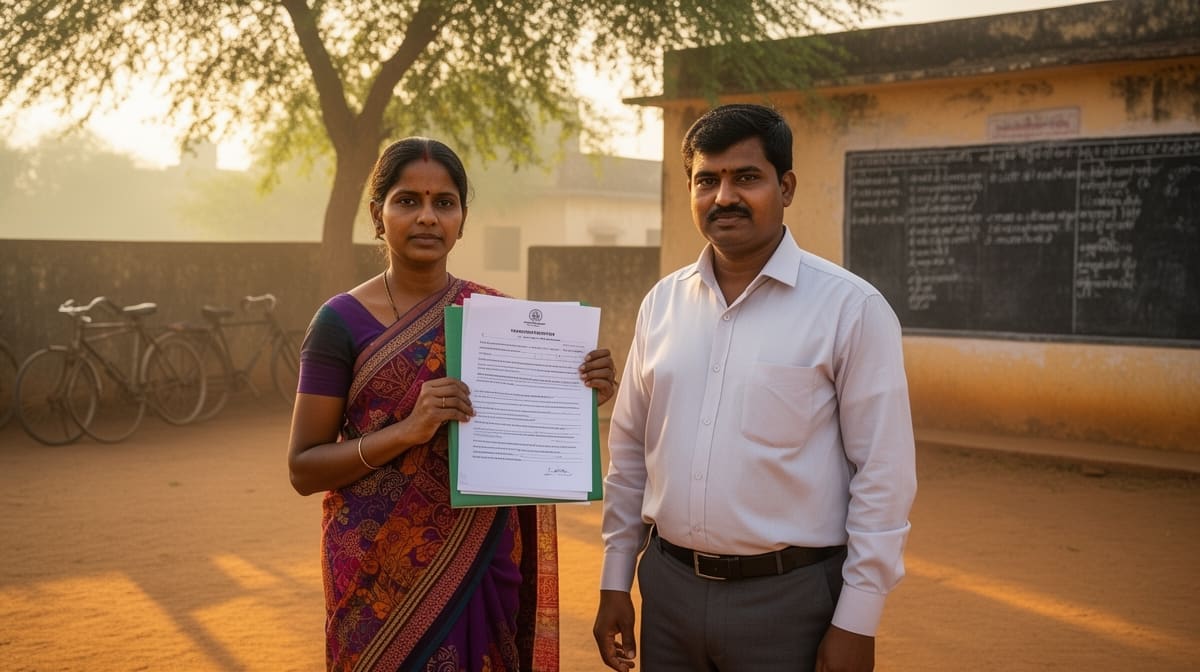
The Rajasthan High Court has set aside an arbitrary transfer order issued to a widow employee, directing municipal authorities to adhere to their own policy prioritizing single women and widows in transfers. The Court stayed the transfer and ordered expeditious consideration of the petitioner's representation within strict timelines.
Background & Facts
The Genesis
The petitioner, Smt. Nirupa Parmar, is a 36-year-old Junior Accountant II employed with the Municipal Council, Sagwara, District Pratapgarh. She is a widow and falls within the category of single women entitled to special consideration under the respondents' transfer policy.
Key Facts
- The petitioner was working as Junior Accountant II at Municipal Council Sagwara.
- On 19.06.2026, the respondents issued an order establishing a policy prioritizing transfers of single women, widows, and abandoned women.
- Despite this policy, the petitioner was transferred to Municipal Council Dungarpur via order dated 10.07.2026.
- The transfer order did not consider the petitioner's status as a widow or the policy's prioritization criteria.
Procedural History
- 10.07.2026: Impugned transfer order issued by respondents.
- 21.07.2026: Present writ petition filed before the Rajasthan High Court.
- 21.07.2026: Order reserved by the Court.
The Parties' Positions
For the Petitioner: The petitioner's counsel argued that the respondents failed to adhere to their own policy dated 19.06.2026, which prioritizes transfers for single women and widows. The impugned transfer order dated 10.07.2026 did not account for the petitioner's status as a widow.
For the Respondents: The respondents' counsel submitted that the transfer was necessitated by administrative exigency. They also stated that the petitioner could file a representation before the respondents to address her grievances, and the respondents would consider it expeditiously.
Relief Sought
The petitioner sought:
- Quashing of the transfer order dated 10.07.2026.
- Permission to continue performing her duties at Municipal Council Sagwara undisturbed.
- Any other appropriate relief the Court deemed just and proper.
The Legal Issue
The central question was whether the respondents were bound to follow their own transfer policy, particularly when it prioritized single women and widows, before issuing a transfer order against such an employee.
Arguments Presented
For the Petitioner
The petitioner's counsel relied on the respondents' policy dated 19.06.2026, which prioritizes transfers for single women, widows, and abandoned women. The counsel argued that the impugned transfer order dated 10.07.2026 failed to consider this policy and amounted to arbitrary exercise of power.
For the Respondent
The respondents' counsel contended that the transfer was necessitated by administrative exigency and was not intended to disregard the petitioner's status. They also submitted that the petitioner could file a representation to address her grievances, and the respondents would consider it expeditiously.
The Court's Analysis
The Court examined the respondents' policy dated 19.06.2026, which explicitly prioritizes transfers for single women, widows, and abandoned women. The Court noted that the impugned transfer order dated 10.07.2026 did not consider this policy or the petitioner's status as a widow.
The Court observed that administrative exigency cannot override a policy that prioritizes vulnerable categories of employees. The Court emphasized that the respondents must adhere to their own policies unless there are compelling reasons to deviate, which were not demonstrated in this case.
"Taking into consideration the fact that the respondents have transferred the petitioner, a widow woman, without taking into consideration her difficulty, this Court deems it appropriate to direct the petitioner to file her representation before the respondents within a period of '7 days' from today and the respondents shall decide the representation within a period of '10 days' thereafter, strictly in accordance with law by way of passing a speaking order."
The Court also stayed the impugned transfer order until the respondents decided the petitioner's representation, ensuring that the petitioner was not prejudiced by the transfer in the interim.
The Verdict
The Court disposed of the writ petition with the following directions:
- The petitioner was directed to file her representation before the respondents within 7 days from the date of the order.
- The respondents were directed to decide the representation within 10 days thereafter, strictly in accordance with law, by passing a speaking order.
- The impugned transfer order dated 10.07.2026 was stayed qua the petitioner until the decision of the representation, provided the petitioner had not joined at the new place of posting.
- If the petitioner failed to file the representation within 7 days, the interim order would stand vacated automatically.
What This Means For Similar Cases
Policy Compliance Is Non-Negotiable
Administrative authorities must strictly adhere to their own policies, especially when they prioritize vulnerable categories such as widows and single women. Deviations must be justified with cogent reasons.
- Actionable Takeaway: Counsel should scrutinize transfer orders against employees in protected categories to ensure compliance with internal policies.
Procedural Safeguards for Vulnerable Employees
The Court's direction to file a representation and decide it expeditiously within strict timelines sets a precedent for protecting vulnerable employees from arbitrary transfers.
- Actionable Takeaway: Employees facing transfers should promptly file representations and seek interim stays to prevent prejudice.
Interim Relief as a Tool for Justice
The Court's interim stay of the transfer order ensured that the petitioner was not prejudiced while her representation was considered. This underscores the importance of interim relief in service law matters.
- Actionable Takeaway: Practitioners should seek interim reliefs in service law matters to prevent irreparable harm during litigation.