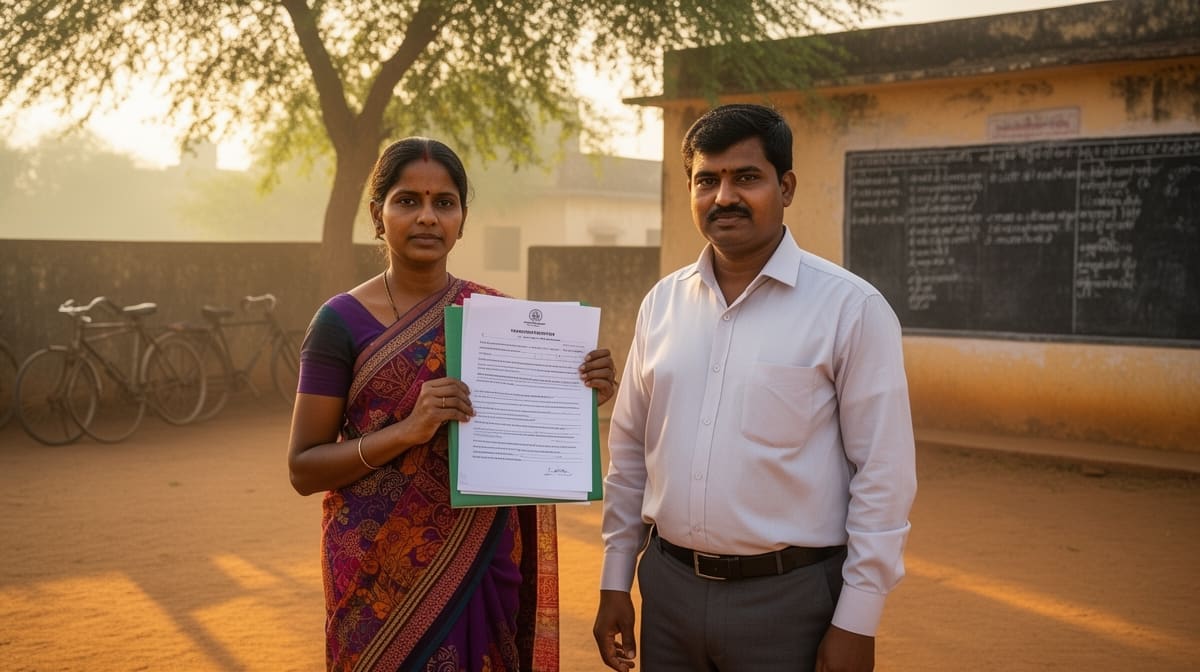
The Madhya Pradesh High Court has underscored the importance of Clause 16 of the 2026 Transfer Policy, which mandates that husband and wife working in government service should be posted in the same city. While disposing of a writ petition, the Court directed the competent authority to reconsider the petitioner's representation within two weeks, staying the impugned transfer order in the interim.
Background & Facts
The Dispute
The petitioner, Kanchan Sahu, a government employee, challenged her transfer order dated 15.06.2026 (Annexure P/1), which relocated her from Jan Chikitsalaya Ganj Basoda to Kurwai, a distance of approximately 40 kilometers. The petitioner's husband, also a government servant, was transferred to Lateri on the same date (Annexure P/2). The petitioner sought relief under Article 226 of the Constitution, contending that her transfer violated Clause 16 of the 2026 Transfer Policy, which stipulates that spouses should be posted in the same city.
Key Facts
- The petitioner was working at Jan Chikitsalaya Ganj Basoda, District Vidisha
- Transfer Order dated 15.06.2026: Petitioner transferred to Kurwai
- Husband's Transfer Order dated 15.06.2026: Transferred to Lateri
- Distance between Kurwai and Lateri: Approximately 40 kilometers
- Clause 16 of the 2026 Transfer Policy: Mandates posting of husband and wife in the same city
Procedural History
- 15.06.2026: Impugned transfer order issued
- Date of Filing: Writ Petition No. 26902 of 2026 filed before the High Court of Madhya Pradesh at Gwalior
- 10.07.2026: Present order passed by the High Court
Relief Sought
The petitioner sought the following reliefs:
- Quashing of the transfer order dated 15.06.2026
- Direction to allow the petitioner to continue working at Ganj Basoda
- Consideration of the petitioner's case under Clause 16 of the 2026 Transfer Policy
- Any other suitable direction deemed fit by the Court
The Legal Issue
The central question was whether the transfer order issued to the petitioner violated Clause 16 of the 2026 Transfer Policy, which mandates that husband and wife working in government service should be posted in the same city. Additionally, the Court had to determine whether the petitioner was entitled to interim relief pending reconsideration of her representation.
Arguments Presented
For the Petitioner
Learned counsel for the petitioner, Shri Ankur Maheshwari, submitted:
- The impugned transfer order dated 15.06.2026 relocated the petitioner to Kurwai, while her husband was transferred to Lateri, both locations being approximately 40 kilometers apart
- The petitioner was willing to join the place where her husband was transferred, thereby complying with the spirit of Clause 16 of the 2026 Transfer Policy
- The petitioner sought liberty to file a fresh and joint representation before the competent authority, with a direction for expeditious disposal
For the Respondent
Learned counsel for the State, Shri Prabhat Pateriya, did not oppose the innocuous prayer made by the petitioner's counsel.
The Court's Analysis
The Court observed that the petitioner's transfer, coupled with her husband's transfer to a different location, raised a valid concern under Clause 16 of the 2026 Transfer Policy. The Court noted that the petitioner was willing to join her husband at the transferred location, which aligned with the policy's objective of ensuring spousal proximity in postings.
The Court disposed of the petition with the following directions:
"The petitioners are directed to submit a fresh, joint, and detailed representation before the respondent/competent authority within seven days from the date of receipt of this order, for consideration in accordance with law."
"In turn, the respondent/competent authority shall consider & decide the said representation by passing a reasoned and speaking order within a period of two weeks from the date of receipt of the certified copy of this order."
The Court further stayed the impugned transfer order dated 15.06.2026 and permitted the petitioner to continue working at her present place of posting, Ganj Basoda, until the competent authority decided her representation. The Court explicitly clarified that it had not expressed any opinion on the merits of the case.
The Verdict
The Court disposed of the writ petition with the following directions:
- The petitioner was permitted to file a fresh, joint representation before the competent authority within seven days from the date of receipt of the order
- The competent authority was directed to decide the representation by passing a reasoned and speaking order within two weeks from the date of receipt of the certified copy of the order
- The impugned transfer order dated 15.06.2026 was stayed pending the decision on the representation
- The petitioner was permitted to continue working at her present place of posting, Ganj Basoda, during the interim period
What This Means For Similar Cases
Clause 16 of Transfer Policy Must Be Given Due Consideration
- Government authorities must strictly adhere to Clause 16 of the 2026 Transfer Policy, which mandates posting of husband and wife in the same city
- Transfer orders that violate this clause may be stayed pending reconsideration, as seen in this case
- Employees can seek interim relief to continue working at their present posting until their representation is decided
Competent Authority Must Pass Reasoned Orders
- The Court emphasized the need for the competent authority to pass a reasoned and speaking order while deciding representations
- This ensures transparency and accountability in administrative decisions
- Failure to provide reasoned orders may lead to judicial intervention, as demonstrated in this case
Joint Representations Can Expedite Relief
- Petitioners should consider filing joint representations with their spouses to strengthen their case under Clause 16 of the Transfer Policy
- Such representations may be decided expeditiously, as directed by the Court in this case
- The Court's willingness to stay transfer orders pending reconsideration provides a practical remedy for aggrieved employees