
The Central Information Commission has reaffirmed that public authorities must not only respond to RTI requests but actively uphold transparency by resuming routine disclosure of official records. This decision sets a critical precedent for institutional accountability, particularly for statutory bodies like Prasar Bharati.
Background & Facts
The Dispute
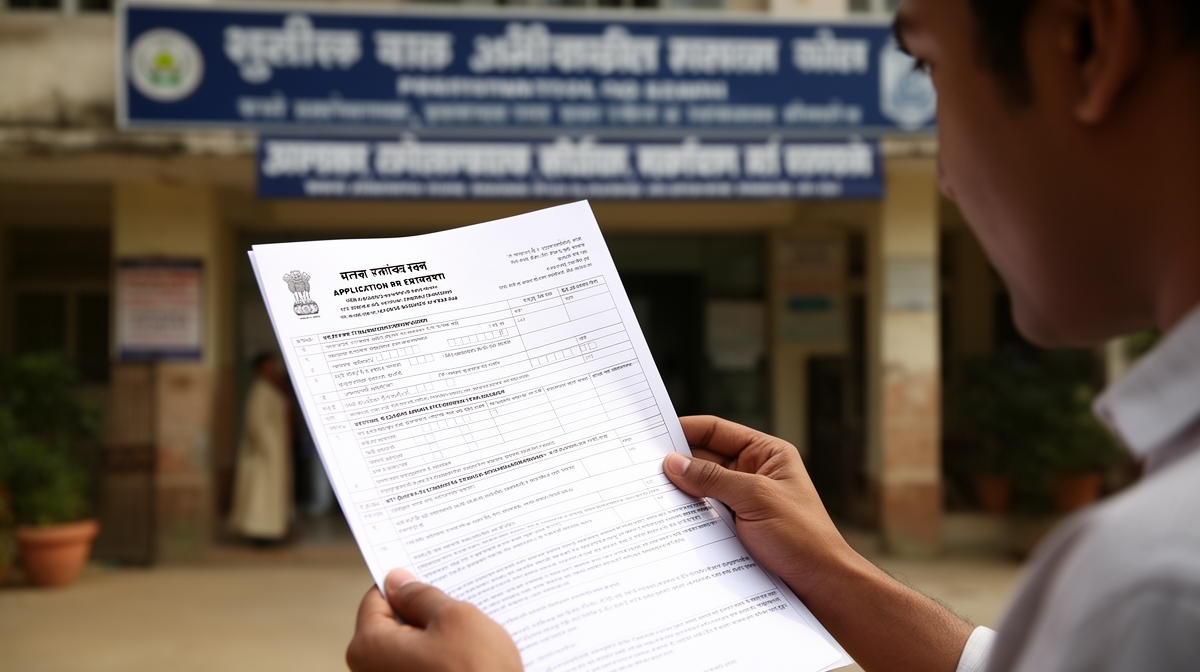
The appellant sought a certified copy of the minutes from the 182nd meeting of the Prasar Bharati Board, filed under the Right to Information Act, 2005. The request was made on 24 July 2024, citing urgency for justice. The Central Public Information Officer (CPIO) responded on 23 August 2024, claiming it was not the custodian of the records and had forwarded the request to the Board Division for processing. The First Appellate Authority upheld this response on 24 September 2024, prompting the appellant to file a second appeal before the Commission.
Procedural History
- 24 July 2024: RTI application filed seeking certified minutes of the 182nd Prasar Bharati Board meeting
- 23 August 2024: CPIO replied that it was not the custodian and was awaiting information from the Board Division
- 4 September 2024: First appeal filed challenging the CPIO’s response
- 24 September 2024: First Appellate Authority upheld the CPIO’s reply
- 15 October 2024: Second appeal filed before the Central Information Commission
Relief Sought
The appellant sought full disclosure of the minutes, including agenda item no. 13, and challenged the discontinuation of a prior practice of publicly uploading redacted board minutes. He argued that the refusal to provide complete information violated the spirit of the RTI Act.
The Legal Issue
The central question was whether a public authority can discontinue its longstanding practice of proactive disclosure of board minutes without justification, and whether partial compliance with an RTI request - while withholding non-exempted information - constitutes a violation of the statutory duty to provide information.
Arguments Presented
For the Appellant
The appellant contended that the CPIO’s response was evasive and failed to discharge the obligation under Section 7(1) of the RTI Act to provide information within the stipulated time. He highlighted that the minutes of previous meetings had been routinely uploaded on the public website until 2017 - 2018, indicating institutional recognition of transparency obligations. The discontinuation of this practice, he argued, was arbitrary and contrary to Section 4(1)(b), which mandates proactive disclosure of records of public interest.
For the Respondent
The respondent, Prasar Bharati, admitted that agenda items 6, 12, and 17 were exempted under Sections 8(1)(c), (d), and (h) of the RTI Act, but claimed that the remaining information had been provided. It asserted that the discontinuation of public uploads was an internal administrative decision based on legal advice, without elaborating on the rationale. It maintained that its response to the RTI request was technically compliant.
The Court's Analysis
The Commission conducted a detailed review of the exempted portions and found that agenda item no. 13 - pertaining to promotion and DPC matters - was general in nature and did not fall within any valid exemption. The Commission noted that the respondent had no objection to disclosing this item, yet had failed to include it in the initial response.
"The practice of uploading redacted minutes was discontinued without any valid reason being offered. This undermines the statutory mandate of transparency under Section 4(1)(b)."
The Commission emphasized that Section 4(1)(b) imposes a positive obligation on public authorities to proactively disclose information of public interest, including minutes of governing bodies. The fact that such disclosure had been routine until 2017 - 2018 established a precedent of institutional commitment to openness. The discontinuation of this practice, without justification, was deemed inconsistent with the ratio decidendi of Central Information Commission v. State of Uttar Pradesh, which held that proactive disclosure is not discretionary but mandatory.
The Commission further observed that the CPIO’s response, while technically acknowledging non-custodianship, did not fulfill the duty under Section 6(3) to transfer the request to the correct public authority or assist in locating the information. The failure to provide the non-exempted portion of the minutes, even after the Commission’s inquiry, demonstrated a lack of diligence.
The Verdict
The appellant prevailed. The Central Information Commission held that proactive disclosure under Section 4(1)(b) is mandatory, and directed Prasar Bharati to provide the full minutes of the 182nd meeting, including agenda item no. 13, within 15 days. The exempted portions (items 6, 12, and 17) were to remain withheld. The Commission also ordered the resumption of the practice of uploading redacted minutes on its website.
What This Means For Similar Cases
Proactive Disclosure Is Not Optional
- Public authorities must maintain and publish records listed under Section 4(1)(b), including board minutes, meeting agendas, and policy documents
- Discontinuation of past disclosure practices without documented justification violates statutory obligations
- Practitioners should cite Section 4(1)(b) in appeals where authorities fail to maintain public repositories
Partial Compliance Is Insufficient
- Even if some information is exempted, non-exempted portions must be provided without delay
- A response that cites non-custodianship without transferring the request or assisting in retrieval is legally inadequate
- RTI applicants may now demand proof of internal transfer under Section 6(3) when records are held by another division
Transparency Must Be Institutionalized
- The Commission’s directive to resume public uploads sets a benchmark for statutory corporations
- Authorities must document reasons for any change in disclosure protocols and make them available upon request
- Legal officers should review internal policies to ensure alignment with Section 4 obligations, not just Section 7 responses