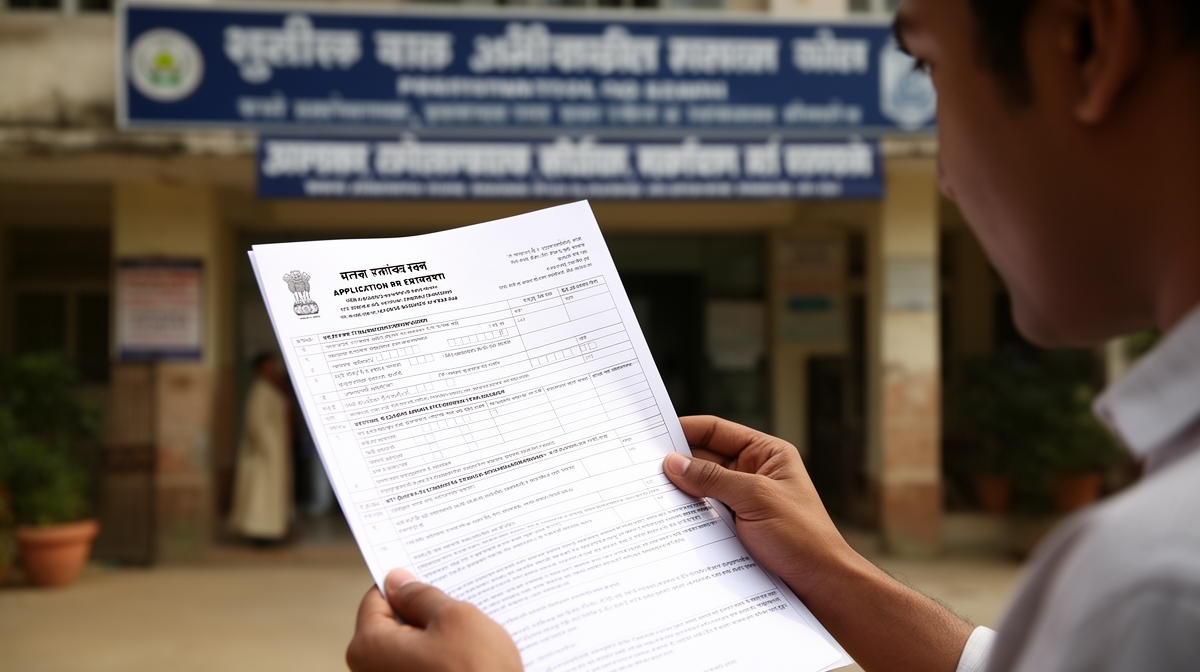

The Central Information Commission has reinforced the duty of public authorities to conduct a diligent and documented search for information requested under the Right to Information Act, 2005. This decision clarifies that mere assertions of non-availability are insufficient and mandates concrete procedural compliance, setting a critical precedent for transparency and accountability in government record-keeping.
Background & Facts
The Dispute
The appellant, Rajendra Kumar, filed an RTI application on 19 June 2024 seeking six specific categories of records from the Indian Grassland and Fodder Research Institute (ICAR). These included documentation relating to the allocation of duties to the DDO (MR) section, records of alleged removal of files, compliance with rules regarding transfer of responsibilities, and evidence of internal inquiries into administrative misconduct. The information sought was integral to understanding alleged irregularities in administrative functioning.
Procedural History
The case progressed through the following stages:
- 19 June 2024: RTI application submitted to the CPIO.
- 26 July 2024: CPIO responded by offering inspection of records for five of the six requests, while claiming the third request pertained to "administrative decision-making" and was exempt.
- 22 July 2024: Appellant filed a first appeal, challenging the adequacy of the response.
- 29 July 2024: First Appellate Authority (FAA) dismissed the appeal, accepting the CPIO’s response without requiring substantiation or verification of record availability.
- 5 September 2024: Appellant filed a second appeal before the Central Information Commission.
Relief Sought
The appellant sought a direction for the CPIO to locate and provide access to the requested records, or in the alternative, to furnish a sworn affidavit confirming that a diligent search had been conducted and the records were genuinely untraceable.
The Legal Issue
The central question was whether a public authority can discharge its obligation under Section 6(1) of the RTI Act by merely stating that records are available for inspection, without verifying their actual existence or conducting a documented search, particularly when the applicant later alleges that the records were deliberately withheld or misplaced.
Arguments Presented
For the Appellant
The appellant argued that the CPIO’s response was a procedural evasion. He contended that offering inspection without confirming the physical availability of records violated the spirit of Section 7(1), which mandates provision of information within 30 days. He cited Central Information Commission v. State of Bihar to assert that public authorities cannot rely on vague assertions of non-availability. He further argued that the FAA’s dismissal without probing the credibility of the CPIO’s claim amounted to a failure to apply the principle of substantial compliance.
For the Respondent
The CPIO, represented by Ravindra Singh Negi, submitted that the records were not located despite repeated efforts. He claimed that the files may have been misplaced during a recent office relocation and that the information sought involved third-party data, which required additional scrutiny. He argued that the CPIO had acted in good faith and that the FAA’s decision was procedurally correct.
The Court's Analysis
The Commission rejected the CPIO’s claim of non-traceability as insufficient. It emphasized that Section 7(9) of the RTI Act requires public authorities to make reasonable efforts to locate information, and that mere verbal assertions carry no legal weight. The Commission held that the FAA had abdicated its duty under Section 19(3) to examine the adequacy of the CPIO’s response.
"The obligation to provide information under the RTI Act is not a formality but a substantive duty. A public authority cannot evade this by claiming files are lost without demonstrating that a systematic, documented search was undertaken."
The Commission distinguished this case from situations where records are genuinely destroyed or expired, noting that the Institute had no record retention policy to justify the absence of documents from 2023-24. It further held that the CPIO’s failure to maintain a log of file movements or conduct an internal audit violated the principles of administrative accountability.
The Commission also clarified that while Section 8(1)(j) permits withholding third-party information, the CPIO must provide a reasoned, written justification for redaction - not a blanket refusal. The burden of proving third-party status lies with the authority, not the applicant.
The Verdict
The appellant prevailed. The Commission held that public authorities must conduct a diligent, documented search for requested records and, if records are untraceable, must file a sworn affidavit to that effect. If records are located, access must be granted with appropriate redactions for third-party information, and the reasons for redaction must be clearly stated.
What This Means For Similar Cases
Diligent Search Is Mandatory, Not Discretionary
- Practitioners must now demand a written search log or audit trail from public authorities in RTI appeals.
- If a PIO claims records are lost, the applicant may file a complaint under Section 20 for willful neglect.
- Courts and Commissions will no longer accept vague claims of non-availability without corroborating evidence.
Third-Party Claims Require Specific Justification
- Redaction under Section 8(1)(j) must be itemized and justified in writing.
- Blanket exemptions for "third-party information" without identifying the third party or the nature of the privacy interest are invalid.
- Applicants may challenge redactions in second appeals if the reasoning is inadequate.
Affidavit of Non-Traceability Is Now a Procedural Requirement
- Public authorities must file a notarized affidavit detailing search methods, personnel involved, and dates of search.
- Failure to file such an affidavit within the stipulated time may result in penalties under Section 20(1).
- This affidavit becomes part of the record and may be used in subsequent litigation or disciplinary proceedings.