The Allahabad High Court has affirmed that private educational institutions imparting higher education perform public functions and are subject to judicial review under Article 226 of the Constitution. In a significant ruling, the Court directed that a suspended student be permitted to appear in his final examination despite non-compliance with attendance norms, holding that disciplinary action without a prescribed appeal mechanism violates fundamental principles of natural justice.
Background & Facts
The Dispute
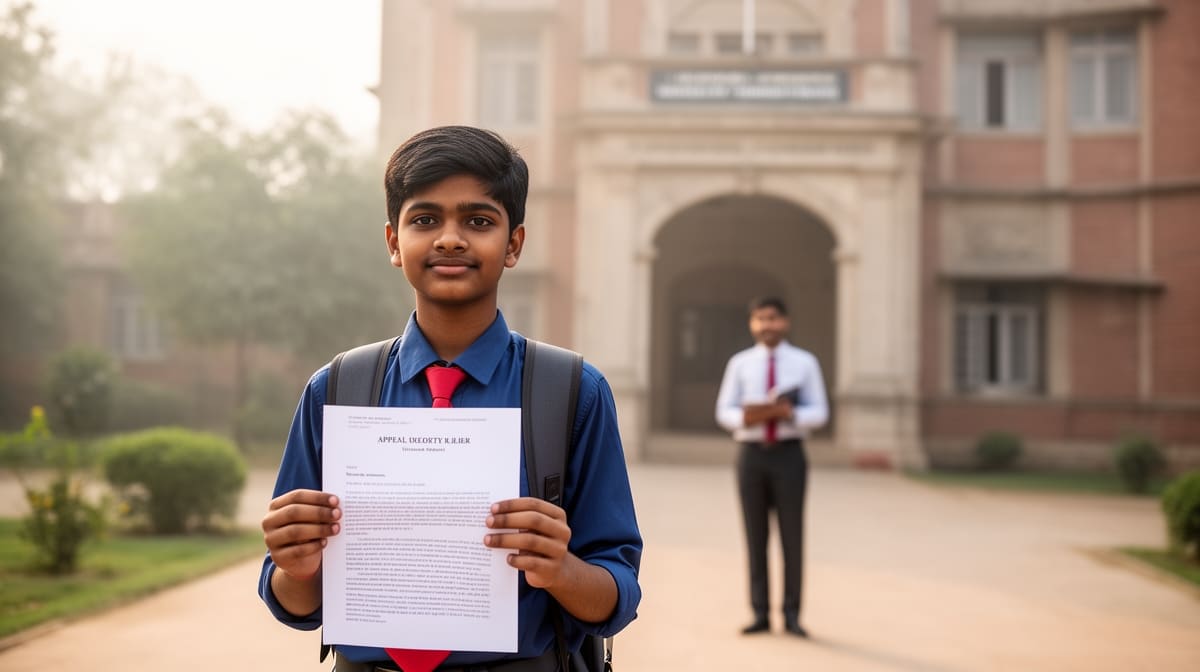
The petitioner, Nikhil Kumar, a student of Bachelor of Physiotherapy (Batch 2021-22, VIII Semester) at Atal Bihari Vajpayee Medical University, was suspended for six months by an order dated 16.12.2025 passed by the University’s disciplinary committee. The suspension followed a complaint by a female student alleging that the petitioner had threatened her with physical assault. No formal inquiry or detailed findings were recorded in the suspension order.
Key Facts
- The petitioner was suspended with immediate effect on 16.12.2025.
- The suspension order did not specify the exact nature of the alleged misconduct beyond a general reference to a complaint.
- No show cause notice issued by the disciplinary committee was produced on record.
- The petitioner’s father attended a meeting with college authorities and gave an assurance that the petitioner would not repeat such conduct.
- The suspension order contained no provision for appeal or review.
- The suspension period was set to expire on 15.06.2026.
- The final examination for the VIII Semester was scheduled to commence on 22.06.2026.
- The petitioner had not been granted permission to appear in the examination due to alleged shortage of attendance.
Procedural History
- 16.12.2025: Disciplinary committee passed suspension order against petitioner.
- 18.05.2026: High Court issued an interim order directing respondents to file rules and regulations governing disciplinary action.
- 22.07.2026: Writ Petition (WP(C) No. 19347 of 2026) filed before the Allahabad High Court.
- 18.06.2026: Hearing conducted before Justice Kunal Ravi Singh.
- 18.06.2026: Judgment delivered.
The Parties' Positions
For the Petitioner:
- The suspension order was arbitrary, non-reasoned, and devoid of procedural safeguards.
- No opportunity of hearing was granted.
- No rules or regulations governing disciplinary action were produced by the University.
- The suspension period has lapsed; further denial of examination rights is punitive and unjust.
- The petitioner seeks permission to appear in the final examination without being penalized for attendance shortfall.
For the Respondents:
- The University is a private institution and not a State under Article 12.
- Therefore, no writ petition lies against its internal disciplinary orders.
- Mandatory attendance rules apply; absence disqualifies the petitioner from appearing in the examination.
Relief Sought
The petitioner sought:
- Quashing of the suspension order dated 16.12.2025.
- Permission to appear in the VIII Semester final examination scheduled from 22.06.2026.
- Waiver of mandatory attendance requirement as a condition for appearing in the examination.
The Legal Issue
The central questions were: (1) Whether a private medical university performing educational functions is amenable to judicial review under Article 226 of the Constitution; and (2) Whether a disciplinary suspension imposed without a prescribed appeal mechanism or recorded reasons violates the principles of natural justice.
Arguments Presented
For the Petitioner
The petitioner relied on the Full Bench judgment in Roychan Abraham v. State of U.P., which held that private institutions imparting education from age six onwards, including higher education, perform public duties and are amenable to judicial review under Article 226. It was argued that the suspension order was non-reasoned, lacked procedural fairness, and provided no avenue for appeal. The petitioner emphasized that the punishment had already been served and that denying examination access amounted to continued punishment without due process.
For the Respondent
The respondents contended that the University, being a private entity, was not a State under Article 12 and therefore not subject to writ jurisdiction. They further argued that attendance rules were mandatory under the University’s academic regulations and that the petitioner’s failure to comply rendered him ineligible for the examination. No rules or regulations were produced on record to substantiate the disciplinary process.
The Court's Analysis
The Court began by addressing the preliminary objection regarding maintainability. It noted that the law on this point was no longer res integra, having been settled by the Full Bench in Roychan Abraham v. State of U.P.. The Court quoted paragraph 64 of that judgment:
"Private Institutions imparting education to students from the age of six years onwards, including higher education, perform public duty primarily a State function, therefore are amenable to judicial review of the High Court under Article 226 of the Constitution of India."
The Court held that medical education, being a regulated public service, inherently involves public interest. The University, though privately managed, discharged a public function by conferring professional qualifications recognized by statutory bodies. Therefore, its disciplinary actions were subject to judicial scrutiny.
On the merits, the Court observed that the suspension order was devoid of any reasoning, failed to indicate whether a show cause notice was issued, and contained no provision for appeal. The absence of procedural safeguards rendered the order violative of natural justice. The Court emphasized that disciplinary action affecting a student’s academic future must be accompanied by fair procedure.
The Court further noted that the suspension period had expired during the pendency of the petition. To continue denying the petitioner access to the final examination on grounds of attendance - without any evidence that such rules were communicated or enforced uniformly - would amount to a continuing penalty beyond the imposed sanction. The respondents had also failed to file any rules or regulations governing disciplinary proceedings, despite being directed to do so by the Court on 18.05.2026.
The Court concluded that the petitioner had already suffered the punishment and that further denial of examination rights was disproportionate and unjustified.
The Verdict
The writ petition was partly allowed. The petitioner is permitted to appear in the VIII Semester final examination scheduled from 22.06.2026 without being subjected to the condition of mandatory attendance. The impugned suspension order dated 16.12.2025 is set aside as academic, since the suspension period has lapsed. The University is directed to ensure that all future disciplinary proceedings are conducted in accordance with principles of natural justice, with written orders, opportunity of hearing, and a clear appellate mechanism.
What This Means For Similar Cases
Private Institutions Are Not Beyond Judicial Scrutiny
- Practitioners may now invoke Article 226 against disciplinary actions by private medical, engineering, and other professional colleges.
- The Roychan Abraham precedent is binding: any institution imparting higher education performing a public function is subject to judicial review.
Suspension Must Be Procedurally Sound
- Disciplinary orders must include: (i) specific allegations, (ii) opportunity of hearing, (iii) reasoned order, and (iv) right of appeal.
- Failure to produce rules or regulations governing discipline will be viewed adversely by courts.
Attendance Rules Cannot Be Applied Arbitrarily
-
Institutions cannot use attendance as a punitive tool after a disciplinary sanction has been served.
-
Attendance norms must be uniformly applied and clearly communicated; non-compliance cannot be used to bar examination access without due process.
-
Always demand production of institutional rules before challenging disciplinary action.
-
Argue that suspension without appeal violates Article 14 and Article 21 of the Constitution.
-
Seek interim relief for examination access when suspension is nearing expiry.