The Jharkhand High Court has clarified that affiliation with a public university does not transform a privately managed teacher training college into a 'State' under Article 12 of the Constitution. This ruling reinforces the boundary between public law remedies and private contractual disputes, offering critical guidance to practitioners handling service-related writ petitions against non-governmental educational institutions.
Background & Facts
The Dispute
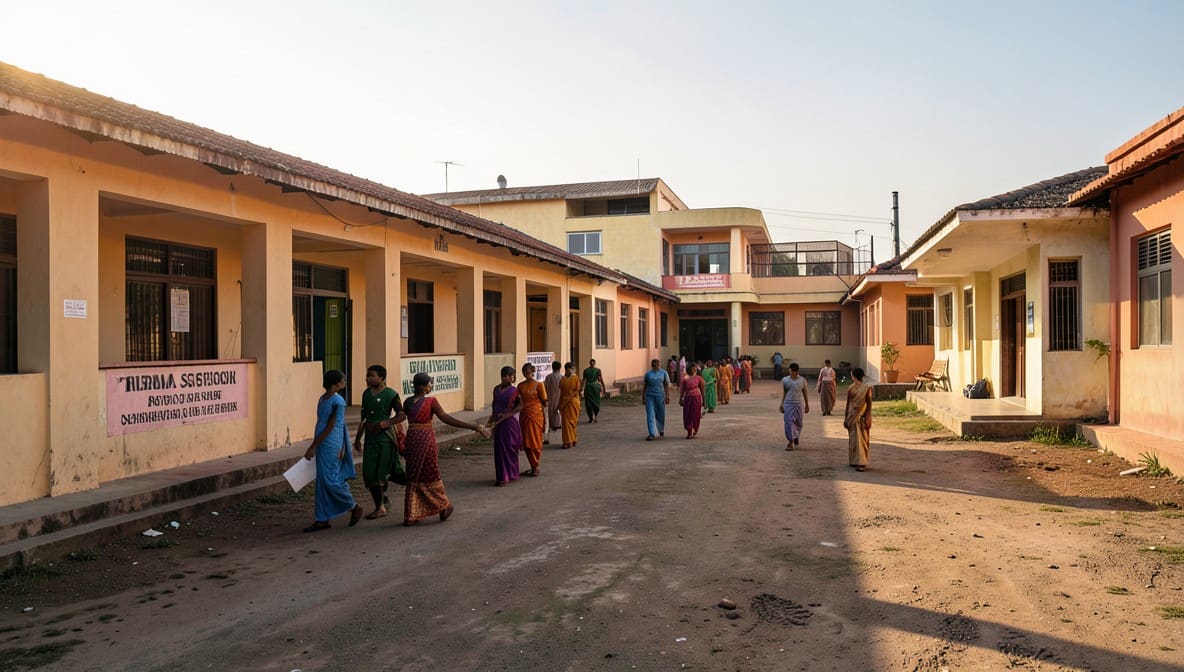
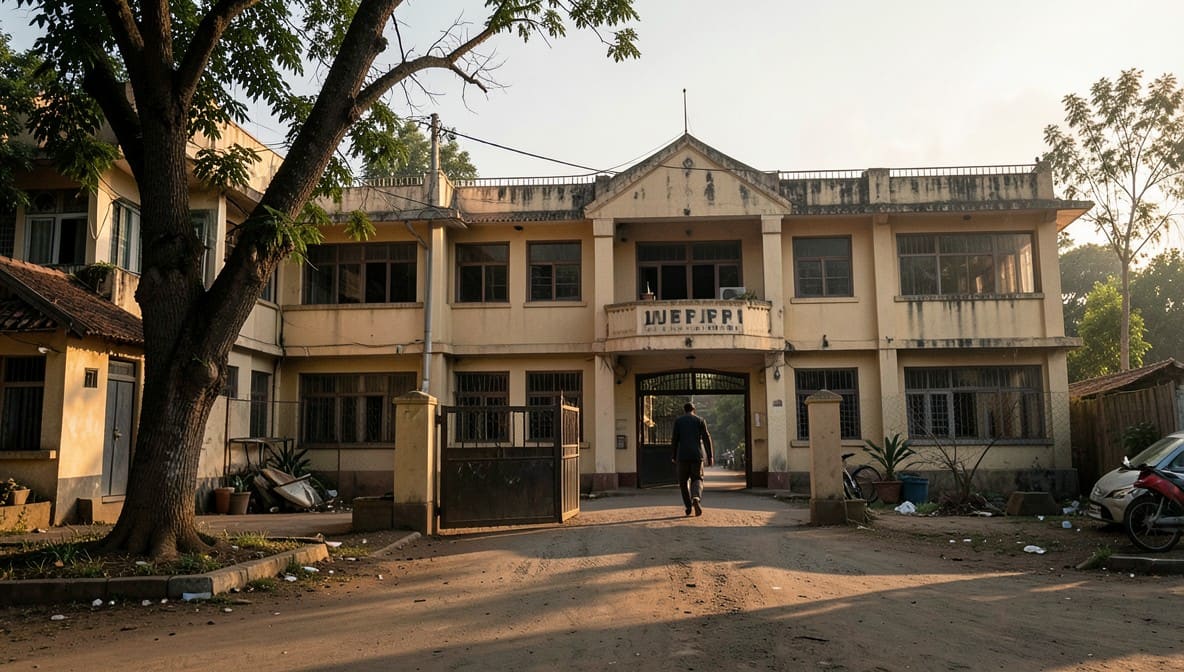
The appellant, Dr. Shishir Kumar Yadav, was employed as a teacher at Sri Ramakrishna Sarada Ashrama, Teacher’s Training College, Hazaribagh, a privately managed institution run by a religious trust. His services were terminated on unspecified grounds in 2020. He challenged the termination through W.P.(S) No. 2394 of 2021 before the Single Judge of the Jharkhand High Court, naming the State of Jharkhand, Vinoba Bhave University, NCTE, EPF Commissioner, and the College and its Governing Body as respondents.
Key Facts
- The College is a private, unaided institution established and managed by the Sri Ramakrishna Sarada Ashrama, a religious trust.
- The College is affiliated with Vinoba Bhave University for academic purposes only.
- The College receives no financial aid, grants, or subsidies from the State of Jharkhand, the University, or any government instrumentality.
- The appellant’s appointment, service conditions, salary, and termination were governed solely by a private contract between him and the College’s Governing Body.
- No statutory framework, such as the UGC Regulations or state service rules, governed his employment.
- The College is not registered under any public statute as a public body.
- The appellant did not allege any violation of statutory rights or public duty in his termination.
Procedural History
- 2020: Appellant’s services terminated by the College’s Governing Body.
- 2021: W.P.(S) No. 2394 of 2021 filed before the Single Judge of the Jharkhand High Court.
- 09.06.2025: Single Judge dismissed the writ petition without deciding the maintainability issue, holding no illegality or breach of natural justice was established.
- 2025: Letters Patent Appeal No. 529 of 2025 filed challenging the dismissal.
- 24.03.2026: Division Bench heard the appeal and disposed of it on the issue of maintainability.
Relief Sought
The appellant sought reinstatement, back wages, and declaration that his termination was illegal and violative of Article 14 and Article 21. He also sought a direction to treat his service as that of a public employee.
The Legal Issue
The central question was whether a privately managed, unaided teacher training college, merely affiliated with a public university and without any state funding or statutory control, qualifies as a 'State' under Article 12 of the Constitution such that its employment actions are amenable to writ jurisdiction under Article 226.
Arguments Presented
For the Appellant
Mr. Manoj Tandon, learned counsel, contended that the College’s affiliation with Vinoba Bhave University rendered it an instrumentality of the State. He relied on the principle that institutions discharging public functions - such as teacher training - are inherently public in nature and therefore subject to constitutional scrutiny. He argued that the College’s role in shaping public education policy and producing teachers for government schools made its actions public law in character.
For the Respondent
The State and the College’s counsel countered that the College was a private, unaided entity with no financial or administrative control exercised by the State or University. They emphasized that the appellant’s employment was purely contractual, governed by internal rules of the trust, and not subject to any statutory framework. They cited St. Mary’s Educational Society v. Rajendra Prasad to argue that mere performance of a public function does not convert private contractual disputes into public law matters.
The Court's Analysis
The Division Bench undertook a rigorous examination of the nature of the College and the scope of Article 12. It noted that while the College performs an important societal function, the mere discharge of a public duty does not, by itself, bring an entity within the ambit of the State. The Court emphasized that for an entity to be deemed a 'State' under Article 12, there must be deep and pervasive control by the government or statutory backing.
"It is indisputably a public law action which confers a right upon the aggrieved to invoke the extraordinary writ jurisdiction under Article 226 for a prerogative writ. Individual wrongs or breaches of mutual contracts without any public element as an integral part cannot be rectified through a writ petition under Article 226."
The Court held that affiliation with a university, without financial aid, statutory regulation, or state control over appointments, promotions, or service conditions, is insufficient to invoke writ jurisdiction. The appellant’s employment was governed by a private contract, and his termination, even if unjust, was a civil wrong - not a violation of a public law right.
The Court further clarified that while the College’s academic functions may be subject to oversight under the UGC or NCTE, its internal employment decisions remain outside the purview of Article 226 unless they are statutorily mandated or controlled. The Court distinguished this case from those involving aided institutions or those operating under statutory mandates.
The Verdict
The appeal was dismissed. The Court held that the writ petition was not maintainable because the 5th respondent, the College, was not a 'State' under Article 12. The appellant’s dispute was purely contractual and not amenable to judicial review under Article 226. The Court granted liberty to the appellant to pursue ordinary civil remedies, including a suit for damages or specific performance, and clarified that nothing in the impugned order or this judgment precludes such remedies. No costs were awarded.
What This Means For Similar Cases
Affiliation Is Not a Substitute for State Control
- Practitioners must now demonstrate more than academic affiliation to invoke writ jurisdiction against private educational institutions.
- Merely showing that an institution trains teachers or provides public education is insufficient; the employment relationship must be statutorily regulated or under state control.
Contractual Service Disputes Remain Civil
- Service disputes involving unaided private colleges, schools, or universities must be pursued through civil courts, not writ petitions.
- Lawyers should advise clients to file suits for breach of contract, wrongful termination, or damages rather than wasting time on non-maintainable writs.
Public Function ≠ Public Law Action
- The judgment reinforces the distinction between performing a public function and engaging in a public law action.
- Institutions may serve the public interest without being subject to constitutional obligations in their internal employment matters.
Statutory Backing Is Key
- Where service conditions are governed by statutory rules (e.g., UGC Regulations, state teacher service rules), writ jurisdiction may still apply.
- Practitioners should examine whether the institution’s employment policies are mandated by law or merely adopted voluntarily.
Procedural Prudence Required
- Courts will now routinely examine maintainability at the threshold before proceeding to merits.
- Advocates must plead and prove the existence of state control or statutory backing in the petition itself to avoid dismissal on procedural grounds.