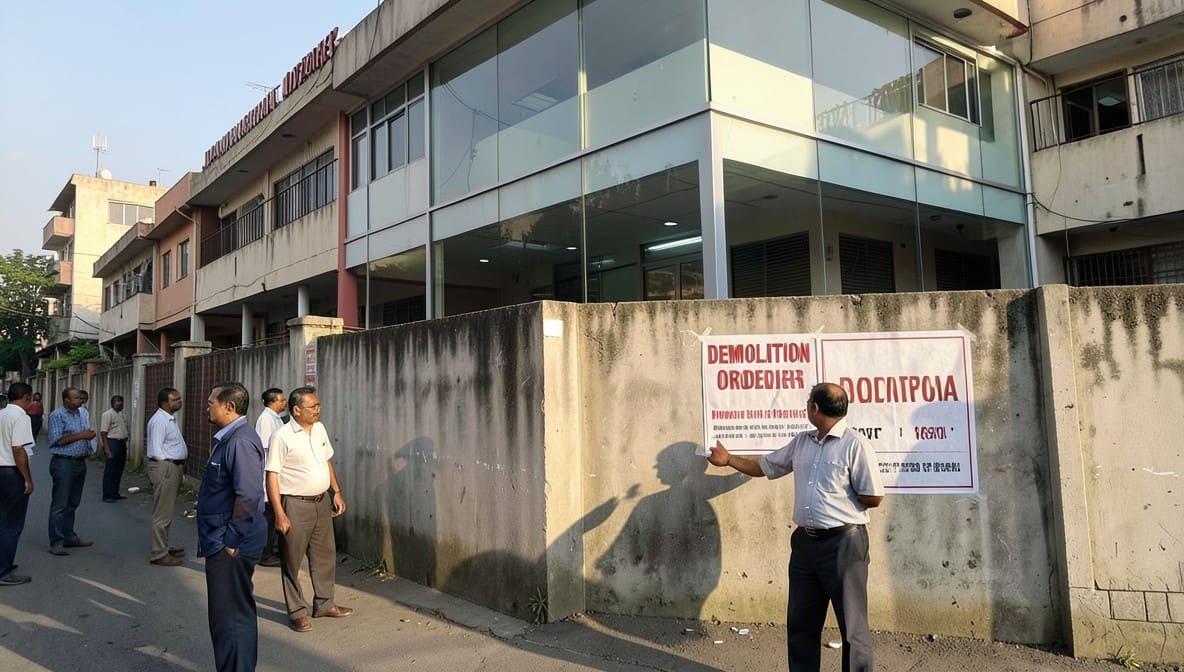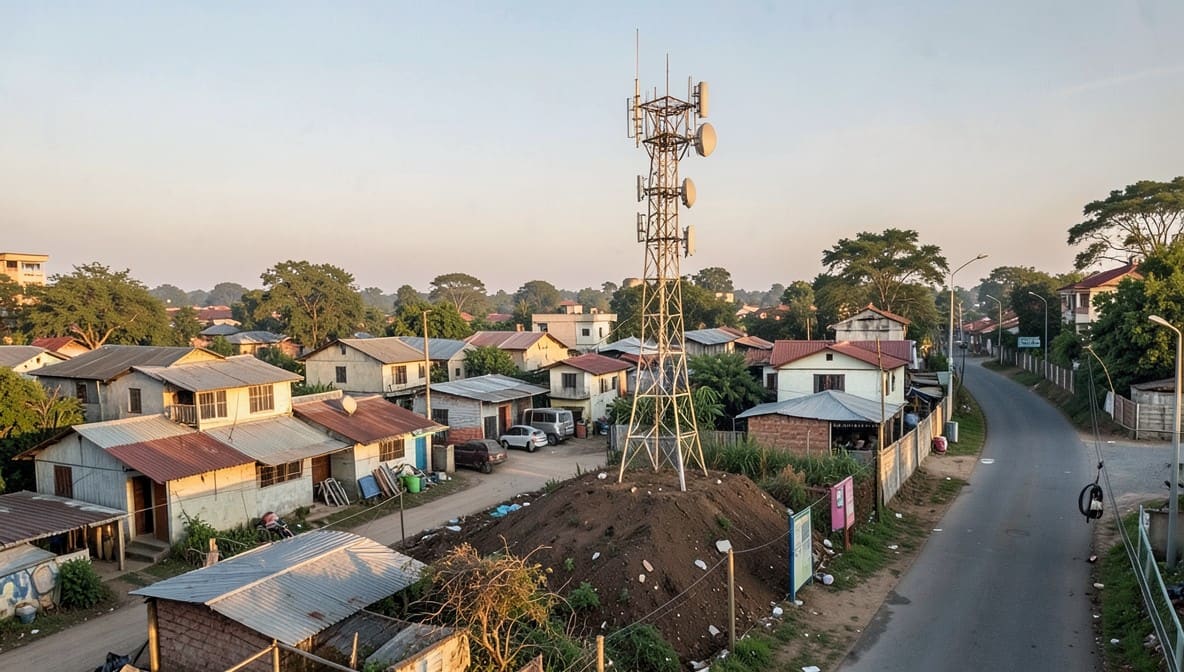
The Gauhati High Court has underscored the fundamental principle of natural justice by allowing a writ petition filed by Reliance Jio Infratel Pvt Ltd, which was adversely affected by an earlier order despite not being impleaded as a party. The Court recalled its judgment dated 11.03.2019 in WP(C) No. 76/2018, which directed the demolition of a mobile tower, after finding that the petitioner was not given an opportunity to present its case. This ruling reaffirms that no order should prejudice a party’s rights without affording them a hearing, particularly when the party is directly impacted by the dispute.
Background & Facts
The Dispute
The dispute revolves around the installation of a mobile telecommunication tower by Reliance Jio Infratel Pvt Ltd (the petitioner) on a plot of land owned by Mr. Gajen Kalita (respondent no. 15) in Kalyan Nagar, Guwahati. The tower, bearing Site ID-GWHT-RIL-0261, was installed pursuant to a Leave and License Agreement dated 08.01.2014 between the petitioner and the landowner. The petitioner, a licensee under the Indian Telegraph Act, 1885, operates the tower to provide telecommunication services.
Key Facts
- 08.01.2014: Petitioner entered into a Leave and License Agreement with Mr. Gajen Kalita for installation of the mobile tower.
- 20.03.2019: Pursuant to a Composite Scheme of Arrangement approved by the National Company Law Tribunal (NCLT), Ahmedabad, the tower infrastructure was transferred from Reliance Jio Infocomm Limited to the petitioner, Reliance Jio Infratel Pvt Ltd.
- 23.12.2016: The Deputy Commissioner, Kamrup (M) issued a No Objection Certificate (NOC) for the installation of the tower, marking it to the Guwahati Municipal Corporation (GMC).
- 29.12.2006: Petitioner paid a one-time fee of Rs. 40,000 to the GMC for a 10-year period, as per the Guidelines dated 11.08.2015 issued by the Government of Assam, Information Technology Department.
- 06.05.2019: The petitioner discovered that the Assam Power Distribution Company Limited (APDCL) had disconnected electricity supply to the tower, following an order issued by the Commissioner, GMC under Section 337(3) of the Gauhati Municipal Corporation Act, 1971.
Procedural History
The dispute escalated through the following legal proceedings:
- WP(C) No. 76/2018: Filed by Mr. Pradip Sarma and others (private respondents herein) against the State of Assam and other authorities, alleging encroachment of public land by Mr. Gajen Kalita and seeking demolition of the mobile tower.
- 11.03.2019: The Gauhati High Court allowed the writ petition, directing the GMC to demolish the mobile tower and ancillary constructions encroaching upon a public road.
- The petitioner was not impleaded as a party in WP(C) No. 76/2018, despite being the licensee of the tower.
- 05.04.2019: The Commissioner, GMC issued Order No. GLG/34/2018/42/111-115, directing the demolition of the tower pursuant to the High Court’s order dated 11.03.2019.
- 11.05.2019: The petitioner filed the present writ petition (WP(C) No. 3005/2019), challenging the order dated 11.03.2019 and seeking:
- Review of the order dated 11.03.2019.
- Impleadment as a party in WP(C) No. 76/2018.
- Stay of the order dated 05.04.2019 issued by the GMC.
- 11.05.2019: The High Court issued notice to the respondents and stayed the order dated 05.04.2019 until the next hearing. It also directed the APDCL to restore electricity supply to the tower upon payment of costs.
- 05.05.2025: The Court heard arguments on the maintainability of the writ petition and held that it was maintainable, relying on precedents such as Shivdev Singh & Ors. v. State of Punjab & Ors. (AIR 1963 SC 1909) and Pohla Singh Alias Pohla Ram (D) & Ors. v. State of Punjab & Ors. ((2004) 6 SCC 126).
The Parties' Positions
For the Petitioner
- The petitioner contended that it was a necessary party to WP(C) No. 76/2018, as it was the licensee of the tower and directly affected by the order dated 11.03.2019.
- It argued that the principles of natural justice were violated, as it was not given an opportunity to present its case.
- The petitioner highlighted that the GMC’s order dated 05.04.2019 was incorrectly addressed to Reliance Telecom Limited, a different entity, instead of the petitioner.
- It submitted that the encroachment allegation (200 metres of public land) was a disputed fact and could not be adjudicated in a writ petition. Instead, the dispute should be resolved before the District Telecom Committee (DTC), as provided under the Guidelines for Granting Right of Way (ROW) to Telegraph Infrastructure in Assam, 2018.
- The petitioner relied on Clause 18 and 19 of the Guidelines, 2018, which provide for alternative dispute resolution mechanisms for grievances related to telecommunication infrastructure.
For the Respondents
- The private respondents (original petitioners in WP(C) No. 76/2018) argued that the writ petition was not maintainable, as the petitioner should have sought review or appeal against the order dated 11.03.2019.
- They contended that Mr. Gajen Kalita had encroached upon 200 metres of public land, as per the physical inquiry report dated 03.05.2018 submitted by the Circle Officer, Guwahati Revenue Circle.
- They submitted that the Kalyan Nagar Unnayan Samiti, a local residents' association, had corroborated the encroachment allegation.
- The respondents argued that the order dated 11.03.2019 was correct and did not suffer from any infirmities, as it was based on the encroachment of public land.
The Legal Issue
The central legal question before the Court was: Whether an order passed by a High Court, which adversely affects the rights of a party not impleaded in the proceedings, violates the principles of natural justice and warrants recall of the order?
The Court's Analysis
The Court undertook a detailed analysis of the principles of natural justice, particularly the right to be heard, and its application in the present case.
-
Violation of Natural Justice: The Court observed that the petitioner, though a necessary party to the dispute, was not impleaded in WP(C) No. 76/2018. Consequently, the petitioner was deprived of an opportunity to present its case, leading to the passing of an adverse order dated 11.03.2019. The Court relied on the precedents of Shivdev Singh and Pohla Singh, which held that no order should prejudice a party’s rights without affording them a hearing.
"The instant writ petition has been filed by the petitioner being aggrieved by the Judgment & Order dated 11.03.2019 as though the petitioner was a necessary party, the petitioner was not made a party in the writ petition No. WP(C) No. 76/2018 and instead, the General Manager, Reliance Telecom Limited has been made a party which is not connected to the dispute assailed in the aforesaid writ petition."
-
Necessity of Impleadment: The Court noted that the order dated 11.03.2019 directly affected the petitioner’s rights and liabilities, as it led to the issuance of the GMC’s demolition order dated 05.04.2019. The petitioner, being the licensee of the tower, had a legitimate interest in the dispute and should have been impleaded as a party.
-
Alternative Remedy: While the petitioner argued that the private respondents could have approached the District Telecom Committee (DTC) under the Guidelines, 2018, the Court clarified that this argument pertained to the merits of the dispute and not the limited prayer in the present writ petition. The Court emphasized that the instant writ petition was filed solely for the purpose of reviewing the order dated 11.03.2019 on the ground of non-joinder of a necessary party.
-
Encroachment Allegation: The Court noted that the encroachment of 200 metres of public land was a disputed fact and could not be resolved in a writ petition. It observed that the private respondents’ grievances regarding the encroachment and the installation of the tower could be adjudicated upon in the restored WP(C) No. 76/2018 or before the appropriate statutory forum.
The Verdict
The Court allowed the writ petition and disposed of it in the following terms:
- The Judgment & Order dated 11.03.2019, passed in WP(C) No. 76/2018, was recalled.
- The order dated 05.04.2019, issued by the Commissioner, GMC, was set aside.
- WP(C) No. 76/2018 was restored to the file of the High Court.
- The petitioner was permitted to implead itself as a party in WP(C) No. 76/2018 by filing the necessary application.
- The restored writ petition was directed to be heard on merits, allowing the parties to raise all contentions, including the availability of alternative remedies under the Guidelines, 2018.
What This Means For Similar Cases
No Order Without Opportunity of Hearing
This judgment reaffirms that no judicial or quasi-judicial order can be passed against a party without affording them an opportunity to be heard. Practitioners must ensure:
- Necessary parties are impleaded in proceedings, particularly when their rights or liabilities are directly affected.
- If a party is prejudiced by an order due to non-joinder, they can seek recall of the order on the ground of violation of natural justice.
Disputed Facts Cannot Be Adjudicated in Writ Petitions
- Courts have repeatedly held that writ petitions are not appropriate forums for resolving disputed questions of fact.
- In cases involving encroachment, land disputes, or contractual breaches, parties must approach the appropriate civil or statutory forums for adjudication.
- Practitioners should argue for alternative remedies when the dispute involves complex factual determinations.
Alternative Remedies Must Be Exhausted
- The Court noted that the Guidelines, 2018 provide for District and State Telecom Committees to address grievances related to telecommunication infrastructure.
- Parties aggrieved by the installation of mobile towers or other infrastructure should first exhaust these statutory remedies before approaching the High Court.
- However, the availability of alternative remedies does not bar a writ petition when the primary grievance is violation of natural justice, as in the present case.