The Punjab and Haryana High Court has reaffirmed that law enforcement agencies cannot conduct searches or make arrests across state borders without prior information and proper jurisdictional authorization under the Narcotic Drugs and Psychotropic Substances Act. This judgment underscores the non-negotiable procedural safeguards mandated by Section 50 of the NDPS Act and reinforces the principle that extraterritorial police action without due process vitiates the entire investigation.
Background & Facts
The Dispute
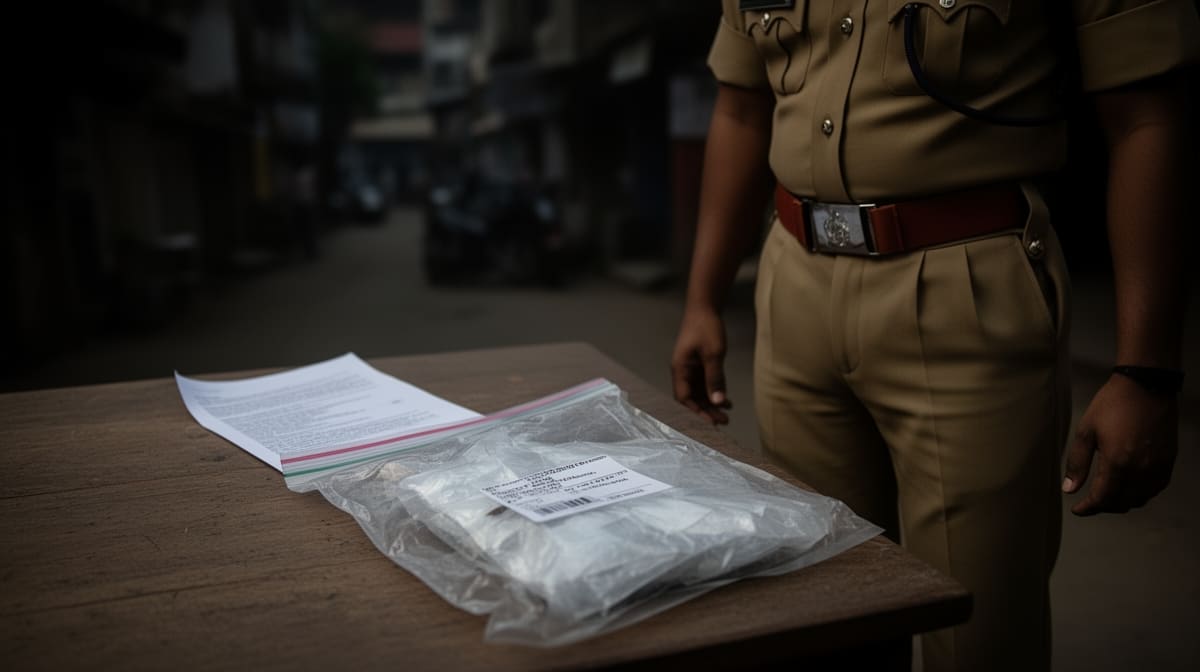
The case arose from the recovery of heroin from two accused persons: Bobby Verma, arrested in Punjab, and Jean Cyrilli Koffi, a Nigerian national arrested in Delhi. The Punjab Police, acting on a disclosure statement by Verma, traveled to Delhi to apprehend Koffi. Upon arrival, they conducted a personal search without invoking the mandatory procedural safeguards under Section 50 of the NDPS Act, recovering 250 grams of heroin from Koffi’s pocket. The trial court acquitted Koffi, holding that the search was unlawful due to non-compliance with Section 50 and lack of jurisdiction.
Procedural History
- November 23, 2020: Punjab Police travel to Delhi based on disclosure statement by Bobby Verma
- Same day: Jean Cyrilli Koffi is detained and searched without prior information or Delhi Police involvement
- 2021: FIR registered in Punjab; both accused arraigned
- February 9, 2023: Trial Court convicts Bobby Verma but acquits Jean Cyrilli Koffi on grounds of procedural violation and lack of jurisdiction
- 2024: State of Punjab files application for leave to appeal, accompanied by condonation of delay of 268 days
Relief Sought
The State sought leave to appeal the acquittal of Jean Cyrilli Koffi and condonation of delay in filing the appeal, arguing that the trial court erred in acquitting the accused despite recovery of contraband.
The Legal Issue
The central question was whether Section 50 of the NDPS Act permits cross-border arrests and searches by state police without prior information, jurisdictional authorization, or compliance with procedural safeguards.
Arguments Presented
For the Appellant
The State contended that the recovery of heroin from Koffi was conclusive proof of guilt and that technical violations of procedure should not override substantive evidence. It argued that the disclosure statement by Bobby Verma provided sufficient basis for the Delhi operation and that the delay in filing the appeal was due to administrative processing, not mala fide intent.
For the Respondent
The respondent argued that the Punjab Police had no jurisdiction to operate in Delhi without coordination with local authorities. He emphasized that Section 50 of the NDPS Act requires an option to be given to the accused to be searched before a gazetted officer or magistrate, which was never properly offered. Further, the absence of prior information from Delhi-based sources rendered the entire operation illegal and violative of Article 21.
The Court's Analysis
The Court conducted a rigorous examination of Section 50 of the NDPS Act, which mandates that before a search of a person is conducted, the officer must inform the suspect of their right to be searched before a gazetted officer or magistrate. The Court held that this provision is not a mere formality but a substantive safeguard against abuse of power.
"The investigator... gave him an offer that they are suspecting him to carry contraband which was neither based on any prior information nor any other reasons."
The Court found that the Punjab Police acted without any independent intelligence linking Koffi to the offense in Punjab. The disclosure statement of a co-accused, while admissible, does not confer jurisdiction on another state’s police force to conduct searches. The Court emphasized that jurisdiction is territorial, and the Delhi Police, as the local authority, should have been involved if there was credible information.
The Court further noted that the failure to inform the Delhi Police or obtain prior authorization rendered the search arbitrary and violative of natural justice. The recovery, therefore, could not be treated as lawful evidence. The Court also rejected the State’s explanation for delay, observing that no justification was provided for the nine-month gap between sanction for appeal and its filing.
The Verdict
The State’s application for leave to appeal and condonation of delay were dismissed. The Court upheld the acquittal of Jean Cyrilli Koffi, holding that the search and arrest were procedurally invalid under Section 50 of the NDPS Act and beyond the territorial jurisdiction of Punjab Police.
What This Means For Similar Cases
Cross-Border Searches Require Prior Intelligence
- Practitioners must challenge any arrest or search conducted by state police outside their jurisdiction without prior information shared with local authorities
- Evidence recovered in such operations is liable to be excluded under Section 50 and Article 21
- Defense counsel should immediately raise jurisdictional objections in NDPS cases involving inter-state operations
Section 50 Compliance Is Non-Negotiable
- The option under Section 50 must be offered in clear, unambiguous terms before any search
- Failure to offer the option, even if the accused is later found with contraband, invalidates the entire recovery
- Courts will not condone procedural lapses even if the substance of the charge appears strong
Delay in Filing Appeals Will Not Be Excused Without Cogent Reason
- Administrative delays within government departments are not sufficient grounds for condonation
- Litigants must demonstrate actual hardship or unavoidable circumstances, not bureaucratic inertia
- Applications for condonation must include a timeline with specific gaps explained, not vague references to "processing"