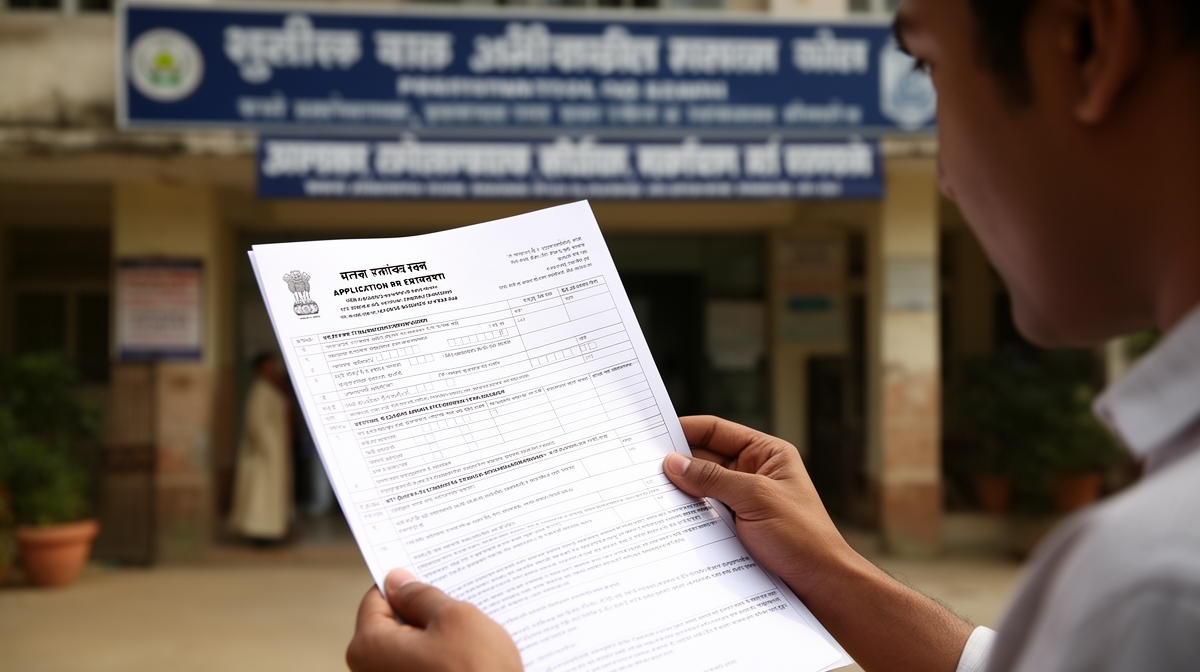

The Central Information Commission's recent decision in Geeta Raikwar v. CPIO, Central Railway clarifies that personal information subject to court-ordered maintenance recovery can be disclosed under the Right to Information Act, 2005, even when it falls under the exemption in Section 8(1)(j). This ruling establishes that judicial directions override the requirement of third-party consent, providing crucial guidance for information officers handling similar requests.
Background & Facts
The Dispute
The appellant, Geeta Raikwar, sought information about her husband, Dilip Kumar Raikwar, an employee of Central Railway. The information pertained to his retirement date, whether her name was recorded as his wife in official records, and details of salary deductions for maintenance payments ordered by a family court. The appellant had obtained a court order directing recovery of ₹1,44,000 from her husband's salary as maintenance, but claimed she received no information about the deductions.
Procedural History
The case progressed through the following stages:
- 20 January 2024: RTI application filed seeking personal information about the husband
- 28 February 2024: CPIO rejected the request under Section 8(1)(j) of the RTI Act, citing third-party personal information
- 22 March 2024: First appeal filed
- 18 April 2024: First Appellate Authority upheld the CPIO's decision
- 12 June 2024: Second appeal filed before the Central Information Commission
Relief Sought
The appellant sought:
- The retirement date of her husband
- Confirmation whether her name was recorded as his wife in official records
- Details of salary deductions made pursuant to the family court's maintenance order dated 25 August 2023
The Legal Issue
The central question before the Commission was whether Section 8(1)(j) of the RTI Act permits disclosure of personal information when a court has ordered recovery of maintenance from an individual's salary, and whether such disclosure requires third-party consent.
Arguments Presented
For the Appellant
The appellant contended that:
- The information sought was crucial for enforcing the family court's maintenance order
- Since the court had already directed salary deductions, the information was no longer purely personal
- The CPIO's refusal to provide information was preventing her from verifying compliance with the court order
For the Respondent
The Central Railway's CPIO argued that:
- The information sought was personal information of a third party, protected under Section 8(1)(j) of the RTI Act
- No larger public interest justified the disclosure
- The information was not available in the public domain and its disclosure would cause unwarranted invasion of privacy
The Court's Analysis
The Commission examined the interplay between privacy rights and judicial directions in maintenance cases. Key aspects of the analysis included:
-
Scope of Section 8(1)(j): The Commission noted that Section 8(1)(j) exempts disclosure of personal information unless there is an overriding public interest. However, it observed that the exemption must be read in conjunction with other legal obligations.
-
Judicial Directions as Overriding Factor: The Commission held that when a court has specifically ordered recovery of maintenance from an individual's salary, the information about such recovery ceases to be purely personal. The judgment emphasized:
"Though the information sought is personal information of third-party, but in the interest of justice, the Respondent has now disclosed information to the Appellant."
-
Practical Compliance: The Commission directed the respondent to provide the updated information, noting that the appellant had not received the revised reply sent by post. This underscores the importance of ensuring actual delivery of information to the requester.
-
No Requirement of Third-Party Consent: The decision implies that when a court has already adjudicated on the matter (such as ordering maintenance recovery), the requirement of third-party consent under Section 8(1)(j) is effectively waived.
The Verdict
The Commission disposed of the appeal with the following directions:
- The respondent was directed to resend the revised reply dated 23 January 2026 to the appellant via WhatsApp
- The updated reply, which provided the husband's retirement date, confirmed that the appellant's name was not recorded in official records, and detailed the maintenance deductions, was treated as the final response
- No further relief was granted, as the respondent had complied with the court's maintenance order by deducting and depositing ₹25,600
What This Means For Similar Cases
Court Orders Override Privacy Exemptions
The decision establishes that judicial directions for maintenance recovery or similar financial obligations create an exception to the Section 8(1)(j) exemption. Practitioners should note:
- Information officers cannot refuse disclosure of personal information when a court has already ordered its use for enforcement
- The public interest in enforcing judicial orders outweighs the privacy rights of the third party
Verification of Compliance Becomes Easier
For individuals seeking to enforce maintenance or similar court orders:
- RTI applications can be used to verify whether deductions or other compliance measures have been implemented
- Information officers must provide details of such compliance, even if the information is technically personal
- Requesters should cite the specific court order to strengthen their case for disclosure
Procedural Safeguards Remain Important
While the Commission permitted disclosure, it also emphasized the need for proper communication:
- Information officers must ensure that revised replies actually reach the requester
- Alternative modes of communication (such as WhatsApp) may be used when traditional methods fail
- Requesters should follow up if they do not receive responses, as non-receipt can be grounds for appeal