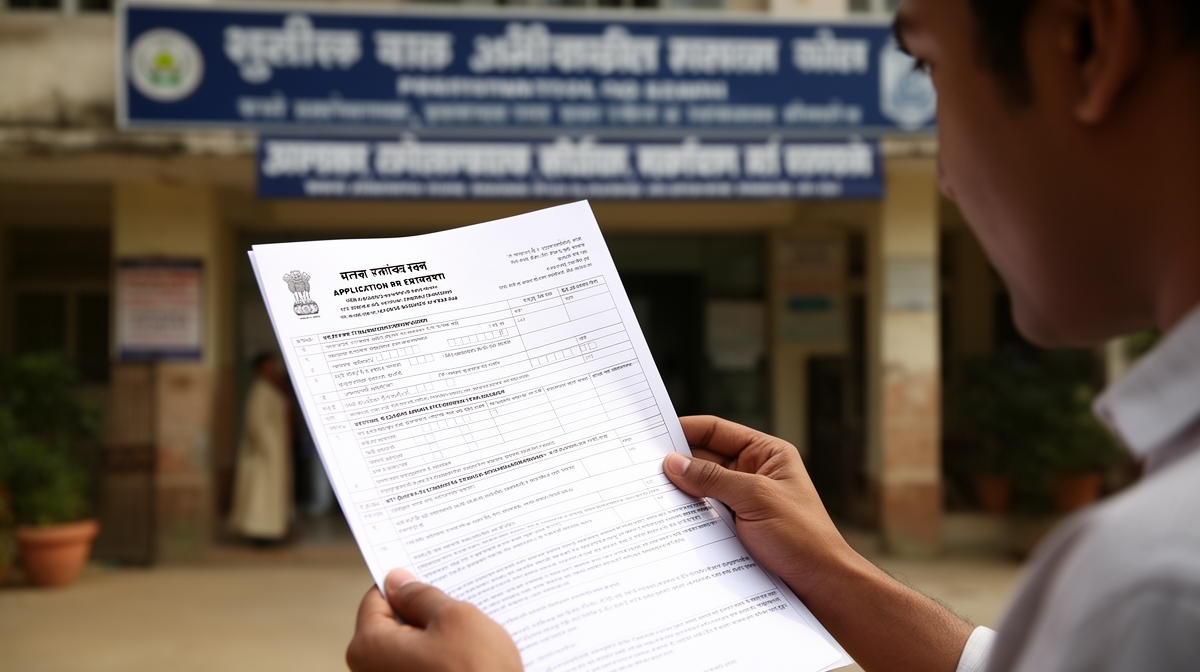
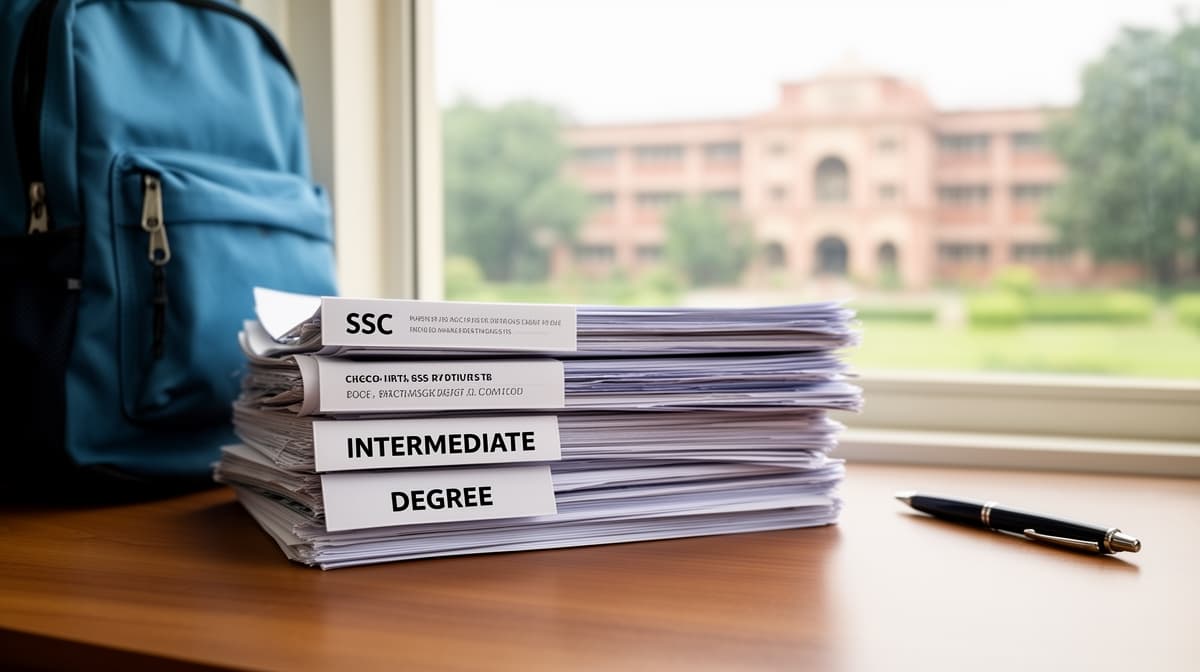
Educational institutions in Telangana are prohibited from withholding students' original academic certificates due to unpaid tuition fees, even when the state has not yet disbursed reimbursement amounts. The High Court of Telangana has affirmed that such certificates are the property of the student and their denial violates constitutional rights under Articles 14, 19 and 21. The judgment reinforces binding UGC regulations and prior judicial precedents, directing immediate release of documents to affected students.
The Verdict
The petitioners, law students who had completed their five-year integrated law degrees, won their writ petition. The High Court of Telangana held that educational institutions cannot withhold original academic certificates - SSC, Intermediate, and LLB - on the grounds of unpaid fees or pending government reimbursement. The court directed the Mahatma Gandhi Law College to immediately return all original certificates to the petitioners, affirming that no lien exists on such documents and that recovery of dues must be pursued through legal remedies, not coercive denial of academic records.
Background & Facts
The petitioners were students of Mahatma Gandhi Law College, admitted under the Telangana Government’s Fee Reimbursement Scheme for the academic year 2020. They successfully completed their B.A. LL.B., B.Com. LL.B., and BBA LL.B. courses in September 2025. Upon completion, they applied for the release of their original academic documents, including SSC, Intermediate, Transfer Certificate, Bonafide, and Study Certificates, to pursue higher studies, particularly LLM counselling, which had a verification deadline of 7 October 2025.
The college refused to release the certificates, citing non-receipt of pending government reimbursement for their tuition fees. Despite repeated requests, the institution maintained its stance, effectively barring the students from enrolling in LLM programmes, registering with the Bar Council of Telangana, or applying for competitive employment.
The petitioners filed a writ petition under Article 226 of the Constitution and a separate application under Section 151 of the CPC, seeking a writ of mandamus to compel the release of documents. The college, represented by its Chairman, did not appear before the court on the hearing date despite being served notice. The State and Higher Education Department were represented, but no justification was offered for the continued withholding.
The Legal Issue
The central legal question was whether an educational institution may lawfully withhold a student’s original academic certificates - such as SSC, Intermediate, and degree certificates - on the ground of unpaid tuition fees or pending government reimbursement, and whether such action violates the student’s rights under Articles 14, 19, and 21 of the Constitution.
Arguments Presented
For the Petitioner
The petitioners’ counsel argued that the withholding of original certificates is a coercive and arbitrary practice that violates the fundamental right to education and livelihood under Article 21. They cited UGC (Grievance Redressal of Students) Regulations, 2018, which explicitly prohibit institutions from refusing to return any document deposited by students for admission purposes. They further relied on multiple High Court judgments - including from Madras, Delhi, and Andhra Pradesh - that have consistently held that certificates are the personal property of students and that financial disputes must be resolved through civil remedies, not by denying access to academic records.
For the Respondent
The State and Higher Education Department did not contest the legal principle but acknowledged the existence of the UGC guidelines and prior judgments. The standing counsel for the university conceded that the issue was squarely covered by a previous order of the same court dated 27 October 2025. No legal argument was advanced to justify the continued withholding of certificates, and no evidence was presented to show that the college had pursued any legal remedy for recovery of dues.
The Court's Analysis
The court undertook a comprehensive review of statutory, regulatory, and judicial precedents. It emphasized that academic certificates are not mere administrative documents but are essential instruments for securing higher education and employment. The court held that these documents are the personal property of the student, and no institution can assert a lien over them, regardless of outstanding financial obligations.
"The certificate of the student is his/her property. College cannot retain the said certificates at any rate. Even if the college has any pecuniary claim, the refusal to hand over the said certificate to the students is not the method by which the claim can be enforced. There is no lien on the certificates of the students."
The court noted that the UGC Guidelines of 2007, specifically paragraph 2, explicitly prohibit institutions from withholding certificates for any reason, including non-payment of fees. It further referenced the Telangana Council of Higher Education’s own directive dated 5 August 2024, which instructed all affiliated colleges not to withhold certificates due to pending reimbursement. The court observed that the college’s conduct was not only contrary to these binding instructions but also in defiance of multiple precedents from other High Courts.
The court rejected any notion that the college’s financial hardship justified the denial of constitutional rights. It clarified that while the institution may have a legitimate claim for unpaid fees, the proper course is to initiate civil proceedings for recovery - not to punish students by denying them access to their academic records. The court also reaffirmed its earlier rulings in W.P. No. 21137 of 2019 and W.P. No. 22417 of 2018, which had declared similar practices unconstitutional.
What This Means For Similar Cases
This judgment establishes a binding precedent within Telangana that no educational institution - public or private - may withhold original academic certificates for any reason related to unpaid fees, whether owed to the institution or pending reimbursement from the government. Practitioners representing students in similar situations may now rely on this order, along with the UGC Guidelines and prior judgments from other High Courts, to seek immediate relief through writ petitions under Article 226.
The ruling also places a duty on university authorities to monitor compliance by affiliated colleges and to initiate disciplinary action against institutions that continue such practices. Institutions must now shift from coercive tactics to legal recovery mechanisms, such as filing civil suits or initiating arbitration under institutional policies. This judgment effectively closes the door on the long-standing practice of holding certificates hostage, reinforcing the principle that access to education and professional advancement cannot be conditioned on financial settlement.
The scope of the judgment is broad: it applies to all academic certificates - SSC, Intermediate, diplomas, degrees, transfer certificates, and bonafides - regardless of the level of education. However, it does not affect the institution’s right to recover dues through lawful means; it only prohibits the use of certificates as collateral.