The Rajasthan High Court has reaffirmed that procedural rigidity must yield to substantive justice when plaintiff evidence has not commenced, even after years of delay in filing a written statement. This ruling restores balance to civil litigation by prioritizing the right to be heard over technical non-compliance.
Background & Facts
The Dispute
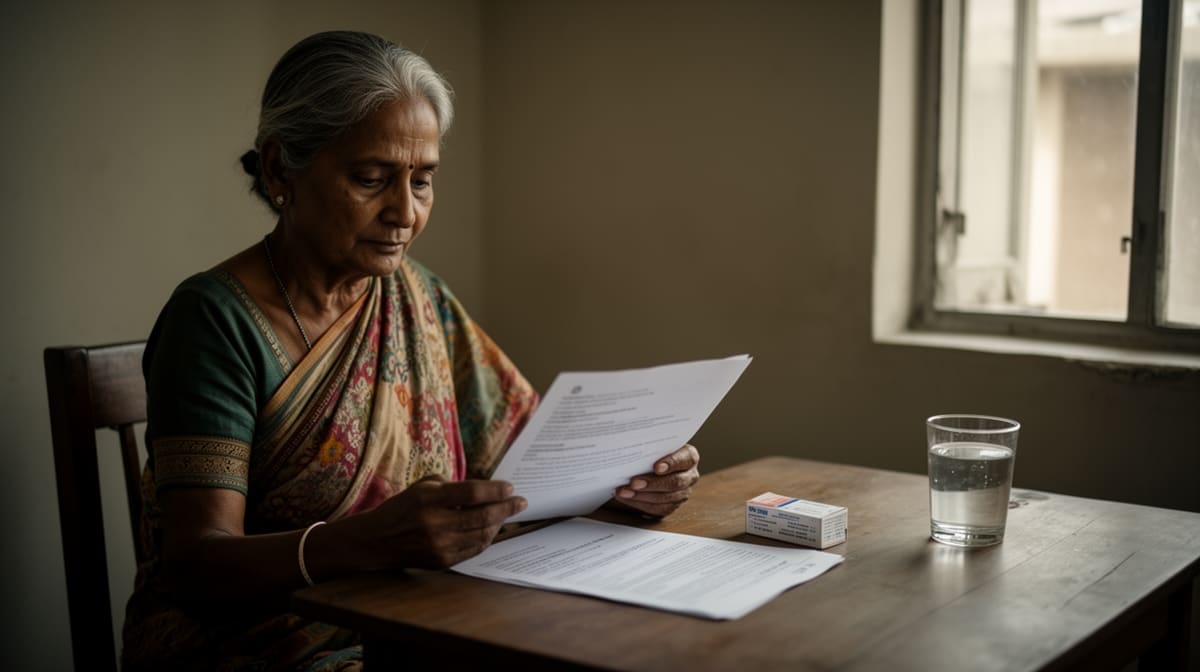
The dispute arose from a suit for specific performance filed in 2017 by the plaintiff against defendant No. 1, a 90-year-old petitioner, and other respondents. Defendant No. 1 failed to file a written statement within the statutory period under Order VIII Rule 1 of the Code of Civil Procedure, 1908. The trial court closed the opportunity to file the written statement on 3 January 2018, despite the plaintiff’s evidence not having commenced.
Procedural History
- 2017: Suit filed for specific performance; defendant No. 2 filed written statement on 29 November 2017
- 3 January 2018: Trial court closed the opportunity for defendant No. 1 to file written statement
- 2019 - 2022: Matter repeatedly adjourned for plaintiff evidence; no evidence led
- 19 October 2022: Plaintiff filed application under Section 35 of the Indian Stamp Act, still pending
- 9 January 2026: Trial court rejected defendant No. 1’s application to file written statement
- 13 February 2026: Writ petition filed before Rajasthan High Court
Relief Sought
The petitioner sought to have his written statement taken on record and the trial court directed to proceed with the suit on its merits, arguing that no prejudice would arise to the plaintiff due to the absence of evidence.
The Legal Issue
The central question was whether a trial court may refuse to accept a belated written statement under Order VIII Rule 1 CPC when plaintiff evidence has not commenced, and whether such refusal violates the right to a fair hearing under Article 21 of the Constitution.
Arguments Presented
For the Petitioner
Counsel for the petitioner relied on Suresh Kumar v. State of Haryana and K. S. Puttaswamy v. Union of India to argue that the right to file a written statement is a substantive right, not a mere procedural formality. He emphasized that since plaintiff evidence had not begun after nearly seven years, allowing the written statement would not prejudice the plaintiff. He further contended that the trial court’s refusal was arbitrary and violated the principle of audi alteram partem.
For the Respondent
The respondents did not appear or file any written submissions. The State of Rajasthan was represented only in form, without substantive opposition to the petition.
The Court's Analysis
The Court examined the purpose of Order VIII Rule 1 CPC, which mandates filing of a written statement within 30 days, extendable to 90 days with sufficient cause. It noted that while the rule is mandatory, its enforcement must be tempered by the overriding objective of adjudicating cases on merits.
"The purpose of civil litigation is not to defeat a party on technicalities but to ensure that justice is done between the parties on the basis of facts and law."
The Court distinguished cases where written statements were rejected after evidence had commenced, noting that those situations involved prejudice to the plaintiff. Here, no evidence had been led, and the plaintiff had been granted repeated adjournments for over four years. The Court held that the trial court’s refusal to accept the written statement was an abuse of discretion and amounted to denial of opportunity to defend.
The Court further invoked Article 21 to reinforce that the right to be heard is an essential component of natural justice. It rejected the notion that delay alone, without prejudice, justifies shutting out a party’s defense.
The Verdict
The petitioner won. The Court held that a belated written statement must be allowed if plaintiff evidence has not commenced, and that refusal to accept it violates natural justice. The trial court was directed to take the written statement on record and proceed with the suit.
What This Means For Similar Cases
Written Statement Cannot Be Rejected Solely on Delay
- Practitioners must now argue that delay alone is insufficient grounds for rejection if no prejudice is shown
- Courts must assess whether evidence has commenced before denying a written statement
- Applications under Order VIII Rule 1 should be decided on merit, not mechanical timelines
Procedural Fairness Trumps Technical Non-Compliance
- The judgment reinforces that Order VIII Rule 1 CPC is not a trap for unwary litigants
- Judges must exercise discretion to allow late filings where justice demands it
- This principle applies equally to defendants in commercial, property, and family disputes
Stay of Proceedings Is Not a Remedy for Procedural Lapses
- Courts cannot use procedural delays as justification to deny defense
- The remedy lies in allowing the written statement and proceeding, not in dismissing the case
- This reduces the risk of summary dismissals and promotes adjudication on merits