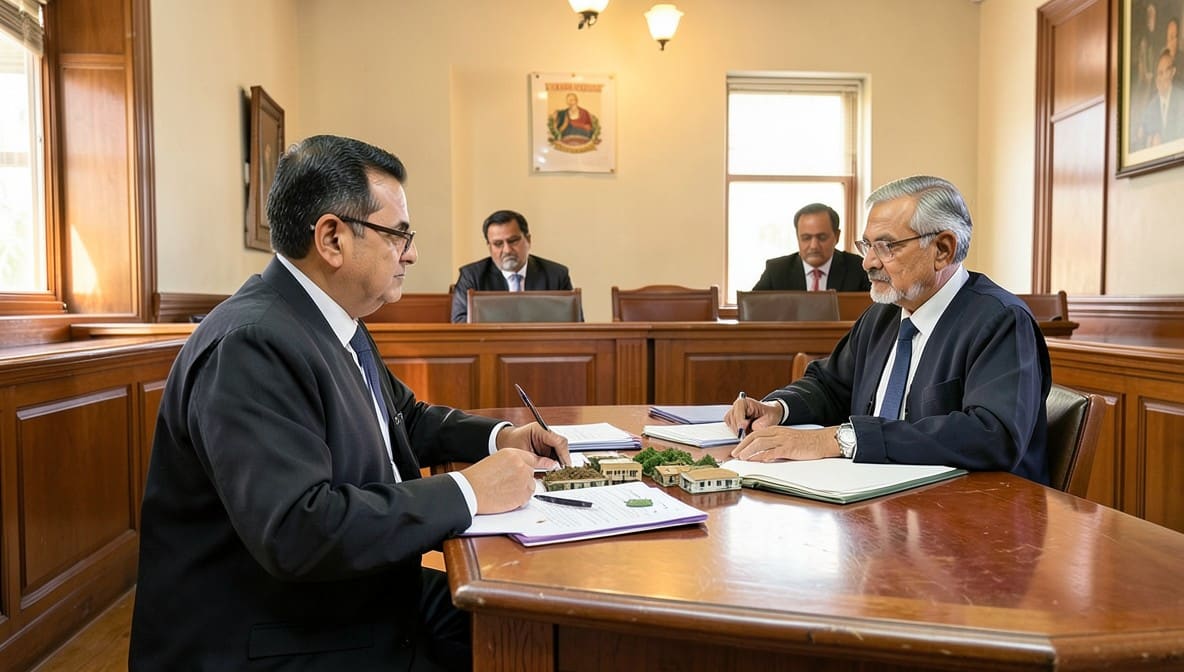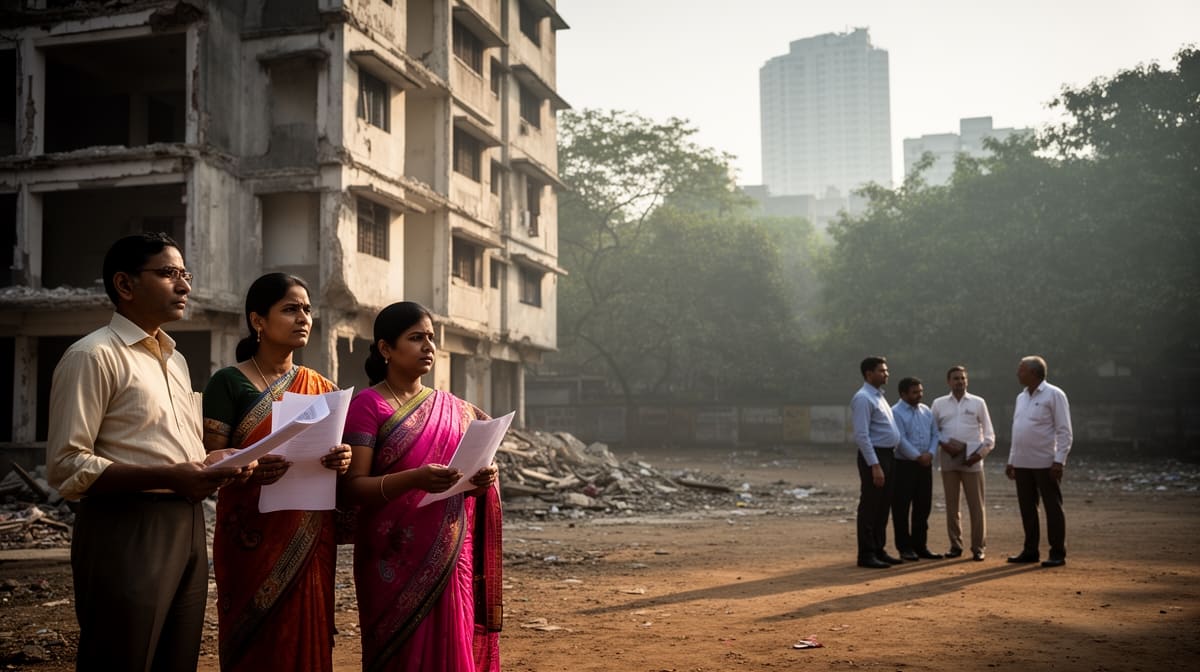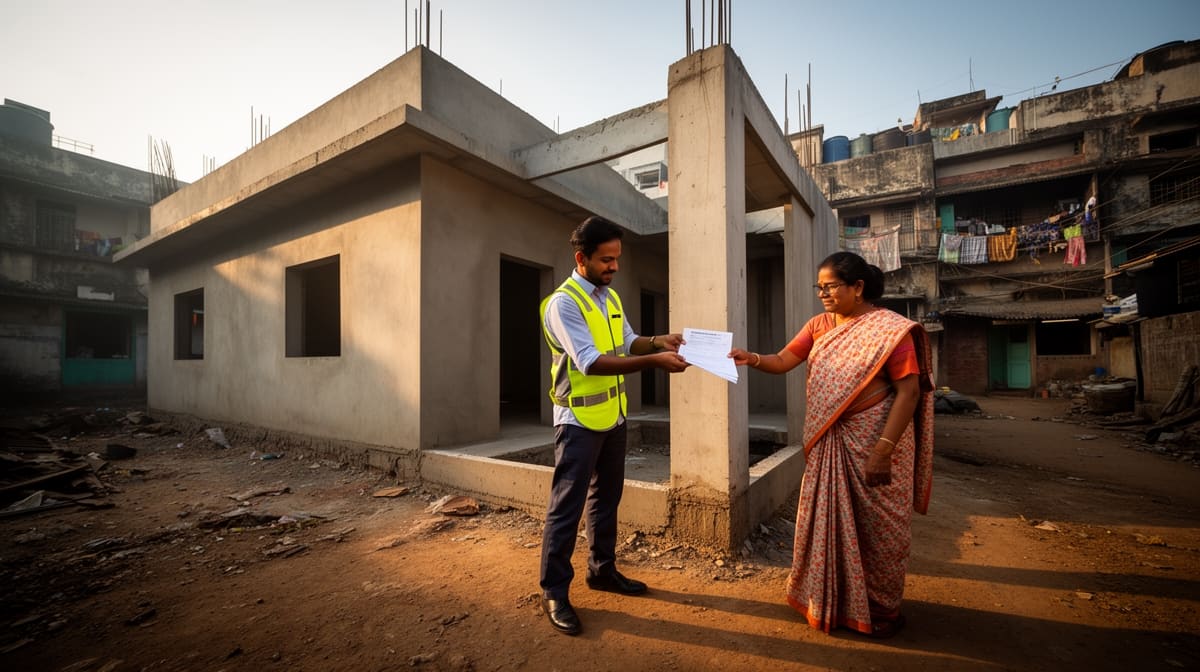
The Bombay High Court has clarified that a third party who is directly and substantially affected by unauthorized construction on common areas of a residential building may be impleaded as a proper party in a suit challenging a demolition notice, even if the plaintiff does not seek relief against them. This decision reinforces the principle that procedural fairness and complete adjudication outweigh rigid notions of dominus litis in cases involving shared property rights.
Background & Facts
The Dispute
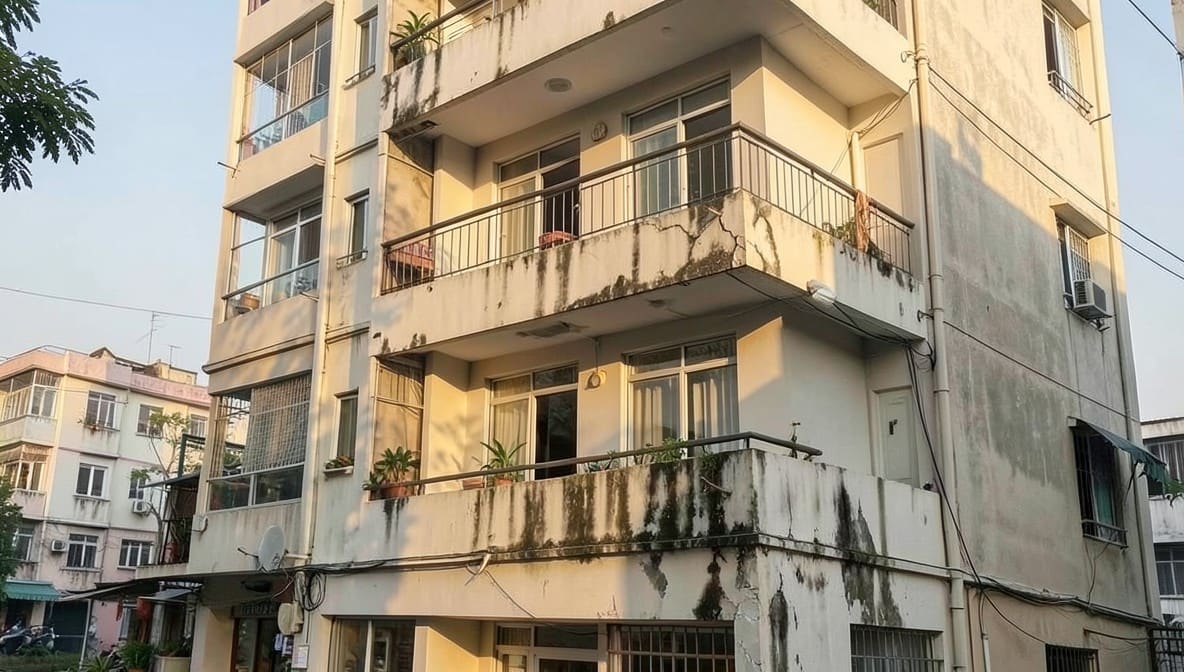
The petitioner, Madhvi Sanjay Bramhane, is the owner of Flat No. 8 in Krishna Apartment, CIDCO, Nashik. She purchased the flat on 04.03.2006 and claims no unauthorized alterations have been made to the property. The Nashik Municipal Corporation (Respondent No. 1) issued a notice dated 27.01.2021 alleging encroachment and unauthorized construction on the common terrace, threatening demolition. The petitioner filed a suit (RCS No. 128/2021) seeking a declaration that the notice is illegal, null, and void, and an injunction against its enforcement.
Key Facts
- The petitioner has occupied Flat No. 8 since 04.03.2006 with no structural modifications.
- Respondent No. 2, Asha Chandrakant Wagh, is the occupant of Flat No. 4 in the same building, located directly beneath the terrace.
- Respondent No. 2 alleges that the petitioner constructed an unauthorized permanent structure on the common terrace, causing severe leakage, foul odour, and health hazards in her flat.
- Respondent No. 2 lodged formal complaints with the Nashik Municipal Corporation on 04.01.2021, 11.06.2021, and 02.07.2021.
- Dissatisfied with the Corporation’s inaction, Respondent No. 2 filed a separate civil suit (RCS No. 239/2024) against the Corporation for failing to discharge its statutory duties.
- The District Court, by order dated 15.12.2024, transferred both RCS No. 128/2021 and RCS No. 239/2024 to a single court for joint disposal.
Procedural History
- 04.03.2006: Petitioner purchases Flat No. 8.
- 04.01.2021: Respondent No. 2 files first complaint with Nashik Municipal Corporation.
- 11.06.2021: Second complaint lodged by Respondent No. 2.
- 02.07.2021: Third complaint filed by Respondent No. 2.
- 27.01.2021: Nashik Municipal Corporation issues demolition notice to petitioner.
- 05.03.2021: Petitioner files suit (RCS No. 128/2021) against Corporation.
- 2024: Respondent No. 2 files suit (RCS No. 239/2024) against Corporation.
- 15.12.2024: District Court orders transfer of both suits to one court.
- 03.03.2025: Civil Judge, Nashik, allows Respondent No. 2’s application for impleadment as defendant under Order I Rule 10 CPC.
- 25.07.2025: Petitioner obtains ad-interim stay against impleadment.
- 18.03.2026: Writ petition heard and reserved.
- 08.06.2026: Judgment pronounced.
The Parties' Positions
For the Petitioner
The petitioner contended that she is the dominus litis and cannot be forced to litigate against a party against whom she seeks no relief. She argued that the suit is confined to the legality of the Corporation’s notice and that impleading Respondent No. 2 would expand the scope of the suit, introduce a new cause of action, and violate settled principles in Mumbai International Airport Pvt. Ltd. v. Regency Convention Centre and Mohamed Hussain Gulam Shariffi v. MCGM.
For Respondent No. 2
Respondent No. 2 asserted she is not a busybody but the primary victim of the alleged encroachment. She argued that her health and property are directly affected, she initiated the Corporation’s action, and her presence is essential for complete adjudication. She relied on Chandrakant Dharma Bhonu v. Pandurang Ramchandra Dandekar to show that aggrieved residents may be impleaded under Order I Rule 10 CPC.
Relief Sought
The petitioner sought quashing of the order dated 03.03.2025 allowing impleadment, setting aside the direction to add Respondent No. 2 as a defendant, and continuation of the ad-interim stay granted on 25.07.2025.
The Legal Issue
Can a third party, who is directly affected by alleged unauthorized construction and whose complaints triggered the impugned notice, be impleaded as a proper party under Order I Rule 10 CPC in a suit challenging the legality of that notice, even if the plaintiff does not seek relief against them?
Arguments Presented
For the Appellant/Petitioner
The petitioner relied on Mumbai International Airport Pvt. Ltd. v. Regency Convention Centre & Hotels Pvt. Ltd. and Mohamed Hussain Gulam Shariffi v. Municipal Corporation of Greater Bombay to argue that the plaintiff, as dominus litis, cannot be compelled to implead a party against whom no claim is made. She contended that the suit is limited to the validity of the Corporation’s notice and that impleading Respondent No. 2 would introduce a new dispute over encroachment, altering the nature of the suit. She emphasized that the mere fact that a party is affected does not make them a proper party if their presence is not essential for adjudicating the specific issue in the suit.
For the Respondent/State
Respondent No. 2 argued that she is not a mere intervenor but the principal aggrieved party whose complaints led to the notice. She cited Chandrakant Dharma Bhonu v. Pandurang Ramchandra Dandekar to show that courts have permitted impleadment where a third party is directly and substantially affected by the subject matter of the suit. She contended that her presence is necessary for a complete and effective adjudication, especially since the outcome of the suit may impact her rights to a leak-free dwelling and the Corporation’s duty to enforce building regulations.
The Court's Analysis
The Court began by reaffirming the distinction between a necessary party and a proper party as laid down in Mumbai International Airport Pvt. Ltd. and Kasturi v. Iyyamperumal. A necessary party is one without whom no effective decree can be passed. A proper party is one whose presence enables the court to adjudicate all matters in dispute completely and effectively, even if no relief is claimed against them.
The Court emphasized that while the plaintiff is dominus litis, this principle is not absolute. The discretion to implead a proper party under Order I Rule 10 CPC must be exercised to ensure justice and avoid multiplicity of proceedings. The Court noted that the Supreme Court in Mumbai International Airport had explicitly held that even if a party is found to be proper, the court may refuse impleadment if it would alter the nature of the suit or introduce a new cause of action.
In this case, the Court found that Respondent No. 2’s claim was not an attempt to litigate ownership or title, but to establish the factual basis of the encroachment that triggered the Corporation’s notice. The Court observed:
"The Respondent No. 2 does not claim that she has been insisting for initiation of action against the plaintiff espousing a public cause or enforcing the civic discipline but as a person who is the victim of the alleged unauthorized erection of the structure and the illegal developments allegedly carried out by Respondent No. 2."
The Court distinguished Mohamed Hussain Gulam Shariffi, where the impleading parties claimed an interest in the suit property itself, whereas here, Respondent No. 2’s interest was in the cessation of harm to her dwelling. The Court also relied on its own precedent in Chandrakant Dharma Bhonu, where a complainant whose grievance led to municipal action was permitted to join as a defendant.
The Court concluded that the trial judge’s discretion was neither arbitrary nor erroneous. The impleadment would not expand the suit beyond its original scope - the legality of the notice - but would allow the court to fully understand the factual context upon which the notice was issued. The presence of Respondent No. 2 would aid in determining whether the Corporation’s notice was justified, thereby facilitating a complete adjudication.
The Verdict
The writ petition was dismissed. The order dated 03.03.2025 allowing the impleadment of Respondent No. 2 as a defendant was upheld. The ad-interim stay granted on 25.07.2025 was vacated. No costs were awarded.
What This Means For Similar Cases
Impleadment Is Permissible When Harm Is Direct and Tangible
- Practitioners must now argue that third parties suffering direct, tangible harm from structural violations (e.g., leakage, noise, loss of light) may be impleaded even in suits challenging municipal notices.
- The focus must shift from whether the plaintiff seeks relief against the third party to whether their presence is essential to understand the factual basis of the impugned action.
Courts Will Not Allow Dominus Litis to Shield Against Accountability
- The doctrine of dominus litis cannot be used to exclude parties whose lived experience is central to the dispute.
- In property disputes involving common areas, courts are increasingly willing to permit joinder to avoid fragmented litigation and ensure complete justice.
Procedural Fairness Trumps Technical Rigidity
- Where a third party has repeatedly complained to authorities and those complaints led to litigation, courts will view their impleadment as a procedural necessity, not an expansion of the suit.
- Lawyers should proactively seek impleadment for affected residents in similar cases, citing Chandrakant Dharma Bhonu and this judgment as binding precedent.
When to Oppose Impleadment
- Oppose only if the impleading party seeks to litigate a new cause of action (e.g., title, ownership, damages) unrelated to the notice’s validity.
- Argue that the party has an alternative remedy (e.g., a pending suit) and their joinder will cause delay or prejudice.