The Madhya Pradesh High Court has clarified a critical procedural limitation in civil litigation: a defendant cannot maintain a counter-claim against co-defendants, even if the claim indirectly affects their rights. This judgment reinforces the principle that counter-claims must be confined to the plaintiff and cannot be used to adjudicate disputes between defendants, thereby safeguarding natural justice and procedural fairness.
Background & Facts
The Dispute
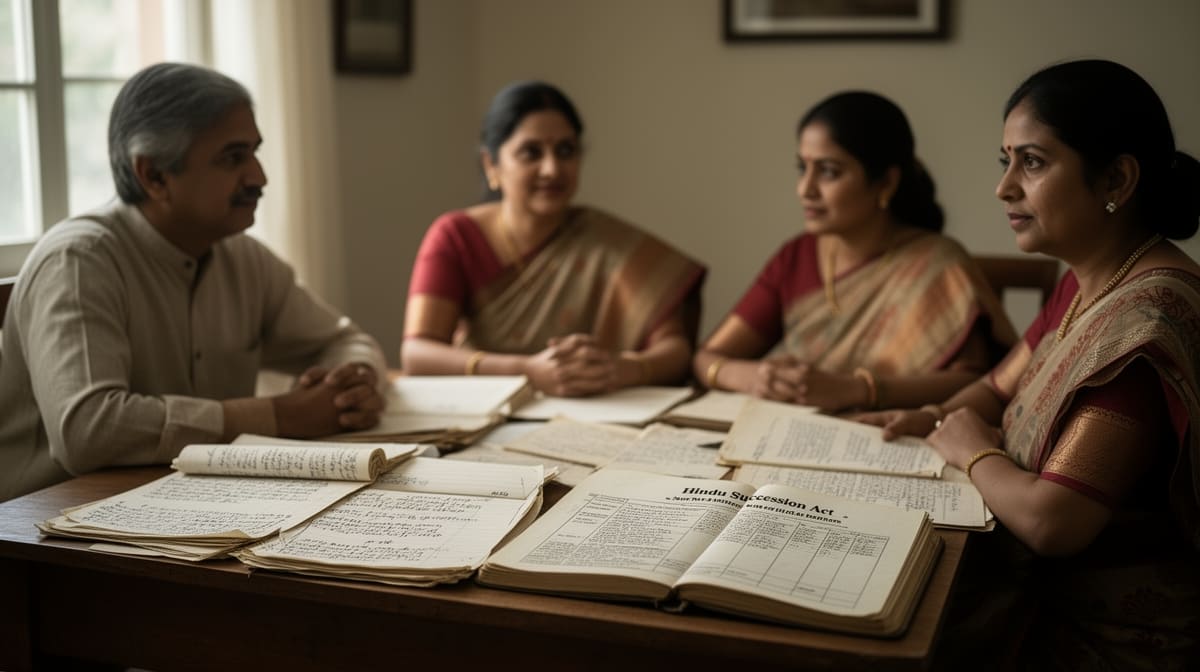
The dispute centers on ownership of ancestral property allegedly inherited from Ram Sahay. Respondents No. 1 and 2, the plaintiffs, filed a civil suit seeking declaration, injunction, and possession of their share in the property, claiming descent through their maternal grandfather, Ram Sahay. The appellant, Raghuvir Sahaye, was defendant No. 8 in the suit and filed a counter-claim asserting that Ram Sahay had executed a will in his favor, bequeathing the entire property to him. Defendants No. 7, 9, 10, and 11 - other co-defendants - contested the suit, asserting their own recorded ownership of the property, which they claimed to have acquired from heirless succession.
Key Facts
- Ram Sahay died intestate or allegedly by will, triggering competing claims to the property
- The appellant (defendant No. 8) filed a counter-claim on the basis of a will dated prior to his death
- Defendants No. 10 and 11 were recorded owners of the property as per revenue records
- Defendants No. 7, 9, 10, and 11 sought to amend their written statement to respond to the counter-claim, but the trial court rejected the application on 06.04.2009
- The rejection of the amendment application was not challenged by any party before any appellate forum
- A handwriting expert was appointed by the trial court to verify the thumb impression on the alleged will against Ram Sahay’s service book and bank records
- The expert’s report, dated prior to 06.04.2009, was adverse to the appellant’s claim and his objections to the report were rejected
- Despite the adverse expert report, the trial court, in its judgment dated 26.03.2010, accepted the will and allowed the counter-claim, declaring the appellant as the sole owner
- This decree extinguished the rights of defendants No. 10 and 11, who were recorded owners and had not been given an opportunity to plead against the counter-claim
Procedural History
- 2009: Civil Suit No. 30-09-2009 filed by plaintiffs in Court of First Civil Judge Class-I, Gauharganj, Raisen
- 2009: Counter-claim filed by defendant No. 8 (appellant)
- 06.04.2009: Trial court rejected appellant’s objections to handwriting expert’s report; report deemed adverse to appellant
- 26.03.2010: Trial court judgment (Annexure A-1) dismissing plaintiffs’ suit and allowing counter-claim in favor of appellant
- 2010: Defendants No. 10 and 11’s legal representatives filed Regular Civil Appeal No. 5A/2010 before III Additional District Judge, Raisen
- 28.07.2011: First appellate court set aside the trial court’s judgment and remanded the matter for fresh adjudication, directing comparison of thumb impression and expert report
- 2006: Appellant had previously filed Writ Petition No. 10502/2006 against the trial court’s direction for expert examination; disposed of with directions
- 27.02.2026: MISC. APPEAL No. 1001 of 2012 heard and reserved
- 26.03.2026: Judgment pronounced by High Court of Madhya Pradesh at Jabalpur
The Parties' Positions
- Appellant (Raghuvir Sahaye): Argued that the will was genuine, the expert report was flawed, and the trial court’s decision in his favor was correct. Contended that the counter-claim was a valid part of the suit.
- Respondents (Plaintiffs and Co-defendants): Argued that the counter-claim was impermissible against co-defendants, that defendants No. 10 and 11 were denied natural justice, and that the trial court erred in ignoring the expert report and the legal bar on counter-claims against co-defendants.
Relief Sought
The appellant sought confirmation of the trial court’s decree granting him ownership of the property via the will. The respondents sought setting aside of the trial court’s judgment and restoration of the appellate court’s remand order, with a direction to first determine the maintainability of the counter-claim.
The Legal Issue
Can a defendant maintain a counter-claim against co-defendants in a civil suit under the Code of Civil Procedure, 1908, when the counter-claim seeks to extinguish their rights and interests in the subject property?
Arguments Presented
For the Appellant
The appellant relied on the trial court’s factual findings and the acceptance of the will as valid. He argued that the counter-claim was directed against the plaintiffs and not directly against co-defendants, and that any adverse effect on co-defendants was incidental. He contended that the appellate court’s remand order was unnecessary and that the trial court had correctly appreciated the evidence.
For the Respondent/State
The State, represented by Mr. Varun Jain, supported the appellate court’s remand order. It emphasized that the counter-claim, though nominally against the plaintiffs, had the direct effect of nullifying the rights of co-defendants who were recorded owners. It cited Sanjay Tiwari v. Yugal Kishore Prasad Sao and Rajul Manoj Shah v. Kiran Bhai Shakra Bhai Patel to argue that counter-claims cannot be used to adjudicate rights between co-defendants, regardless of form.
The Court's Analysis
The Court undertook a doctrinal review of the nature and scope of counter-claims under Order 8 Rule 6 of the CPC. It observed that while a defendant may file a counter-claim against the plaintiff, the law does not permit a counter-claim to be used as a vehicle to litigate rights against co-defendants. The Court emphasized that the purpose of a counter-claim is to assert an independent cause of action against the plaintiff, not to resolve disputes among defendants.
"A counter-claim with an intent to claim direct relief against co-defendants is not permissible in law."
The Court noted that the trial court’s decree had effectively extinguished the rights of defendants No. 10 and 11, who were recorded owners and had been denied the opportunity to amend their written statement to respond to the counter-claim. This denial constituted a grave violation of natural justice and procedural fairness.
The Court further held that Order 41 Rule 33 CPC empowers the appellate court to remedy such injustices even if the aggrieved party did not file a separate appeal. The appellate court’s remand order was therefore not only justified but necessary to ensure that the issue of maintainability of the counter-claim was addressed first.
The Court also clarified that Order 43 CPC Rule 2 makes the provisions of Order 41 CPC applicable to appeals under Order 43, thereby conferring upon this Court the same powers as a regular appellate court. Consequently, the Court declined to examine the merits of the will’s authenticity, as the threshold issue of maintainability remained unresolved.
The Verdict
The appeal was dismissed. The High Court upheld the remand order dated 28.07.2011 and directed the trial court to first determine whether the counter-claim filed by defendant No. 8 is maintainable against co-defendants. If found impermissible, the counter-claim shall be dismissed without adjudication on its merits. The trial court shall then proceed to decide the suit on its original issues, ensuring all parties, including defendants No. 10 and 11, are given full opportunity to plead and present evidence. The matter shall be decided afresh within 12 weeks from the date of receipt of this order.
What This Means For Similar Cases
Counter-Claims Cannot Be Used to Bypass Co-Defendant Rights
- Practitioners must screen counter-claims for indirect targeting of co-defendants - even if framed against the plaintiff
- Any counter-claim that seeks to extinguish, diminish, or alter the rights of co-defendants is legally unsustainable
- Courts must raise the issue of maintainability suo motu if not raised by parties
Natural Justice Overrides Procedural Lapses
- Failure to permit amendment of written statement to meet a counter-claim affecting co-defendants is a fatal flaw
- Appellate courts may invoke Order 41 Rule 33 CPC to correct such errors even if the aggrieved party did not appeal
- The absence of a separate appeal by co-defendants does not waive their right to procedural fairness
Precedent Controls Over Factual Findings
- When binding precedent (Sanjay Tiwari, Rajul Manoj Shah) clearly prohibits a procedural mechanism, factual findings based on that mechanism are void ab initio
- Expert reports and will attestations cannot validate an impermissible claim
- Courts must prioritize procedural legality over substantive outcomes when the former is violated