The Chhattisgarh High Court has reaffirmed that insurers cannot introduce a new defence at the appellate stage - such as exclusion of passenger cover under a liability-only policy - when no such plea was raised before the Motor Accident Claims Tribunal. This judgment underscores the foundational principle that appellate courts cannot permit parties to raise unpleaded issues, especially where it prejudices claimants seeking compensation for fatal accidents.
Background & Facts
The Dispute
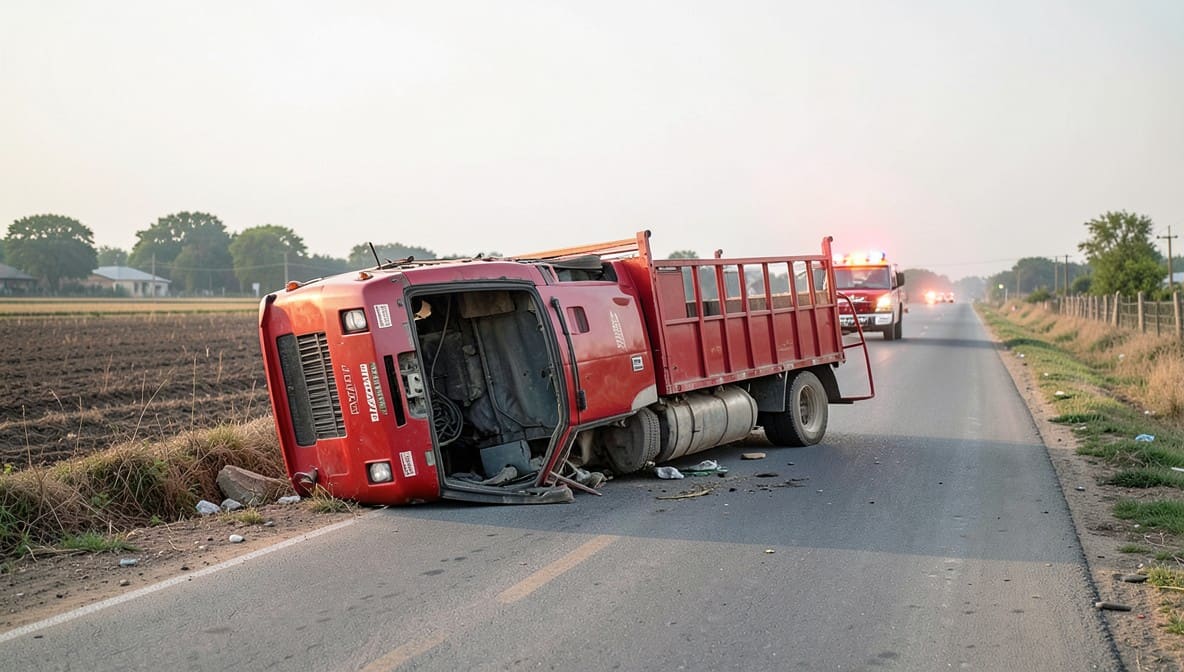
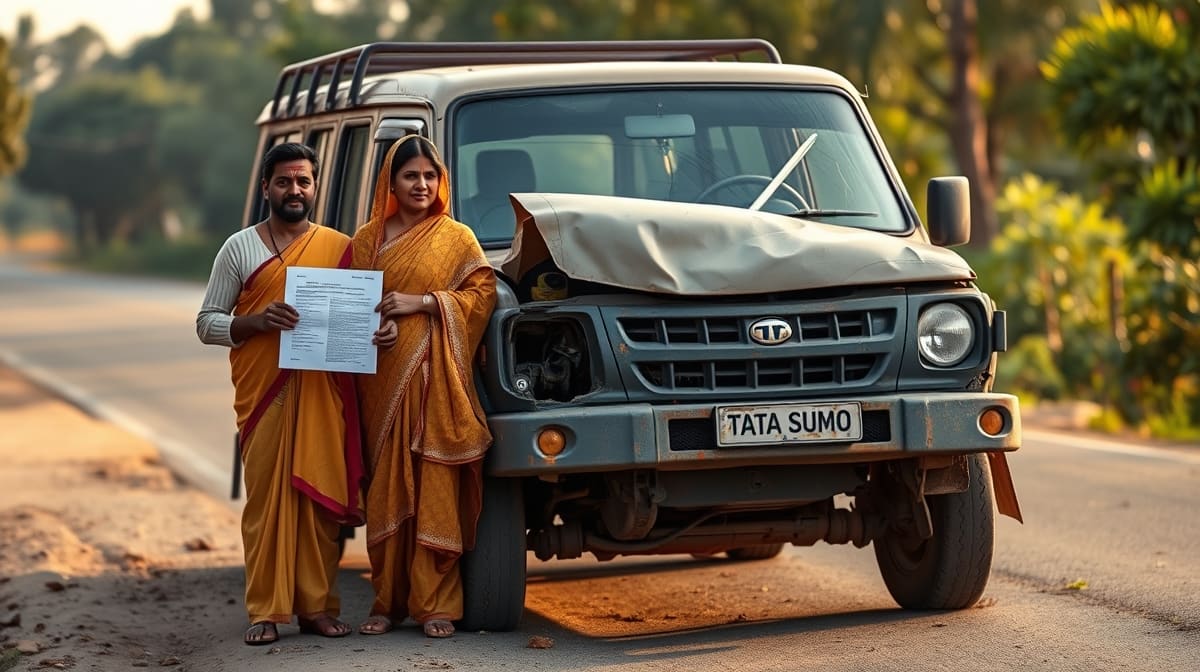
The dispute arose from a motor vehicle accident on or about 10.08.2018, in which Rambai, a female occupant of a Tata Sumo vehicle, sustained fatal injuries. The vehicle was driven by Firoz Khan, the fourth respondent, and owned by Kamal Chouhan, the fifth respondent. Rambai was a passenger in the vehicle at the time of the accident. The claimants - Samaru Sai (her husband), Maniram Chouhan, Saniram Chouhan (her sons), and Firoz Khan (driver) - filed Claim Case No. 50/2019 before the Motor Accident Claims Tribunal, Baikunthpur, seeking compensation for her death.
Key Facts
- The accident occurred on or about 10.08.2018 near Chirmiri, District Koriya, Chhattisgarh
- Rambai died on the spot as a result of injuries sustained in the collision
- The offending vehicle was insured with the appellant, United India Insurance Company Limited, under a third-party liability policy
- The policy number and terms were not disputed before the Tribunal
- The claimants sought compensation for loss of dependency, funeral expenses, and solatium
- The claim was filed on 15.09.2019
- The Tribunal recorded evidence of witnesses, including the driver and family members
- No evidence was led by the insurer to dispute coverage or policy terms during the Tribunal proceedings
Procedural History
- 10.08.2018: Motor accident resulting in death of Rambai
- 15.09.2019: Claim petition filed before Motor Accident Claims Tribunal, Baikunthpur (Claim Case No. 50/2019)
- 14.01.2020: Tribunal awarded compensation of Rs. 5,05,600/- against the insurer, holding it liable under the policy
- 14.02.2020: Appellant filed appeal before the High Court under Section 173 of the Motor Vehicles Act, 1988 (MAC No. 1055 of 2020)
- 18.06.2020: Appellant filed application under Order 41 Rule 27 CPC seeking to produce a copy of the insurance policy to prove it was a liability-only policy excluding passenger cover
- 20.03.2026: High Court heard arguments and delivered judgment
The Parties' Positions
- Claimants: Argued that the insurer was bound by the statutory obligation under Section 147 of the Motor Vehicles Act to cover third-party liability, including passengers, unless explicitly excluded by law
- Appellant/Insurer: Contended before the High Court that the policy was a liability-only policy and did not cover passengers, and sought to introduce the policy document as additional evidence
- Respondents (Driver and Owner): Did not contest liability; accepted Tribunal’s findings
Relief Sought
The appellant sought to set aside the Tribunal’s award of Rs. 5,05,600/- and to have the claim dismissed on the ground that passenger cover was excluded under the policy. The appellant also sought permission to file the insurance policy as additional evidence under Order 41 Rule 27 CPC.
The Legal Issue
Can an insurance company raise for the first time before the High Court, under Order 41 Rule 27 CPC, a defence that the policy excludes passenger cover, when no such plea was pleaded or evidence led before the Motor Accident Claims Tribunal?
Arguments Presented
For the Appellant
Learned counsel for the insurer relied on National Insurance Company Ltd. v. Balakrishnan to argue that liability-only policies do not extend to passengers and that the insurer should be permitted to produce the policy document to prove this exclusion. He contended that the Tribunal erred in not considering the nature of the policy and that the High Court should allow additional evidence to rectify this oversight.
For the Respondent
The claimants argued that the insurer had ample opportunity to raise the issue before the Tribunal but deliberately chose not to. They emphasized that the insurer’s failure to plead or lead evidence on policy exclusions amounted to waiver of the defence. They relied on Iqbal Ahmed (Dead) by LRs. v. Abdul Shukoor to argue that additional evidence cannot be admitted without prior pleading.
The Court's Analysis
The Court undertook a rigorous examination of the pleadings filed before the Motor Accident Claims Tribunal. It found that the written statement submitted by the appellant contained no mention of the policy being a liability-only policy, nor any assertion that passenger cover was excluded. The insurer did not cross-examine any witness on this point, nor did it tender the policy document during the Tribunal proceedings.
"In absence of necessary pleadings in that regard, permitting a party to lead additional evidence would result in an unnecessary exercise and such evidence, if led, would be of no consequent as it may not be permissible to take such evidence into consideration."
The Court cited Iqbal Ahmed (Dead) by LRs. v. Abdul Shukoor to hold that the appellate court must first determine whether the case sought to be set up by the additional evidence is already pleaded. Since no such pleading existed, the application under Order 41 Rule 27 CPC was legally unsustainable.
The Court further relied on Gobind Singh and Others v. Union of India and Others to emphasize that parties have no automatic right to lead additional evidence at the appellate stage. The provision is not a tool to rectify litigation negligence or tactical silence.
The Court observed that the insurer’s failure to raise the issue before the Tribunal was not a mere oversight but a deliberate omission. Allowing the plea now would prejudice the claimants, who had proceeded on the assumption that the insurer was liable under the statutory mandate of Section 147 of the Motor Vehicles Act.
The Court concluded that the Tribunal’s award was based on the evidence available and the insurer’s statutory obligations. The introduction of a new defence at the appellate stage, unsupported by pleadings, violates the principles of natural justice and fair trial.
The Verdict
The appeal was dismissed. The High Court upheld the Motor Accident Claims Tribunal’s award of Rs. 5,05,600/- against the appellant, United India Insurance Company Limited. The application under Order 41 Rule 27 CPC for additional evidence was also dismissed. The parties were directed to bear their own costs.
What This Means For Similar Cases
Pleadings Are Non-Negotiable in Insurance Disputes
- Practitioners must ensure that all policy exclusions, limitations, or defences are explicitly pleaded in the written statement before the Claims Tribunal
- Failure to plead such defences at the first opportunity constitutes waiver
- Appellate courts will not permit belated attempts to introduce policy documents or exclusions without prior pleading
Statutory Liability Trumps Policy Language
- Under Section 147 of the Motor Vehicles Act, insurers are statutorily obligated to cover third-party liability, including passengers, unless the exclusion is statutorily permitted
- Policy language cannot override statutory mandates unless clearly and lawfully exempted
- Claimants are entitled to rely on the insurer’s statutory liability without being burdened by unpleaded policy technicalities
Strategic Litigation Implications
- Insurers must conduct a thorough review of the claim petition and file a comprehensive written statement addressing all potential liabilities
- Claimants’ advocates should object to any application under Order 41 Rule 27 CPC that seeks to introduce unpleaded defences
- Tribunals must actively scrutinize pleadings before allowing additional evidence